The Reay Immigrants

For the most part, Earltown was overwhelmingly settled by families from the Parishes of Rogart and Clyne in Eastern Sutherlandshire with some from townships lying across their borders in Lairg and Dornoch.  There were some exceptions.   A notable one would be the Parish of Reay families who settled at West Earltown between 1832 and 1845.

Reay is a parish on the northern coast of Scotland.   It straddles the boundary between the old shires of Sutherland and Caithness.  The parish church is in the village of Reay within Caithness and therefore most families identified themselves in documents, obituaries and on monuments as “Native of Caithness-shire” regardless of which side of the county border they came from.   All of those arriving in Earltown were residents of Strath Halladale within the bounds of Sutherlandshire.

Strath Halladale is a strath, or broad river valley,  commencing on the heights near the border with Kildonan and runs northward for 22 miles to Melvich Bay on the north coast.  The surrounding hills  are of a height similar to the Cobequid Hills around Earltown and are interspersed by huge areas of blanket bog.1 Arable land is found along the course of the Halladale River which is backed by grazing lands on the surrounding hills.

Halladale River near Trantlemore (D. Bremner photo)

Unlike Kildonan and Strathbrora to the south, Strath Halladale, as a whole, was not subject to the widescale clearances of the early 19th century.   Parts of  Upper Strath Halladale were cleared in the early 19th century with further minor clearances in the 1830’s. Over time it was subject to the normal regression of small holdings or crofts with families migrating to urban settings or overseas. 

This was an area of Scotland with a strong Norse presence prior to the 13th century.  During the 12th century, a tribe known as MacEth or MacIye migrated north from Moray and spread across the north coast with Reay being the eastern reaches of the clan’s influence.  Without going into the politics, feuding and strategic marriages of medieval times, suffice it to say that the MacKays eventually gained legitimate but fragile superiority.  The chieftain was known as Lord Reay and the northwest of Sutherlandshire became unofficially known as Lord Reay’s Country. 

Strath Halladale was under the leadership of a cadet family of MacKays who styled themselves as the MacKays of Bighouse.  Bighouse is the name of a community at the mouth of the Halladale, the name of an estate and predictably the name of the mansion that once housed the gentry.  Despite the obvious, its origin is the Norse bygdh-hus meaning village house.

Bighouse Mansion (Bill Henderson photo)

The MacKays of Bighouse retained their lands and estate, (albeit with some genealogical diversions), until 1830.  At that time the estate was sold to the Marquis of Stafford, (later the Duke of Sutherland), who was married to the Countess of Sutherland.

A fascinating aspect of migration into Earltown, or any Scottish settlement in Nova Scotia, is how incoming families would seek out and find ways to settle near former neighbours or relatives.  In some cases, a generation would have passed. 

The root of the Reay migration goes back to approximately 1816 when a newly wed couple,  Alexander MacKay 2 and Elspie Murray, arrived in Scotsburn from the Parish of Reay.  While Alex, a tailor, had ancient ties to Reay, Elspie, was a native of  Sciberscross in the Parish of Rogart.   Her father and uncle,  William and Alex Murray respectively,  moved their families to Autanduin in Kildonan prior to 1810.  In 1814, they were cleared from Altanduin and fled north to Strath Halladale.  They found temporary shelter on Sletill Hill but were eventually warned off.  They found a permanent home in the community of Craigton. 
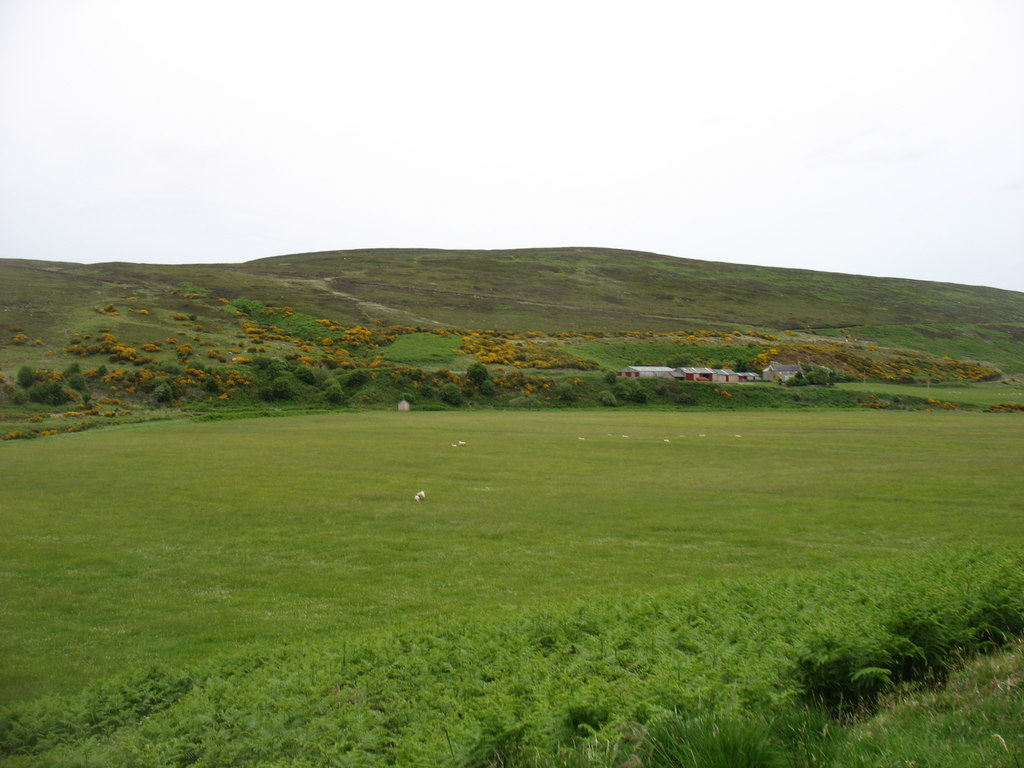
Craigton area (David Purchase Photo)

Shortly thereafter, in 1819, one of Elspie’s cousins, daughter of Alex, arrived at Scotsburn with her husband’s family and “great with child”.  Nancy Murray and her Rogart husband Alexander “Ballem” Sutherland settled at the foot of Gunn’s Hill.   In 1822, her sister Eliza and her Rogart husband,  Peter Murray “Bonesetter”, arrived in Earltown and settled next to Nancy on what is now the Alex Macdonald Road.

 We often discount transatlantic correspondence.  While the evidence is scant,  messages and letters did cross the Atlantic both ways.  Before the days of formal postal service,  the immigration agents, such as Donald Logan and Hugh Denoon, were back and forth to the Highlands and were likely happy to report that earlier migrants were succeeding in their new homes.  In 1831/1832, a significant number from Sutherlandshire arrived in Pictou and many proceeded to Earltown to join relations and former neighbours.  Among them was Jane Murray,  sister of  Nancy and Eliza Murray, and her husband, Robert MacDonald “MacClaharn”.

Robert was the son of Donald MacDonald, alias MacClaharn, and his wife Ann Sutherland. Donald and Ann lived in Achoultivillin in Strath Halladale. (The location seems to be an earlier rendition of the present-day Allt a’ Mhullin, which translates into Nova Scotian English as Millbrook.)

Allt a’Mhullin in the distance (Mackenzie photo)

Robert and Jane cleared a farm at West Earltown to the east of Ferguson Brook and south of the Waugh River.  The land in this area had been granted to individuals from the North River area who never attempted settlement.  The MacDonalds did not get title until later but they most certainly settled there shortly after their arrival.   This was common among the families arriving in the 1830’s leading us to believe that the Onslow farmers accepted unregistered promissory notes and retained title until the debt was extinguished.

They had a family of ten.   Betsy was married to William Morrison3 and they first lived on Cnoc Na Gaoidthe before moving to Ardoch, North Dakota; Donald married Mary Elizabeth MacDonald “Macadie” of The Falls and lived at Balmoral; Alexander, possibly died in infancy in Scotland; Peter married Christena Munro “Captain” and lived at Tatamagouche Mountain;  William died young; Alexander emigrated to Massachusetts where he enlisted in the 18th Regiment in 1861 and was discharged due to wounds received in the Civil War in 1862; Christy was the second wife of Robert Aikenhead, East New Annan;  William who studied for the ministry but had to return to the farm for health reasons;  Robert, unmarried, remained on the home farm and Rev. Angus who married Flora MacLeod of Wallace and served as an Anglican minister in New York state.

The MacDonalds were accompanied by Robert’s sister,  Elizabeth, (aka Betty), and her husband John MacKay “Strathy”.   They lived in the Strath Halladale hamlet of Nahar near Croick. This family had two descriptors.  The name “Strathy” appears in early Earltown records and would seem to indicate that John’s people had their origins in the Strathy area to the west of Strath Halladale.   Later this family was known as the “Gouda” MacKays.

Nahar looking across to Croick area (Alan Reid photo)

John and Betty settled a farm to the East of Robert and Jane MacDonald.  This is on an old road that would once have been an extension of the current Campbell Road and connected up with the Alex MacDonald Road. 

Their family included  Christy,  wife of Hugh MacDonald “Paulie”;  William who married Janet Ferguson and lived on Ferguson Brook Road;  Donald, NFI; Catherine wife of Donald MacKay “Uhr”, West Earltown;  Nancy, unmarried; Hugh married  1. Margaret Mackay and 2. Annie Ferguson and lived at Tatamagouche Mountain; and Angus born in 1830, NFI.

The aforementioned  William “Gouda” who lived on the late Harold Ferguson’s farm,  left Earltown after the death of his wife and settled at Grand Forks, North Dakota.  Most of the sons went west leaving only his son Joseph at West Earltown.  Both of his daughters remained in the area.  Elizabeth married  Sandy Ferguson and took over the home farm.  Mary married Albert Drysdale of Tatamagouche Mountain.

Another family coming from Strath Halladale in the early 1830’s was that of William and Dorothy Gunn. William was from the community of Achintoul located in the upper reaches of the Parish of Kildonan. In 1800 William married Dorothy MacKay of Dalhalvaig, Strath Halladale. The family moved about and eventually put down roots in Achiemore.

Achiemore in the distance (Rupert Fleetingly photo)

William and Dorothy are believed to have lived briefly in Pictou County before arriving in Earltown.  In 1838 they are listed in the Kemptown census as living on or near Boodle Hill4 although he had already purchased what is now Sweet Earth Farm5 on the South Spiddle Hill Road in 1837. This would suggest he was clearing the West Earltown property while living at Boodle Hill.  

Their family:  Donald, the eldest, married and remained in Strath Halladale;  Jane married Hugh Campbell in Strath Halladale6; Catherine, NFI; Hugh married Janet MacKay prior to emigrating to Pictou around 1831.  They lived for a few years at Middle River before moving to Clydesdale in 1841.  William married Catherine MacKenzie and lived in Stellarton;  John married Barbara MacKay at MacLellan’s Mountain and moved to Red Oak, Illinois;  Barbara married Donald MacLeod of The Falls shortly after arriving in Earltown; and Alexander took over the property near Boodle Hill.  Alexander married Eleanor Sutherland of Middle River.  In the 1870’s, he moved his large family to a farm known to many as the Geordie Fraser farm on Brule Point.

William died at West Earltown in 1850 after which the farm was placed with the Sheriff and later sold to a MacKenzie from Stellarton7.

In 1837 Earltown received the Joseph MacKenzie family.   Joseph was born to Alexander MacKe8nzie and Ann MacKay in Coul,  Parish of Reay.  In 1833 he married Esther Bruce of the Parish of Latheron9, Caithness.  The couple settled at Croick where their eldest two children were born.   Joseph’s brother Hector came to Nova  Scotia at the same time and settled near Stellarton where he was a schoolmaster.  Another brother, Angus, remained at Croick on the original holding and his grandchildren were still in the area in the 1950’s. Kenneth MacKenzie, grandson of Joseph, in his personal memoir, Sabots and Slippers, claims that most of the MacKenzies in the northeast sector of MacKay Country descended from Joseph’s great grandfather, Hector MacKenzie of Gairloch. The move to Strath Halladale, and Croick in particular, was around 1730 at the behest of a MacKay chieftain, likely the local laird at Bighouse.
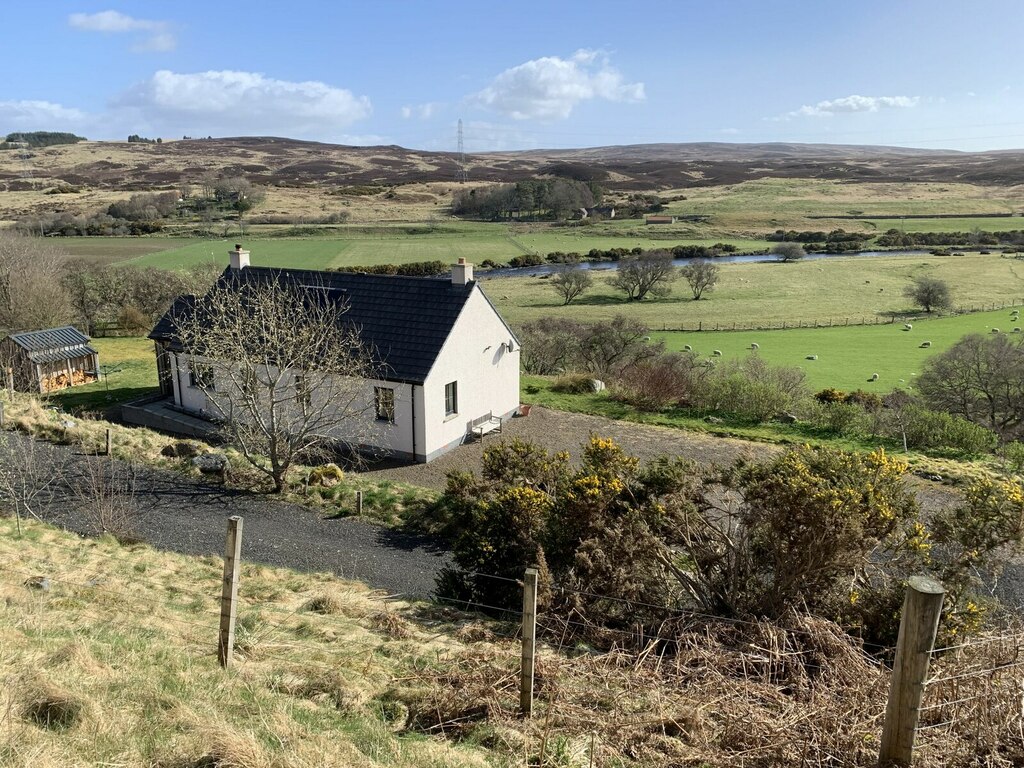
Croick (Alan Reid photo)

After a brief sojourn in Pictou County,  Joseph and Esther acquired a property at Central Earltown which was roughly across from the end of the Matheson Corner Road10.   Joseph was one of the early Catechists in the area as reported in this blog post.    Joseph died of pneumonia on July 1st, 1848, a short time before his youngest daughter was born.

Their family were:   Alexander, died unmarried in 1871; Elizabeth unmarried;  Janet, unmarried; Hector Munro, a schoolmaster and unmarried; Annie, unmarried; William, married to 1) Christy Sutherland, Croucher and 2) Barbara MacKenzie;  Hugh, a lawyer in Truro and Josephine Margaret, unmarried.  Many of this family, including Widow Esther, died of TB.

The son William eventually took over the farm that was the home base for his door to door general merchandise business.  He later acquired what is the current general store in Earltown which he operated in the late 1800’s and early 1900’s.

1845 marked the last of the migrations from Strath Halladale to Earltown and involved two family groups.

We return to Alexander Murray. The twice-removed miller of Altanduin, finally made the move to rejoin his three daughters who were well-established and matriarchs of large families.  One can imagine the novelty of meeting approximately 30 grandchildren for the first time within the span of a couple of days!

The journey was not without drama.  Alex,was up on the ship’s deck for fresh air.  A gust of wind blew his cap into the ocean.  The cap had been handmade by his mother and prized as a remembrance of her.  He pled the captain to turn the ship around to retrieve his beloved ‘corrigan’ but to no avail and he wept as his cap bobbed out of sight.  The family has since been known by the descriptor “Corrigan”. 

Alex was about 84 years old at this point.  His wife, Christy Sutherland, was about 76.  However Alex was still in his middle age as he lived to be 102. 

Along with Alex and Christy came their sons Donald and Robert as well as their unmarried daughters, Ellen, Catherine and Isabel.  They settled atop Spiddle Hill.   Shortly thereafter Robert acquired the MacLeod farm on the South Spiddle Hill Road.

The family has extensive tentacles throughout the genealogies of North Colchester.  In summary, the family were:

  1. Eliza, wife of Peter Murray, Bonesetter.  She lived to be 103 years old.
  2. Christy, died in Scotland
  3. Jane, wife of Robert MacDonald, West Earltown
  4. Nancy, wife of Alex Sutherland  “Ballem”  Gunn’s Hill
  5. Angus married Janet MacKay and remained in Craigton.  Angus was willing to emigrate but not Janet.
  6. Donald married Nancy Murray, Inchure of Clydesdale.  They lived on Alex’s farm on Spiddle Hill.
  7. Ellen, unmarried
  8. Catherine, unmarried
  9. Isabel married John Graham shortly after arrival
  10. William, nfi
  11. Robert married Ellen Murray, Valley.  In the 1880’s they and five of their children moved to Maple Plain, Minnesota. After they were first married, they lived on a farm on the South Spiddle Hill Road, originally granted to Hugh MacLeod. After they left for Minnesota, the property was acquired by Joe MacKay “Gouda”. He retired in the 1920’s to Balfron after which the farm went vacant.

“Uhr”  is Gaelic for late.  It is the descriptor put on this last family of MacKays to arrive from the old country. 

Widow Anne MacKay “Uhr” was the daughter of  Donald MacDonald “MacClarharn” and Ann Sutherland, Achoultivillin, Strath Halladale.  She was married to Robert Coupar MacKay of Bighouse.   He died around 1835.  

Upper Bighouse showing deserted croft houses (Chris Heaton Photo)

The family’s home base before dispersing was the farm behind the Brown School at West Earltown11. This became the permanent home of Donald Coupar MacKay, the second eldest son.

The family:

  1. James 1815-1873 did not stay long in Earltown if he even came to Earltown.  He settled in Halifax where he was a trader and also spent time in Boston.  He was married to Sarah Anderson.   An unmarried daughter, Bell, lived in Dartmouth and a son, Rupert Coupar MacKay, was an engineer on steamers between Halifax and Boston.
  2. Isabel  was the second wife of Robert Baillie, West Earltown and they were married shortly after her arrival.  Her last years were spent with her son Robert in Malagash.
  3. Donald Couper was married to Catherine MacKay  “Gouda”.  They had two daughters: Annabell married to Dan MacDonald and Libbie, unmarried.
  4. Jane – NFI
  5. Hugh, known as Hugh Uhr, married Margaret Baillie, his sister Isabel’s stepdaughter.  They lived near the Earl McNutt farm on Tatamagouche Mountain when first married but later settled atop MacKay Hill on the Corktown Road. They had nine children.
  6. Anne Coupar MacKay married Hiram Downing Jr. of Tatamagouche Mountain. They had seven children.   They emigrated to Oregon around 1872 and acquired a farm near Portland, Oregon. 

Widow Anne was living with her son Hugh at Tatamagouche Mountain when she died in 1863.

This family was closely connected to another MacKay clan who arrived in Earltown in this same period in the 1840’s.  Three siblings,  Angus, William and Jane, settled next to the  Gunn property and off the Kemptown Road.  This group were known as the “Boodles”.  (Boodle was a liquid or monetary incentive given out by candidates in an election).   William and Jane never married, but Angus married Jane MacKay in Strath Halladale.  Angus and Jane had three known children all born in Corkall in Strath Halladale:

  1. Margaret, unmarried
  2. Angus married to Annie Lynch of Nuttby
  3. Jane married to Charles Lynch of Gunn’s Hill
Kirkton Cemetery with Corkall in the distance (Alan Reid photo)

Angus and Annie lived on his parent’s farm along with his single sister and father’s siblings.  Their daughter, Bella, was married to Hughie “Kemptown” Sutherland, Jane married Woodbury Moore and lived in Washington State,  Dannie and Angus remained on the home place unmarried.

This is a very broad exploration of the origins and early family ties and a topic that could use some additional study.

Map of properties mentioned https://www.google.com/maps/d/edit?mid=1KhIphCm-6aEyFf6oKMX7izjLa0RNomw&usp=sharing

Sources:

Baldwin, John (Ed) The Province of Strathnaver, The Scottish Society for Northern Studies, 2000 – In particular the chapter From Clanship to Crofting: Landownership, Economy and the Church in the Province of Strathnaver by Malcolm Bangor-Jones

Baldwin, John (Ed) The Province of Strathnaver, The Scottish Society for Northern Studies, 2000 – In particular the chapter Bighouse and Strath Halladale, Sutherland by Elizabeth Beaton

MacKenzie, Kenneth, Sabots and Slippers, Ross & Main Press Limited, 1954

Sage, Donald Memorabilia Domestica W. Rae, Wick 1899

Old Parish Register, Reay, Caithness (online via Scotland’s People)

Beeler, Donald The Descendants of John and Elizabeth MacKay unpublished

Whiston, Norris The History of Nuttby and Nuttby Summit unpublished

Bighouse Estate Population List from Sutherland Papers, (Courtesy of M. Bangor-Jones)

Alice Manchester – Correspondence on Gunn family 1979

James R. MacKay, late of New Annan – Various interviews on the Uhr MacKays

Mary Douglas Murray, late of Earltown – Various discussions on the MacClarharn MacDonalds

Mary MacDonald MacArthur, late of Woburn, Ma. – Correspondence on the MacClarharn MacDonalds 1980

Colchester County Land Deeds, microfilm, Provincial Archives of Nova Scotia

1838, 1861, 1871, 1881 and 1891 Census of Earltown

Free Church Records, Congregation of Earltown

Malcolm Bangor-Jones, direct correspondence and helpful suggestions on the lay of the land.


  1. This is now part of a World Heritage site and the first peatland world heritage site. ↩︎
  2. Alex, a tailor, always referred to his native homeland as “Lord Reay’s Country”, which is what his family put on his death certificate. This family lived in Millsville near Scotsburn. ↩︎
  3. William Morrison, born in 1820 in Scotland, has been a genealogical brick wall. He came to Earltown as a single man. There are Morrisons on the north coast of Scotland so one wonders if there was a connection with MacDonald family back in Scotland. William died in Ardoch, ND, in 1886. Betsy died in Lordsbury, California in 1915. The Morrison sons were heavily involved in citrus farming. ↩︎
  4. Boodle Hill is the area between the John Sutherland and Kemptown Roads located within the old boundaries of the Kemptown district. The name came from a nickname applied to a MacKay family featured later in this post. ↩︎
  5. Otherwise known locally as the Charles McGill farm. ↩︎
  6. Hugh and Jane Campbell had at least two daughters born in Strath Halladale. They are gone from the area by 1841. A Hugh Campbell settled on the first farm near the bridge on Campbell Road, Central Earltown. He appears with family in the 1838 census and the 1861 census but gone by 1871. The late Gladys Sutherland MacDonald, who grew up near the Campbell farm, heard as a child that the family mysteriously disappeared without telling anyone. To add to the mystery, a peddler working the area abruptly disappeared the same day and he was seen heading to the Campbell home. ↩︎
  7. The property became the home of Angus Baillie of Spiddle Hill. Angus left it to his daughter Maggie, wife of Jimmie Stewart. The Stewarts had no children. It later became the home of the McGill family. ↩︎
  8. Latheron borders on Reay in the back country. Rev. Donald Sage in Memorabilia Domestica notes that there was a mission in the back country that served those in remote parts of Latheron and Reay. ↩︎
  9. Latheron is southeast of Reay in Caithness. While is it a considerable distance from Strath Halladale by today’s roads, in times past it was not far as the crow flies. The church had a mission in the back country that served people living in the remoter parts of Reay, Latheron and Kildonan. ↩︎
  10. An old house was still standing on this property in the 1960’s which people referred to as the Nicky Baillie place. Nicky was the grandson of Nicholas Sutherland who annexed the MacKenzie property to his own to the east. ↩︎
  11. This property was granted to a John Murray. Donald Uhr purchased the property in 1846 from John Murray and wife. To date, I have not been able to identify John Murray but it is believed he never attempted to settle the property. ↩︎

Cnoc na Gaoithe

As one travels towards Earltown from The Falls on the 311, one notices a ridge at the head of the valley. This same ridge is part of the view when entering West Earltown from Central Earltown. In the 19th century it was commonly known as Cnoc na Gaoithe, (pronounced Croc na Gee), and later became known in English by its translation, Windy Hill. It is named after a similar hill in the Parish of Clyne located to the north of Loch Brora and near Dalfolly. It was the ancestral home of several first settlers in West Earltown. There were once eight homesteads in this remote area. Most were vacant by 1930. They were served by the church at The Falls, the Brown School at West Earltown, and, for a period of time, a store at the end of the road leading into the settlement. Most of these people were buried in the Murray Cemetery. The first four homesteads along the main route through the settlement were settled by an extended family in 1821. They were the three Baillie brothers along with their sister who was married to a MacKay. We will notice their particulars as we proceed along the road.

The Baillies were raised on the Cnoc na Gaoithe in Clyne. Their home was supposedly on the opposite side of Strath Brora from other Baillies that came to the Earltown area around the same time.   They were certainly among the evicted of Strath Brora . Their land grant petitions suggest they came over in 1821.  They made their way to the Lovat – West River Station area where other Baillie families were already established.   There is a strong family tradition that they were near relatives to the Baillies that arrived in those settlements around 1814. They requested land in the West River area but were instead pointed to West Earltown, the preferred gathering place for Sutherland evictees in the early 1820’s. An older brother, Donald, chose to settle on the summit of Spiddle Hill on the farm recently restored by Edwin Cameron for buffalo pasture. The remaining siblings took a block of land along the ridge of Cnoc na Gaoithe.

Today one gains access to this area from the Kavanagh’s Mills Road. About 700 meters from the 311 highway, a road turns off to the left and heads south. About 500 meters along that road one comes to a cross road. The one to the left is a lane into the Robert Baillie grant. Part of the clearing is now a gravel pit however the ruins of the house were in existence as recent as 1990. Robert Baillie, (1799-1871), was a son of Alexander and Janet Baillie of Cnoc na Gaoithe, Clyne. He lived as a bachelor at this location for several years establishing a viable farm. Around 1833 he married Margaret Murray, (1812-1839), then living across the road from Knox Church. She was born to William Murray “Ardachu” and Margaret MacKay in Rogart and arrived in Earltown with them in 1831/32.   The 1838 census shows that Robert and Margaret had three children. We have only been able to identify one, that being a daughter Margaret, wife of Hugh MacKay “Uhr” of MacKay’s Hill near Kavanagh’s Mills. Margaret, wife of Robert Baillie, is buried with her parents in Earltown and is memorialized by an elaborate table stone. There are no markers for children of this marriage but one wonders if the unknown children expired along with the mother due to a virus. Left with at least one small child, loneliness, necessity and hopefully love led to Robert’s second marriage to an Isabel MacKay. Isabel was born in Scotland. Her grandson Geordie Sutherland “Macin” claimed that she belonged to the Uhr MacKays at Kavanagh’s Mills. If that is the case, she came to Nova Scotia subsequent to 1841 with a sister in law, Annie MacDonald MacKay, and her family as well as a clan of MacKays known as the Boodles.  The Boodle MacKays settled near Earltown Lake.   By this union, Robert had Margaret, (Mrs. George Sutherland “Macin”), Mary, Annie, (Mrs. Tom Mattatall of West Tatamagouche), Robert Jr., and Alexander.

Robert Baillie Sr. died in 1871 and the farm eventually went to his son Robert. This Robert married Isabella MacKay, “Black”, daughter of “Kicking” George MacKay and Janet MacKay “Deacon”, West Earltown.   Robert and Isabella, as well as his widowed mother, moved to Malagash in the late 1880’s. They had Jessie, (Mrs. Walter Craig of Niacom, Sk.), Bessie, (Mrs. Louis Langille of Waugh River), and Melville Baillie who died at Pashendale, France, on November 2, 1917 in the service of King and Country.

The Baillie’s sold this farm to Neil Murray of Earltown. Neil was a nephew of Margaret Murray Baillie, Robert Sr.’s first wife. Neil, (1854-1924), was a son of Donald Murray “Bible” and Janet MacKay “Tailor” of Earltown.   He had a first wife, name unknown, and a son John by that marriage. His second wife was Christena MacDonald, daughter of Neil MacDonald and Janet MacIntosh of North River. In addition to farming, Neil also operated a store in the house for the surrounding community.   Neil and Christena had four children: Maude, (Mrs. Charles Douglas, North River), Mamie died young, Gordon, (m. Catherine MacLeod of The Falls), and lived at Upper River John Road. The youngest child was Mabel, wife of Dan Robert MacLeod, The Falls and Trail, BC..  Neil spent his final years with his son Gordon on the River John Road.

The Alonzo, (Lonnie), Sullivan family were the next to occupy this farm. They were formerly of North River. In later years they built a new house near to the junction of the 311 and the Kavanagh’s Mills Road. Members of that family still live on parts of the original homestead.

Returning to the road on the ridge, another road turns to the right opposite the Baillie – Sullivan land. It leads into a clearing currently under blueberries. It seems that this parcel may have been part of the Hector MacKay grant.  This parcel seems to have been settled around 1848 by Donald MacKay and his wife Mary MacKay. Mary was a daughter of John MacKay “Post” on Gunn’s Hill. Donald’s origins are vague but tradition claims that he was one of the Achlean MacKays in the Clydesdale.   Donald and Mary had six children, William, John, Alex, Christena, Catherine and Jessie. Alex never married and worked as a carpenter around Denmark, N.S. .  John spent the his final years at the county poor farm in North River. Catherine died at home in 1927. Christy took over the farm and was first married to an Angus MacDonald. To date we cannot trace Mr. MacDonald.   Christy’s second husband was Neddie Tattrie of French River. They had an infant son. This couple lived to be elderly and are buried in Earltown. The farm has been vacant since. A roadway through this farm eventually continued over the hill to the Corktown Road passing through the farm of John S. Baillie.

Back on the road along the ridge, one ascends a half kilometer into the remains of the Donald MacKay “Macomish” grant.   The origins of the name Macomish is now unknown. The name appears in the rent rolls of the Sutherland Estate in the early to mid 1700’s, a time when many of the families had unique Gaelic surnames.   Macomish may have been an old branch of the MacKay clan or a tribe that took the MacKay name towards the late 1700’s. This family lived on the west bank of the Blackwater, a river flowing into Strath Brora from the North. In 1820, prior to emigration, Donald was living at Dalvait near the mouth of the Blackwater. Donald married Marion Baillie in Clyne. As previously mentioned, she was a sister of the Baillie brothers on the adjoining farms. Marion had a daughter prior to her marriage, also Marion, who was raised in the MacKay household. This Marion married Alexander Sutherland “Loib Bheg” of Central Earltown. Together, Donald and Marion had a daughters Janet, who was born in Clyne and died unmarried in 1867, Christy, wife of James Sutherland “Loib Bheg” or Lake at Earltown Lake, Margaret, first wife of Hugh MacKay “Gouda”, West Earltown, sons Alexander and William.   Donald and Marion are buried in Murray Cemetery. This grant was divided between the two sons.

William was given the original homestead and Alexander occupied a portion further along the road. William MacKay “Macomish” 1827-1872, was twice married. His first wife was Isabel Sutherland “Loib Bheg”, daughter of Robert Sutherland and Eliza MacKay, Earltown Lake. They had Marion, (Mrs. William Sutherland “Macin”, Corktown), Eliza, (Mrs. Jim Sutherland, Caribou of The Falls), Dolina, unmarried, Robert died in 1883 unmarried, Dan, (Mary Heughan) and William. Isabella died in 1864 leaving William with a young family.

He married a second time to Ellen MacKay, daughter of Hector MacKay and Jane Sutherland, West Earltown. They had a son Hector who died young. In the late 1860’s William vacated the farm on Cnoc na Gaoithe and moved to the New Truro Road about three miles south of Tatamagouche Village. A number of properties along that road had become available for settlement at that time. It was flat and considerably more arable than the mountain properties. William died shortly after the move and the farm was taken over by his young sons. Dan, known as Dan Macomish, was the eventual heritor of the farm which later passed to his grandson, Freeman MacKay.

Alexander Macomish, son of Donald, cleared the rear part of the grant. He was married to Annie Sutherland, sister of William’s wife Isabel and Christy’s husband James.  She was also a half sister of Alex Sutherland, the husband of Marion Baillie. The Macomish MacKay and Sutherland Loib Bheg families were greatly intertwined likely due to some close connection back in Clyne. Alex and Annie raised a dozen children on that remote and marginal homestead.   Marion, (married George Sutherland, Sawyer), Betsy, unmarried, Dan, Eliza, Robert, Janet, William, Betsy, Christy Ann, Isabel, (Mrs. Robert Morrison, Vancouver), and Margaret, wife of Big Donald MacDonald of East Earltown.   Some of this family left home young and their whereabouts became unknown.   Some died single on the home farm. The last of this family was Donald who was also known as Dan Macomish. He was a bit of an eccentric and roamed the back country at night by lantern light. He spent his last years as a border with Hugh Alan and Minnie Sutherland, Balmoral.

These Macomish MacKay farms bordered on the farm of the Black MacKay’s and the clearings were open to one another at one time. The Black MacKay’s entered their homestead from the West Earltown side near the Devil’s Elbow.

At the back of the MacKay clearing a road branched to the south east and eventually entered the Morrison clearing. This farm would be to the southwest of the old Brown School at West Earltown. It was only inhabited by one family for a relatively short life. We don’t know what circumstances brought William Morrison to Earltown. He was born in Scotland in 1820. He first appears in the official records marrying Betsy MacDonald at Tatamagouche in 1851. Betsy was born in the Parish of Reay, Caithness in 1826. She was a daughter of Donald MacDonald and Jane Murray and came to Earltown in 1832.   She was a granddaughter of Alex Murray “Corrigan” of Spiddle Hill who later emigrated from Reay. William and Betsy’s farm, although remote today, was only a couple of properties away from her parent’s farm above Ferguson Brook Road.

In 1873 William and Betsy vacated their farm and set out with the family for the American West. They chose to settle in Ardoch, North Dakota, a new settlement in the Red River Basin. William died there in 1886 and Betsy in 1915. They had ten children. What is most remarkable about this family is that they kept in contact with their friends and relatives in Nova Scotia. Five of the family married people originally from Earltown who had somehow tracked them down. The family was later centered on the outskirts of Los Angeles with two sons owning citrus farms. An elderly relative from Idaho once told the writer of visits to the Morrison homes as a child visiting Los Angeles. They remained true to their roots, were keen on the Scottish obsession with genealogy, and sang the old Presbyterian hymns as a source of entertainment.

The children were:   Robert, (m. Isabel MacKay, Macomish) and lived in Vancouver; Christy, (m. Alex MacKay, Gouda), Grand Forks, North Dakota; Jane, (m. John Murray, Bonesetter of The Falls), Pine City, Mn; Margaret; John, a rancher in Dakota who retired to California; Alexander, a farmer in San Dimas, Ca., (m. 2. Johanna MacKay, Canada); Elizabeth; Donald, San Jose, Ca.; Peter, a farmer in San Dimas, Ca., (m. Ellen MacKay, Tailor).

Back on the road leading to Corktown, we next come to the first of two Baillie grants. The first was granted to William Baillie, (1798-1844). He was the ancestor of a branch of the Baillies nicknamed the Jaffries. William was married in Clyne in 1820 to Margaret Anderson.   She was born at Badnellan in Clyne. Her people remained in Scotland and are still living in the area today. Their first home as a couple was on Alt Na Mhuillan above Aschoile Beg.  Family tradition claims they lived for a short period of time in the West River area while William was securing a permanent home. While at West River, their eldest son was born in 1821. They had at least four children: Alexander, settled on the next farm; Nancy, unmarried; Margaret, the second wife of Alex Baillie “Doctor” of West Earltown; and William who continued on the home place.

William Jr. , (1830-1908), was married to Isabella Sutherland “Macin”, daughter of John Sutherland and Christy Ferguson. They raised a family of nine in this remote setting:   Margaret, Mrs. Dan MacLeod, MacLeod Road; Christena, second wife of Jim Sutherland, “Caribou”, The Falls; Annie, Mrs. David Murray, Kavanagh’s Mills; William died young; Georgie, unmarried; Catherine, Mrs. William Sutherland, “Dearg”, East Earltown; John S. Baillie, Corktown; Alex S. Baillie, at home; and Bessie Baillie, unmarried. Alex S. Baillie worked for a number of years in the United States and came home to look after the homestead around the time his parents could no longer manage. After their deaths, he moved with his sisters Georgie and Bessie to the old Henderson farm on Studivan Mountain. This is still a remote setting but was a considerable improvement over the farm on the far side of Cnoc na Gaoithe. Continuing on through the Baillie grant, we come to former homestead of Alex Baillie, son of William. He broke with tradition and married someone outside the Gaeldacht, Margaret Jane Tucker of Corktown. They also had nine children: William, Hugh and Alex died as young men on the home place, James went west and was never heard of again, Margaret married Joe Dunford of Wittenburg, NS; Elizabeth was first married to Finley MacDonald of the Berrichan and later married Murdoch Munro of Loganville Glen; George Baillie married Bella Ross Meagher and they took over her first husband’s farm at The Falls; Annie married Alex Sutherland “Macin” and lived on the Kavanagh’s Mills Road; and John Baillie who lived at Waugh’s River and was married twice.

At this point the crosses into the New Annan District and the community once known as Corktown. The next property was granted to Alexander Baillie, the youngest of the Baillie siblings to settle along this road.   Very little is known of this man.   He married a woman by the name of Annie and had at least two sons, William and Alexander.   William went to Londonderry, (then known as Acadia Mines), to work where he met and married Margaret Spencer. He later appears among the early inhabitants of Calgary. Alexander Baillie the younger, known locally as Alloch, continued with the homestead. He married Janet Baillie, (1842-1910), a daughter of William Baillie, “Quilly” and Helen Sutherland of Clydesdale. Janet, known as Jessie, was a distant cousin.   They had four children, Robert who lived near Trenton, N.S.; Alex William in Trail, B.C.; Christy, Mrs. John Pugh; and John.   John went by the nickname Johnny Alloch, was a bachelor, and worked in the lumber camps most of his life. He died in Truro and was buried at North River. The land at this point is extremely poor. The continues through Baillie’s Bog and emerges on the Old Nuttby Road in Corktown.

The locations on this map are approximate:  https://www.google.com/maps/d/edit?hl=en&authuser=0&mid=zWuNe7Aar9m4.kZghunWViU_U

The War of 1812 and Donald “Pentioner” MacKay

The hot topic in Canadian history this year is the War of 1812.   I never gave much thought to that conflict and erroneously assumed it was mainly revlevant to Upper Canada and the privateer activity on the Atlantic.   It is well known that one of  Earltown’s settlers was involved in the Battle of New Orleans however I never made the connection to the War of 1812.   My thanks to Toni MacDonald of Brule for bringing the relevance of the War to my attention.

The Battle of New Orleans took place between December 12, 1814 and January 26th, 1815 with the major battle occurring on January 8th.  It was the last battle front of the War of 1812 with heavy losses for the British.   The worst losses were sustained after peace was negotiated but before word reached Louisiana.  Among the British soldiers was one Donald MacKay who was severely wounded in battle.

Donald was born in the Parish of Lairg, Sutherland, in 1770.   As a young man he enlisted in the army and served for 21 years.    After his severe wounds,  he was discharged and sent back to Britain.  After his recovery, likely in England,  he returned to his native parish.   He next appears living in the traditional MacKay country of Strathnaver.   In the far north Parish of Farr,  he married Barbara MacKay.    After the birth and death of their eldest son,  they moved to Tomich in Lairg where Donald found employment as a grasskeeper for Major Gilchrist of the 93rd Sutherland Regiment.   They also lived for a time in the Parish of Creich.

In the last great migration of 1831-32,  Donald and Barbara together with their young family emigrated to Pictou.  One version of their story claims they lived for a time near Blue Mountain with Donald’s brother James.  They came to East Earltown shortly thereafter and acquired a farm on the crest of the hill on Squire MacKay Road.   It was land originally reserved for the Deans of Kings College.   From this lofty situation,  they had a magnificent view three counties and two colonies.

Despite his wounds,  (some say he lost an arm in the war),  Donald cleared a productive farm.   He was known as “Donald Pensioner”  or simply “Pensioner” as there were nearly a dozen Donald MacKays in the surrounding communities at that time.   Descendants claim he received a life pension for his extensive service to the crown.

After an active life of military adventure,  herding cattle in the Highlands,  clearing a farm from virgin forest and active farming in an infant settlement,   Donald died in 1871 at the advanced age of 101.  He is buried in Gunn’s Cemetery,  a short distance from his homestead.  His wife Barbara is buried beside him.   A stately stone was erected when that small cemetery was at the side of an active country road.  Her epitaph reads that  “She was a woman of quiet piety and her example and memory are a sweet inheritance.   Far from the haunts of the busy world may their ashes rest in this serene and quiet place”.     One hundred and thirty four years later,  it is now a remote break on a dead end road, even further from the haunts of the busy world!

Map reference:

https://www.google.com/maps/d/edit?hl=en&authuser=0&mid=zWuNe7Aar9m4.k8Fzn4BSMhZQ