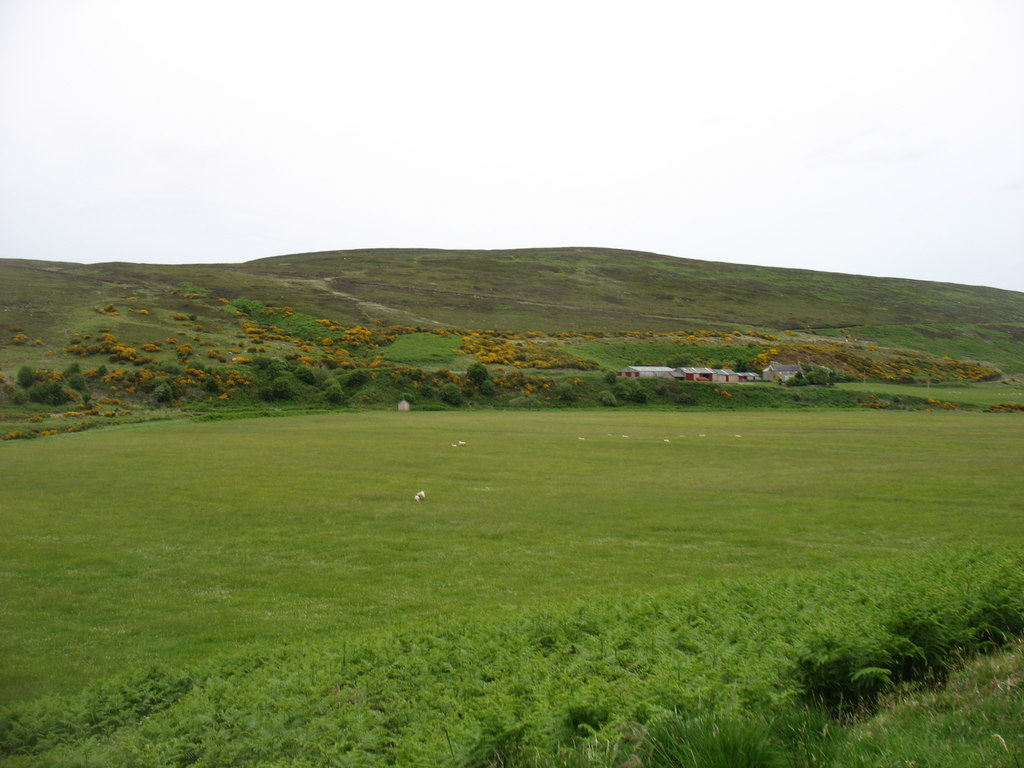
The Kildonan Riots (The Earltown Connection)

Kildonan Parish is located in the north-east of Sutherland along the Caithness border.  It begins in the high country on the watershed between Strath Halladale and Strath Ullie and follows the latter southeasterly down the Helmsdale River towards the sea.  In the early 19th century, it was home to at least 1,500 souls, predominantly Gunn, MacKay, Polson, Sutherland, Matheson, and a handful of other Highland names.  The valley floor had abundant land suitable for grains and the surrounding hills afforded thousands of acres of grazing for cattle and sheep.

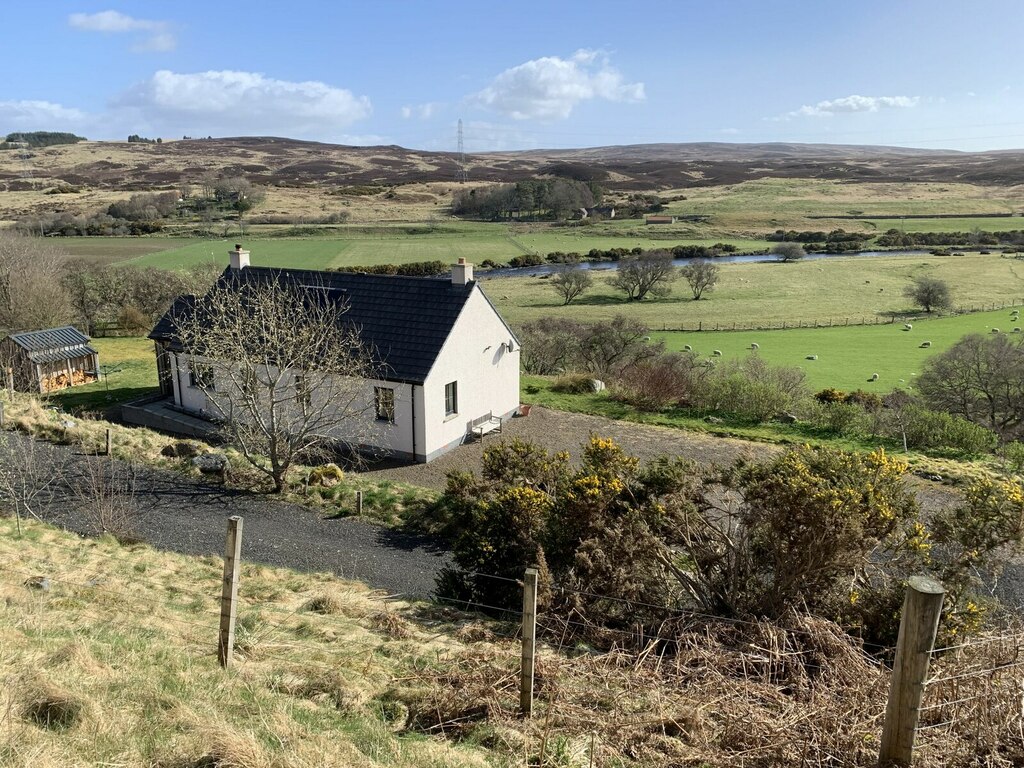
Helmsdale River near Kildonan Farm – Julian Paren Photo

In 1807-1808, the Sutherland Estate created a farm in Kildonan out of three townships and leased it to an outsider.  The collection of small tenants cleared out in making this farm, offered no resistance.  In all likelihood, they were not expecting such a move nor were they organized or prepared to mitigate the situation.

On January 5th, 1813, farmers “from away” were seen exploring and surveying other parts of the parish, which raised alarm among the traditional tenants.  In the lead was the proposed new tenant for another extensive farm which would precipitate another clearance.  Major William Clunes, who already had a farm on the coast, would have been recognized by former soldiers in the parish from their days in the Peninsular War.  That evening, it was learned that Clunes had settled for the night in the manse of Rev. Alexander Sage. 

A delegation was appointed by the local tenants to confront Clunes at the manse.  They summoned Clunes to the yard for a conversation and learned that Clunes was doing due diligence on a lease near Torrish.  The delegation appealed to Clunes to abandon the plan and let them continue to farm in peace. The conversation became heated and ended with threats.
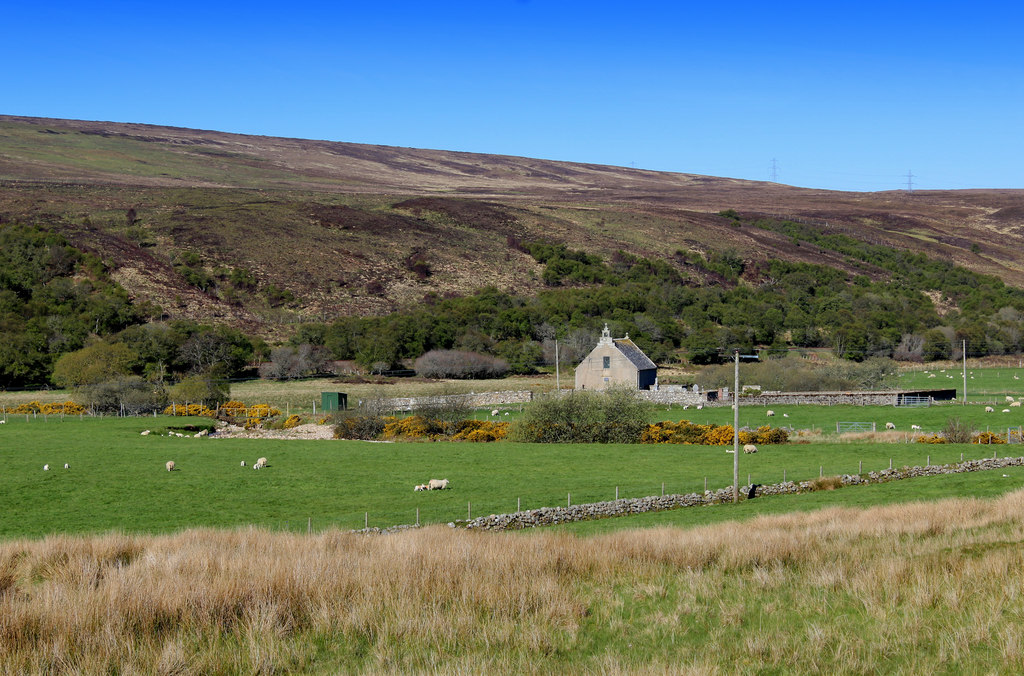
Kildonan Church Chris Heaton Photo

This was reported back to the leaders of the protest, who were awaiting word at a nearby mill. The protests were being organized, allegedly, by the local schoolmaster, George MacLeod, and an influential catechist by the name of George MacKay.  While they all realized that their actions were against the law, the catechist was able to assure them they had the moral high ground.  Overnight, tempers flared, adrenaline flowed, and the protest took on a momentum that was hard to contain.

The following morning, as Clunes was saddling his horse, he was confronted with a mob of fifty men bearing sticks and cudgels.  He was warned to take leave of the strath before blood would be shed.  Realizing there would be nothing productive happening that day, Clunes saddled up and went home.

Meanwhile, other southerners in the same party were housed with a Turnbull family further up the Strath in Suisgill.  Another party of 50 concealed themselves in the thickets and gullies surrounding the Turnbull farm.  A couple of shepherds/farmers, managed to escape on horseback across the hills into Caithness, but others were trapped in the house.  The scene became quite ugly with threats of violence.  One of the tenants, a pragmatist by the name of Alex Fraser, entered the house and suggested that the party mount up and leave.  They were advised to tell the mob what they wanted to hear and not engage in any conversation that would make matters worse.  If they obeyed Fraser’s instructions, they would likely get away unscathed.  As predicted, the men safely departed, although they continued to be threatened with harm should they ever be found in the parish again.[1]

Suisgill,- Approximate locale of second mob Julian Paren Photo

This so unsettled the southern farmers that they avoided the parish in the weeks that followed.

Complaints were presented to Sheriff Substitute MacKid by the Estate.  Sheriff MacKid attempted to get peace bonds served but was unsuccessful.  The Estate then called a meeting whereby they promised crofts on the North Coast or smaller ones within Kildonan in exchange for their current leases.  These offers were rejected.  The tenants decided they needed to counteroffer to move things along and proposed to match whatever terms Clunes had negotiated for his lease.  The bearer of this counteroffer was arrested and jailed in Dornoch which only served to raise the temperature once again.

Over time, the Sheriff learned the names of some likely ringleaders.  Summons were issued to appear at court in Golspie to give evidence.  When one of the constables, Donald Bannerman, arrived in the Strath, he discovered those named were nowhere to be found and were believed to have been hiding in Caithness.  Bannerman, later to be labeled a brutal thug in later clearances, returned to Golspie empty-handed.  Nevertheless, he posted the names of the men expected to appear for discovery on February 10th at the Golspie Inn.[2]

Once bitten, twice shy.  There was no doubt in Kildonan that the discovery was an ambush to arrest the alleged ringleaders.  Once again, the men of the Strath congregated in the mill of John Gordon to develop a plan.  It was quickly decided that all that were able would accompany the named men to Golspie to ensure their protection.  Two men were dispatched to Caithness to hopefully raise upwards of a hundred men.  Another two men, George MacDonald and John MacKay were sent south to recruit in Strathbrora.

Strathbrora (home of many of the Earltown settlers) could be expected to be sympathetic with the Kildonan tenants.   Like Kildonan, much of Strathbrora was leased by the Sutherland Estate to small tenants. It was equally suitable for large scale sheep farming.  One of the gentleman farmers present at the Kildonan Riot was Gabriel Reid, the owner of Carrol on Loch Brora, who had ambitions to expand up Strathbrora.

The two emissaries, George MacDonald and John MacKay, crossed from Kildonan into the upper settlements of the Skinsdale and Blackwater valleys which they followed down into Strathbrora.  They had instructions to go west to Braegrudy at the entrance to Rogart where John Sutherland, Tacksman of Scibberscross, was known to be opposed to the “improvements”.   The two proceeded from township to township, tapping on windows and entering wherever they were welcome.  After explaining their mission, the Strathbrora men were asked to meet the Kildonan men at the bridge in Brora and proceed together to the outskirts of Golspie.  They would then be instructed to enter the village in small parties and pretend to be on business until proceedings started at the Inn.

Reports vary as to how many showed up.  There was likely a full contingent from Kildonan.  They may have been 50 to 100 from Caithness and a similar number from Strathbrora.   The appointed time the mob assembled in front of the Inn.  The Sheriff and Clerk came forward and read the names of those to appear.  Two started forward but the crowd became agitated and unruly.  The discovery was called off and the officers retired to Dunrobin Castle for safety. 

The next move was to employ the military. Infantry was dispatched from Fort George near Inverness to bring order to Kildonan.  This seemed to bring the temperature down while the Kildonan tenants sought out alternatives to the proposed small crofts offered by the Estate.  The only violence reported was the flogging of a soldier for unwanted advances on a local woman.

Hearings, known as precognitions, were held in Golspie in March.  These proceedings would be similar to what is known as a discovery in our current justice system.  This becomes interesting from an Earltown perspective as familiar names appear among the witnesses.

The first of interest is Alexander Sutherland of Balnakyle.  Unfortunately, Sheriff Depute Cranston and his interpreter, Alexander Anderson, didn’t use descriptor names which were then prevalent, so we have no idea if this Alex Sutherland was a future emigrant to Nova Scotia.  He describes visiting at the home of Widow MacPherson, Faissalach, along with his Uncle Donald MacLeod of Achrimisdale and John Bruce of Baddenbeg.  Also present were Robert Bruce of Ardachu, William Gilcrest of Wilkhouse, John MacLeod of Gartymore and Hugh Ferguson of Rhives.   He declared that George MacDonald and John MacKay of Kildonan came into the house and said that they had come down from Kildonan to go down Strathbrora and afterwards westward to Braegruidy to invite men in those parts to come to Glasslochan to meet the Kildonan people and fifty men from Caithness who were all going to Golspie to prevent the persons cited there by the Sheriff from being committed to jail

Mid Strathbrora Jonathan Billenger Photo

Alex further declared that “… the men about Clyne had been told by Major Houston to be quiet and that they might be needed to help peace officers.”  He also mentioned that “… the men of Kildonan and their assistants were determined to take John Bannerman … out of the Dornoch jail.”

The next witness of interest is Adam MacDonald.  Adam MacDonald of Aschoilmore was the father of Alexander MacDonald “Macadie”, and early settler at The Falls and ancestor of the MacDonalds who operated the Balmoral Grist Mill and a large branch who later settled in California[3]

Adam’s testimony was very similar to that of Alex Sutherland.  He declared that George Clyne, Tailor, of Gobernausgach and his apprentices were also in the house and would have understood more of what was said as he, Adam, was sick in bed at the time.  It was noted that he was still in a very infirm state.  His testimony was read back in Gaelic as he declared that he never learned to write.

Adam recovered from his malady and was still alive when the Estate turned their attention to the clearing of Strathbrora.  As reported elsewhere, he and his brother-in-law, Mad Donald MacKay, attempted to renegotiate their leases at terms matching those of Gabriel Reid.  They successfully orchestrated resistance to the clearance in 1820 but were finally removed in 1821 with the military present.

The next precognition was that of George Ferguson.  Many in Northern Nova Scotia, myself included, descend from this man.  He was the miller of Kilpheddermore in mid Strathbrora.  His testimony is a bit longer than those preceding him, as he admitted to being at the Golspie Inn disturbance.

George “declared that he remembered when the Kildonan men were to be examined at Golspy and thinks it was about the beginning of February last but he cannot specify the day of the month;  that William Sutherland “Merchant” in Ellan told the declarant upon the day before that intended examination that the Kildonan men were to go to Golspy the next day and the declarant thereafter being solemnly sworn and interrogated if William Sutherland wanted him to attend at Golspy.  Deponed that he did not but that William Sutherland informed him that the Strath Brora people had been invited to attend by two men from Kildonan but he did not mention their names and that the purpose of their attendance was to see what would become of the persons who were cited for examination; that Sutherland said nothing of preventing those men  from being apprehended or of rescuing any person from Dornoch jail  Depones that the deponent himself went to Golspy on the day of examination, and his purpose in doing so was to get payment of a debt which a man in Kildonan owed him;  That he was present when the Officer called over the names at the door of the Inn, but he was a good way down the road and only heard the last of them; That he does not recollect to have seen the Sheriff Substitute on that occasion but he saw Mr. Taylor, Sheriff Clerk, and Mr. Leslie the Procurator Fiscal.  Being interrogated how he could see these two Gentlemen at the door of the Inn when he was a good way down the road and the crowd between him and them, depones that there was a considerable interval between them and the crowd which enabled him to see them. Deponed that he saw some of the people whose names were called come in front of the crowd, but he did not see an Officer attempt to apprehend them or the crowd close in about them.  Deponed that the deponent expressed his sorrow for having gone to Golspy that day to Adam Sutherland in Kilfeddermore and Alexander McLeod in Torrisellar both in Strathbrora – Being interrogated what the cause of his sorrow since he only went to crave payment of a debt.  Depones that it was because he saw the people were likely to make a disturbance and he was afraid of being implicated. Deponed that he saw some Strath Brora men at Golspy on that occasion in particular Donald Sutherland in Kilfeddermore, Donald MacKay, Tailor in Strath Roy, John Sutherland, Pentioner, in Duchal, Alexander Sutherland in Achnamean, the said William Sutherland, Merchant, who informed him that the Strath Brora men had been invited to attend, Donald Grant, son to Donald Grant, Tenant in Ellan, Robert Sutherland, son of Donald Sutherland, Tenant, in Kilfedderbeg, Donald and William Grant, Tenants in Urachcall, William Sutherland, Stone Dyker in Scottary, Donald Murray, Alexander MacKay and Norman Douglas all in Ballenleden, Donald MacDonald, Donald Baillie and Robert MacKay, Tenant’s sons in Aschoilmore; Alexander Sutherland, James MacLeod and Robert Baillie in Oldtown of Carrol. Alexander Sutherland, Weaver, and John Sutherland, Tenant in Brachary, Robert Bruce and John Sutherland in Aultsmerrel; Deponed that he returned home that evening in company with some of the Strath Brora men who were saying in conversation that the Kildonan men who had been cited were prevented from being taken into custody, but he did not hear them say there were determined to prevent all arrests for the future.  Depones that he was informed the day before the said William Sutherland that Strath Brora men were meet the Kildonan men on the day of examination at the Bridge of Brora and to proceed together to Golspy, but the deponent did not fall in with the party till they reached Strath Stephen.  That William Sutherland informed him that they were to be joined by men from other parishes in Sutherland and also from the County of Caithness  – that William Sutherland did not mention the number of men expected but said they were to get as many men as they wanted – all which is Truth as he shall to God and depones he can not write – the foregoing Oath being administered and the Deponent interrogated through the medium of Alexander Anderson, Wright in Brora sworn Interpreter,   signed Geo. Cranstoun   Rob MacKid “

Aside from actual ringleaders from Kildonan, this discovery was unusually lengthy and detailed as to those present at the Inn. Reading between the lines, the interrogators seemed to be doubting George’s reason for being in Golspie on that particular day and this descendant is not entirely convinced, although the opportunity to collect a debt is plausible.

Towards the end he was quite forthcoming with a list of attendees, which likely didn’t please his neighbours back in Strathbrora if they learned the content of his testimony. 

Some of the names are of interest.   William Sutherland, Merchant, lived in Ellan, the township where the Sutherlands of MacLeod Road were born.   William Sutherland of Scottary was likely William Sutherland “Ruidh” of The Falls.  Alexander MacKay, Ballenledan, is undoubtedly Alex MacKay ‘Caribou’ who emigrated to Pictou in 1815 and later settled in the Berichon.

Donald MacDonald of Aschoilmore would be a brother to Alex MacDonald, The Falls.  Donald became an employee of the Hudson Bay Company at Fort Edmonton.   Norman Douglas settled in Loganville.

George Ferguson returned to his labours at his grist mill.  Having an inkling of what would likely happen in Stathbrora in the not-too-distant future, he began to mull over the merits of emigrating to Nova Scotia.  Before that dream became a reality, he developed cancer and died around 1817.  His widow, Catherine Graham, left with six young children.  She was among a group in Scottary[4] that petitioned the estate to let them occupy their leases until they departed for Pictou in May of 1820.  Patrick Sellar, the Estate factor and ruthless promoter of the clearances, was happy to see them go believing them to be better suited to the wilds of Nova Scotia.

As for the Kildonan people, Thomas Douglas, Earl of Selkirk, had plans for them.  He needed settlers for his proposed settlement on the Red River and the hardy people of Kildonan fit the bill. In June of 1813, 90 of them sailed from Stromness to Churchill on Hudson Bay, arriving in September and overwintering in that frozen land. The following spring they were confronted by an 800 km trek through the wilderness to their new home.  By 1820,  the Strath of Kildonan was empty but for a few farmers, shepherds and their families.

Sources:

Hunter, James  Set Adrift Upon the World, The Sutherland Clearances  Birlinn Ltd  2015

National Records of Scotland, High Courts AD14-13/9 Precognitions, Kildonan 1813

Credit to Joyce Ferguson, The Falls, for noticing George Ferguson’s name in the High Court Index.

For more information on George Ferguson’s mill site and the township of Kilfeddermore, see this video by Nick Lindsay of Brora


[1] There was only one Kildonan immigrant to Earltown, John MacLeod, who later removed to North River. He would be in his late teens during this period.  James Murray, North River, and a member of the Earltown congregation, was also from Kildonan.  The Polsons of North River also had roots there.  Alexander Murray “Corrigan” was operating a mill at Aultandon in a remote part of Kildonan at this time and was later cleared. Thomas MacKay, grantee of the eastern end of the Berichon Road in West Branch was also from Kildonan.

[2] The Kildonan Riots is a complicated story that is well presented in James Hunter’s “Set Adrift Upon the World, The Sutherland Clearances”.  The story has been heavily condensed to give context to the Strathbrora portion of events.

 [3] The writer’s Great, Great, Great, Great Grandfather. 

[4] The mill lease was likely given up when George took ill, necessitating the move to a holding in Scottary down stream.

The Reay Immigrants

For the most part, Earltown was overwhelmingly settled by families from the Parishes of Rogart and Clyne in Eastern Sutherlandshire with some from townships lying across their borders in Lairg and Dornoch.  There were some exceptions.   A notable one would be the Parish of Reay families who settled at West Earltown between 1832 and 1845.

Reay is a parish on the northern coast of Scotland.   It straddles the boundary between the old shires of Sutherland and Caithness.  The parish church is in the village of Reay within Caithness and therefore most families identified themselves in documents, obituaries and on monuments as “Native of Caithness-shire” regardless of which side of the county border they came from.   All of those arriving in Earltown were residents of Strath Halladale within the bounds of Sutherlandshire.

Strath Halladale is a strath, or broad river valley,  commencing on the heights near the border with Kildonan and runs northward for 22 miles to Melvich Bay on the north coast.  The surrounding hills  are of a height similar to the Cobequid Hills around Earltown and are interspersed by huge areas of blanket bog.1 Arable land is found along the course of the Halladale River which is backed by grazing lands on the surrounding hills.

Halladale River near Trantlemore (D. Bremner photo)

Unlike Kildonan and Strathbrora to the south, Strath Halladale, as a whole, was not subject to the widescale clearances of the early 19th century.   Parts of  Upper Strath Halladale were cleared in the early 19th century with further minor clearances in the 1830’s. Over time it was subject to the normal regression of small holdings or crofts with families migrating to urban settings or overseas. 

This was an area of Scotland with a strong Norse presence prior to the 13th century.  During the 12th century, a tribe known as MacEth or MacIye migrated north from Moray and spread across the north coast with Reay being the eastern reaches of the clan’s influence.  Without going into the politics, feuding and strategic marriages of medieval times, suffice it to say that the MacKays eventually gained legitimate but fragile superiority.  The chieftain was known as Lord Reay and the northwest of Sutherlandshire became unofficially known as Lord Reay’s Country. 

Strath Halladale was under the leadership of a cadet family of MacKays who styled themselves as the MacKays of Bighouse.  Bighouse is the name of a community at the mouth of the Halladale, the name of an estate and predictably the name of the mansion that once housed the gentry.  Despite the obvious, its origin is the Norse bygdh-hus meaning village house.

Bighouse Mansion (Bill Henderson photo)

The MacKays of Bighouse retained their lands and estate, (albeit with some genealogical diversions), until 1830.  At that time the estate was sold to the Marquis of Stafford, (later the Duke of Sutherland), who was married to the Countess of Sutherland.

A fascinating aspect of migration into Earltown, or any Scottish settlement in Nova Scotia, is how incoming families would seek out and find ways to settle near former neighbours or relatives.  In some cases, a generation would have passed. 

The root of the Reay migration goes back to approximately 1816 when a newly wed couple,  Alexander MacKay 2 and Elspie Murray, arrived in Scotsburn from the Parish of Reay.  While Alex, a tailor, had ancient ties to Reay, Elspie, was a native of  Sciberscross in the Parish of Rogart.   Her father and uncle,  William and Alex Murray respectively,  moved their families to Autanduin in Kildonan prior to 1810.  In 1814, they were cleared from Altanduin and fled north to Strath Halladale.  They found temporary shelter on Sletill Hill but were eventually warned off.  They found a permanent home in the community of Craigton. 

Craigton area (David Purchase Photo)

Shortly thereafter, in 1819, one of Elspie’s cousins, daughter of Alex, arrived at Scotsburn with her husband’s family and “great with child”.  Nancy Murray and her Rogart husband Alexander “Ballem” Sutherland settled at the foot of Gunn’s Hill.   In 1822, her sister Eliza and her Rogart husband,  Peter Murray “Bonesetter”, arrived in Earltown and settled next to Nancy on what is now the Alex Macdonald Road.

 We often discount transatlantic correspondence.  While the evidence is scant,  messages and letters did cross the Atlantic both ways.  Before the days of formal postal service,  the immigration agents, such as Donald Logan and Hugh Denoon, were back and forth to the Highlands and were likely happy to report that earlier migrants were succeeding in their new homes.  In 1831/1832, a significant number from Sutherlandshire arrived in Pictou and many proceeded to Earltown to join relations and former neighbours.  Among them was Jane Murray,  sister of  Nancy and Eliza Murray, and her husband, Robert MacDonald “MacClaharn”.

Robert was the son of Donald MacDonald, alias MacClaharn, and his wife Ann Sutherland. Donald and Ann lived in Achoultivillin in Strath Halladale. (The location seems to be an earlier rendition of the present-day Allt a’ Mhullin, which translates into Nova Scotian English as Millbrook.)

Allt a’Mhullin in the distance (Mackenzie photo)

Robert and Jane cleared a farm at West Earltown to the east of Ferguson Brook and south of the Waugh River.  The land in this area had been granted to individuals from the North River area who never attempted settlement.  The MacDonalds did not get title until later but they most certainly settled there shortly after their arrival.   This was common among the families arriving in the 1830’s leading us to believe that the Onslow farmers accepted unregistered promissory notes and retained title until the debt was extinguished.

They had a family of ten.   Betsy was married to William Morrison3 and they first lived on Cnoc Na Gaoidthe before moving to Ardoch, North Dakota; Donald married Mary Elizabeth MacDonald “Macadie” of The Falls and lived at Balmoral; Alexander, possibly died in infancy in Scotland; Peter married Christena Munro “Captain” and lived at Tatamagouche Mountain;  William died young; Alexander emigrated to Massachusetts where he enlisted in the 18th Regiment in 1861 and was discharged due to wounds received in the Civil War in 1862; Christy was the second wife of Robert Aikenhead, East New Annan;  William who studied for the ministry but had to return to the farm for health reasons;  Robert, unmarried, remained on the home farm and Rev. Angus who married Flora MacLeod of Wallace and served as an Anglican minister in New York state.

The MacDonalds were accompanied by Robert’s sister,  Elizabeth, (aka Betty), and her husband John MacKay “Strathy”.   They lived in the Strath Halladale hamlet of Nahar near Croick. This family had two descriptors.  The name “Strathy” appears in early Earltown records and would seem to indicate that John’s people had their origins in the Strathy area to the west of Strath Halladale.   Later this family was known as the “Gouda” MacKays.

Nahar looking across to Croick area (Alan Reid photo)

John and Betty settled a farm to the East of Robert and Jane MacDonald.  This is on an old road that would once have been an extension of the current Campbell Road and connected up with the Alex MacDonald Road. 

Their family included  Christy,  wife of Hugh MacDonald “Paulie”;  William who married Janet Ferguson and lived on Ferguson Brook Road;  Donald, NFI; Catherine wife of Donald MacKay “Uhr”, West Earltown;  Nancy, unmarried; Hugh married  1. Margaret Mackay and 2. Annie Ferguson and lived at Tatamagouche Mountain; and Angus born in 1830, NFI.

The aforementioned  William “Gouda” who lived on the late Harold Ferguson’s farm,  left Earltown after the death of his wife and settled at Grand Forks, North Dakota.  Most of the sons went west leaving only his son Joseph at West Earltown.  Both of his daughters remained in the area.  Elizabeth married  Sandy Ferguson and took over the home farm.  Mary married Albert Drysdale of Tatamagouche Mountain.

Another family coming from Strath Halladale in the early 1830’s was that of William and Dorothy Gunn. William was from the community of Achintoul located in the upper reaches of the Parish of Kildonan. In 1800 William married Dorothy MacKay of Dalhalvaig, Strath Halladale. The family moved about and eventually put down roots in Achiemore.

Achiemore in the distance (Rupert Fleetingly photo)

William and Dorothy are believed to have lived briefly in Pictou County before arriving in Earltown.  In 1838 they are listed in the Kemptown census as living on or near Boodle Hill4 although he had already purchased what is now Sweet Earth Farm5 on the South Spiddle Hill Road in 1837. This would suggest he was clearing the West Earltown property while living at Boodle Hill.  

Their family:  Donald, the eldest, married and remained in Strath Halladale;  Jane married Hugh Campbell in Strath Halladale6; Catherine, NFI; Hugh married Janet MacKay prior to emigrating to Pictou around 1831.  They lived for a few years at Middle River before moving to Clydesdale in 1841.  William married Catherine MacKenzie and lived in Stellarton;  John married Barbara MacKay at MacLellan’s Mountain and moved to Red Oak, Illinois;  Barbara married Donald MacLeod of The Falls shortly after arriving in Earltown; and Alexander took over the property near Boodle Hill.  Alexander married Eleanor Sutherland of Middle River.  In the 1870’s, he moved his large family to a farm known to many as the Geordie Fraser farm on Brule Point.

William died at West Earltown in 1850 after which the farm was placed with the Sheriff and later sold to a MacKenzie from Stellarton7.

In 1837 Earltown received the Joseph MacKenzie family.   Joseph was born to Alexander MacKe8nzie and Ann MacKay in Coul,  Parish of Reay.  In 1833 he married Esther Bruce of the Parish of Latheron9, Caithness.  The couple settled at Croick where their eldest two children were born.   Joseph’s brother Hector came to Nova  Scotia at the same time and settled near Stellarton where he was a schoolmaster.  Another brother, Angus, remained at Croick on the original holding and his grandchildren were still in the area in the 1950’s. Kenneth MacKenzie, grandson of Joseph, in his personal memoir, Sabots and Slippers, claims that most of the MacKenzies in the northeast sector of MacKay Country descended from Joseph’s great grandfather, Hector MacKenzie of Gairloch. The move to Strath Halladale, and Croick in particular, was around 1730 at the behest of a MacKay chieftain, likely the local laird at Bighouse.

Croick (Alan Reid photo)

After a brief sojourn in Pictou County,  Joseph and Esther acquired a property at Central Earltown which was roughly across from the end of the Matheson Corner Road10.   Joseph was one of the early Catechists in the area as reported in this blog post.    Joseph died of pneumonia on July 1st, 1848, a short time before his youngest daughter was born.

Their family were:   Alexander, died unmarried in 1871; Elizabeth unmarried;  Janet, unmarried; Hector Munro, a schoolmaster and unmarried; Annie, unmarried; William, married to 1) Christy Sutherland, Croucher and 2) Barbara MacKenzie;  Hugh, a lawyer in Truro and Josephine Margaret, unmarried.  Many of this family, including Widow Esther, died of TB.

The son William eventually took over the farm that was the home base for his door to door general merchandise business.  He later acquired what is the current general store in Earltown which he operated in the late 1800’s and early 1900’s.

1845 marked the last of the migrations from Strath Halladale to Earltown and involved two family groups.

We return to Alexander Murray. The twice-removed miller of Altanduin, finally made the move to rejoin his three daughters who were well-established and matriarchs of large families.  One can imagine the novelty of meeting approximately 30 grandchildren for the first time within the span of a couple of days!

The journey was not without drama.  Alex,was up on the ship’s deck for fresh air.  A gust of wind blew his cap into the ocean.  The cap had been handmade by his mother and prized as a remembrance of her.  He pled the captain to turn the ship around to retrieve his beloved ‘corrigan’ but to no avail and he wept as his cap bobbed out of sight.  The family has since been known by the descriptor “Corrigan”. 

Alex was about 84 years old at this point.  His wife, Christy Sutherland, was about 76.  However Alex was still in his middle age as he lived to be 102. 

Along with Alex and Christy came their sons Donald and Robert as well as their unmarried daughters, Ellen, Catherine and Isabel.  They settled atop Spiddle Hill.   Shortly thereafter Robert acquired the MacLeod farm on the South Spiddle Hill Road.

The family has extensive tentacles throughout the genealogies of North Colchester.  In summary, the family were:

  1. Eliza, wife of Peter Murray, Bonesetter.  She lived to be 103 years old.
  2. Christy, died in Scotland
  3. Jane, wife of Robert MacDonald, West Earltown
  4. Nancy, wife of Alex Sutherland  “Ballem”  Gunn’s Hill
  5. Angus married Janet MacKay and remained in Craigton.  Angus was willing to emigrate but not Janet.
  6. Donald married Nancy Murray, Inchure of Clydesdale.  They lived on Alex’s farm on Spiddle Hill.
  7. Ellen, unmarried
  8. Catherine, unmarried
  9. Isabel married John Graham shortly after arrival
  10. William, nfi
  11. Robert married Ellen Murray, Valley.  In the 1880’s they and five of their children moved to Maple Plain, Minnesota. After they were first married, they lived on a farm on the South Spiddle Hill Road, originally granted to Hugh MacLeod. After they left for Minnesota, the property was acquired by Joe MacKay “Gouda”. He retired in the 1920’s to Balfron after which the farm went vacant.

“Uhr”  is Gaelic for late.  It is the descriptor put on this last family of MacKays to arrive from the old country. 

Widow Anne MacKay “Uhr” was the daughter of  Donald MacDonald “MacClarharn” and Ann Sutherland, Achoultivillin, Strath Halladale.  She was married to Robert Coupar MacKay of Bighouse.   He died around 1835.  

Upper Bighouse showing deserted croft houses (Chris Heaton Photo)

The family’s home base before dispersing was the farm behind the Brown School at West Earltown11. This became the permanent home of Donald Coupar MacKay, the second eldest son.

The family:

  1. James 1815-1873 did not stay long in Earltown if he even came to Earltown.  He settled in Halifax where he was a trader and also spent time in Boston.  He was married to Sarah Anderson.   An unmarried daughter, Bell, lived in Dartmouth and a son, Rupert Coupar MacKay, was an engineer on steamers between Halifax and Boston.
  2. Isabel  was the second wife of Robert Baillie, West Earltown and they were married shortly after her arrival.  Her last years were spent with her son Robert in Malagash.
  3. Donald Couper was married to Catherine MacKay  “Gouda”.  They had two daughters: Annabell married to Dan MacDonald and Libbie, unmarried.
  4. Jane – NFI
  5. Hugh, known as Hugh Uhr, married Margaret Baillie, his sister Isabel’s stepdaughter.  They lived near the Earl McNutt farm on Tatamagouche Mountain when first married but later settled atop MacKay Hill on the Corktown Road. They had nine children.
  6. Anne Coupar MacKay married Hiram Downing Jr. of Tatamagouche Mountain. They had seven children.   They emigrated to Oregon around 1872 and acquired a farm near Portland, Oregon. 

Widow Anne was living with her son Hugh at Tatamagouche Mountain when she died in 1863.

This family was closely connected to another MacKay clan who arrived in Earltown in this same period in the 1840’s.  Three siblings,  Angus, William and Jane, settled next to the  Gunn property and off the Kemptown Road.  This group were known as the “Boodles”.  (Boodle was a liquid or monetary incentive given out by candidates in an election).   William and Jane never married, but Angus married Jane MacKay in Strath Halladale.  Angus and Jane had three known children all born in Corkall in Strath Halladale:

  1. Margaret, unmarried
  2. Angus married to Annie Lynch of Nuttby
  3. Jane married to Charles Lynch of Gunn’s Hill
Kirkton Cemetery with Corkall in the distance (Alan Reid photo)

Angus and Annie lived on his parent’s farm along with his single sister and father’s siblings.  Their daughter, Bella, was married to Hughie “Kemptown” Sutherland, Jane married Woodbury Moore and lived in Washington State,  Dannie and Angus remained on the home place unmarried.

This is a very broad exploration of the origins and early family ties and a topic that could use some additional study.

Map of properties mentioned https://www.google.com/maps/d/edit?mid=1KhIphCm-6aEyFf6oKMX7izjLa0RNomw&usp=sharing

Sources:

Baldwin, John (Ed) The Province of Strathnaver, The Scottish Society for Northern Studies, 2000 – In particular the chapter From Clanship to Crofting: Landownership, Economy and the Church in the Province of Strathnaver by Malcolm Bangor-Jones

Baldwin, John (Ed) The Province of Strathnaver, The Scottish Society for Northern Studies, 2000 – In particular the chapter Bighouse and Strath Halladale, Sutherland by Elizabeth Beaton

MacKenzie, Kenneth, Sabots and Slippers, Ross & Main Press Limited, 1954

Sage, Donald Memorabilia Domestica W. Rae, Wick 1899

Old Parish Register, Reay, Caithness (online via Scotland’s People)

Beeler, Donald The Descendants of John and Elizabeth MacKay unpublished

Whiston, Norris The History of Nuttby and Nuttby Summit unpublished

Bighouse Estate Population List from Sutherland Papers, (Courtesy of M. Bangor-Jones)

Alice Manchester – Correspondence on Gunn family 1979

James R. MacKay, late of New Annan – Various interviews on the Uhr MacKays

Mary Douglas Murray, late of Earltown – Various discussions on the MacClarharn MacDonalds

Mary MacDonald MacArthur, late of Woburn, Ma. – Correspondence on the MacClarharn MacDonalds 1980

Colchester County Land Deeds, microfilm, Provincial Archives of Nova Scotia

1838, 1861, 1871, 1881 and 1891 Census of Earltown

Free Church Records, Congregation of Earltown

Malcolm Bangor-Jones, direct correspondence and helpful suggestions on the lay of the land.


  1. This is now part of a World Heritage site and the first peatland world heritage site. ↩︎
  2. Alex, a tailor, always referred to his native homeland as “Lord Reay’s Country”, which is what his family put on his death certificate. This family lived in Millsville near Scotsburn. ↩︎
  3. William Morrison, born in 1820 in Scotland, has been a genealogical brick wall. He came to Earltown as a single man. There are Morrisons on the north coast of Scotland so one wonders if there was a connection with MacDonald family back in Scotland. William died in Ardoch, ND, in 1886. Betsy died in Lordsbury, California in 1915. The Morrison sons were heavily involved in citrus farming. ↩︎
  4. Boodle Hill is the area between the John Sutherland and Kemptown Roads located within the old boundaries of the Kemptown district. The name came from a nickname applied to a MacKay family featured later in this post. ↩︎
  5. Otherwise known locally as the Charles McGill farm. ↩︎
  6. Hugh and Jane Campbell had at least two daughters born in Strath Halladale. They are gone from the area by 1841. A Hugh Campbell settled on the first farm near the bridge on Campbell Road, Central Earltown. He appears with family in the 1838 census and the 1861 census but gone by 1871. The late Gladys Sutherland MacDonald, who grew up near the Campbell farm, heard as a child that the family mysteriously disappeared without telling anyone. To add to the mystery, a peddler working the area abruptly disappeared the same day and he was seen heading to the Campbell home. ↩︎
  7. The property became the home of Angus Baillie of Spiddle Hill. Angus left it to his daughter Maggie, wife of Jimmie Stewart. The Stewarts had no children. It later became the home of the McGill family. ↩︎
  8. Latheron borders on Reay in the back country. Rev. Donald Sage in Memorabilia Domestica notes that there was a mission in the back country that served those in remote parts of Latheron and Reay. ↩︎
  9. Latheron is southeast of Reay in Caithness. While is it a considerable distance from Strath Halladale by today’s roads, in times past it was not far as the crow flies. The church had a mission in the back country that served people living in the remoter parts of Reay, Latheron and Kildonan. ↩︎
  10. An old house was still standing on this property in the 1960’s which people referred to as the Nicky Baillie place. Nicky was the grandson of Nicholas Sutherland who annexed the MacKenzie property to his own to the east. ↩︎
  11. This property was granted to a John Murray. Donald Uhr purchased the property in 1846 from John Murray and wife. To date, I have not been able to identify John Murray but it is believed he never attempted to settle the property. ↩︎

The MacAdie MacDonalds

In August of 1822, a young and single 24-year-old Alexander MacDonald arrived in the port of Pictou on a ship the identity of which had never been found. He was not alone as a few settlers around Earltown and West Branch appeared that same year. Several of his fellow passengers likely went east to join relatives in the Upper Barneys River area.

In his native Clyne, he would have been known as Alex MacAdie, (son of Adam), part of the Cadaich MacDonald clan that were small tenants at Aschoilmore in mid Strath Brora and with ties to other holdings further back along the Blackwater River. He was the son of Adam MacDonald and Mary MacKay.

This MacDonald family was very much in the center of events surrounding the near total removal of inhabitants from the upper two-thirds of the Parish of Clyne. Adam MacDonald was one of the negotiators on behalf of a number of tenants seeking to find an alternative to removal.  Adam, his brother-in-law Mad Donald MacKay, and others approached the Sutherland Estate through their minister, Rev. Walter Ross, and secured what they thought to be an extension on their leases. A year later they learned that they were destined to be removed. Rev. Ross, who drew his stipend from the Countess, denied witnessing such an extension. MacDonald, MacKay et al then offered to match, pro rata, whatever rent the large sheep farmers, would be paying. The offer was rejected. The estate was adamant that Strath Brora would be totally cleared in 1821.  Many of the subtenants had already booked subsidized passage to Pictou and were glad to be done with the Estate factors and the less than scrupulous Rev. Ross.

View looking down Strath Brora from Ascoile near home of Alex MacDonald. Photo by Valenta, Geograph.org.uk

A few families chose to stand their ground including the MacAdie MacDonalds and Mad Donald MacKay.

Mad Donald, whose descendants in Barneys River share DNA with MacAdie descendants in Earltown, appears to have been a brother to Mrs. MacDonald. Mad Donald earned his name while working as a trapper/trader with the Hudson Bay Company in Manitoba, the Dakotas and elsewhere on the prairies. He retired back to Clyne with sons born to his indigenous wife[1]. His legal wife, Mary MacKenzie,  had remained in Clyne those years and might have had something to say about this unexpected expansion of the family. Hardened from years of adventure and independence in the wilds of the prairies, he was not going to walk away from his lease in Aschoilmore without a fight.  Yet despite the resolve of  Donald MacKay and Adam MacDonald, among other tenants, to stay put, they had already secured small farms in Caithness to which they could retreat if they were unsuccessful.

When the authorities first arrived to enforce removal, they were met by a mob armed with sticks and stones. A request for help was sent to London and a very reluctant government sent troops to enforce a peaceful removal. Resistance was attempted once more but was unsuccessful. Several of the ringleaders fled to Caithness.  The township of Aschoilmore and others were burned and destroyed.[2]

Having missed the voyages of the summer of 1821. The MacDonalds, MacKays and likely others of that group spent the winter in Caithness[3]. The following spring many sailed for Nova Scotia. Alexander’s parents are believed to have stayed in Caithness but he and his MacKay kin chose to leave Scotland.

Alexander was given a location ticket for a 200 acre grant on the Tatamagouche River[4]. Compared to his fellow Clyne emigrants, he lucked out. His grant, surrounding the intersection of the Balmoral Road and Highway 311[5] at The Falls, is a gentle sloping strip gradually ascending the front slope of the Cobequids. This would be his home for the next 60 years.

New Beginnings

Alex MacAdie constructed his homestead on the bank of the river near the house known locally today as that of the late Sterling and Odessa Matheson. His clearing extended down to the crossroads by the church and westward to the treeline you see today. (A map showing the homesteads for the family can be found here:https://www.google.com/maps/d/edit?mid=1EINnzQcAQWh_ThMIVdQwrAVJUsIcW0k&usp=sharing )

One might envision a lonely existence for a single man in the wilds of Nova Scotia carving a clearing out of a dense forest while learning to use a not too familiar axe.  But this was not the case as former neighbours were near at hand.   Immediately across the river was the expanding homestead of William and Mary Sutherland “Ruidh” and William’s elderly parents, James and Catherine (Ferguson) Sutherland.  They had arrived two years before.   Donald Baillie of Dalfolly was looking down on Alex from his cabin on the summit of Spiddle Hill.   Alexander Sutherland “Sawyer” and Elizabeth Baillie were established a mile upstream.  Another single man,  William Sutherland,  aka Billy Ban, was settling a short distance away as was Laughing Sandy Sutherland and his brothers.   To north was Fred Hayman.  Although not a Sutherlandshire native, Hayman’s father was a Gael from Argyle and said to have been fluent in Gaelic.

Even more notable in this not-so-lonely quarter was a family of Baillies.  A short distance downstream was a homestead occupied by Widow Elizabeth Baillie and three of her children,  Donald, Janet and Christiana.  One can only speculate whether Alex’s settlement at The Falls was a coincidence or planned as the following year Alex and Christiana were a newly married couple.

Despite Alex and his family being betrayed by their parish minister, Rev. Ross, and the Church of Scotland in general which encouraged parishioners to submit to the evictions,  he remained a firm and unwavering adherent of the Church of Scotland in Nova Scotia. When the Church of Scotland formerly organized a congregation in Earltown,  Alex MacDonald and George Baillie were elected to serve The Falls section as elders.  This was considered the height of influence and power in a Highland protestant community and elders performed their function with zeal.  These two men were instrumental in developing a preaching point at The Falls under the roof of St. Andrew’s Kirk which stands to this day.

In 1843, Christiana died at the young age of 46.   She was laid to rest in the MacKenzie Cemetery at Earltown  where several of the Clyne settlers are buried.

Alex married again, this time to Annie MacDonald.  Her origins are a bit of a mystery.  She was a native of Clyne but doesn’t appear to have any connection with other MacDonalds families living in the Earltown region.  It is a possibility that she may have been part of the contingent that settled Upper Barney’s River in the early 1820’s.    This was a later in life marriage to which there was no issue.[6]  She died on December 28th, 1884.

Less than three months later Alex died on March 2, 1885 after leading a full life that witnessed one of the most turbulent and violent chapters in the clearances after which he was one of several to form a cohesive and distinctly Clyne community in the new world.  He carved out a pleasing and prosperous farm and wide spread network of descendants.

To be continued with the next generations


[1] The country wife was Hannah Sutherland, a Metis woman from the Red River area. His legal wife was Mary MacKenzie.

[2] The complicated events surrounding the destruction of Strath Brora cannot adequately be explained in a couple of paragraphs.  Intrigued readers are encouraged to read James Hunter’s detailed description of events in “Set Adrift Upon the World – The Sutherland Clearances”

[3] While the evictees were encouraged and expected to relocate to small coastal properties to staff the fishing and mining activities on the Estate, it is likely the ringleaders would not be welcome. Various researchers claim the extended Cadaich family settled in Caithness permanently.

[4] Today it is known as the Waugh River.

[5] This intersection didn’t exist before the 1980’s. The Balmoral Road turned north immediately off the bridge and followed the riverbank to the edge of the MacDonald grant before turning west to join the highway.

[6] An Ann MacDonald was one of four people arrested and jailed after the final skirmish in Strath Brora in 1821. She was later released without sentence. In that era there were advantages of not being an equal with men.  Magistrates were reluctant to prosecute women, (witchcraft aside), as they were not held to the same degree of accountability.   It has been suggested that this was the reason women were often found in the front lines of domestic riots or resistance.   There is no evidence to suggest this is the same Ann MacDonald, second consort of our Alex, but given that this Ann and our Alex would have been “shoulder to shoulder” in the final resistance, it leads one to wonder.

The Burial of Big Donald

Big Donald MacDonald was born at East Earltown in 1859 on the farm which was settled by his grandparents in 1818.  His grandparents were Donald MacDonald and Esther Sinclair, natives of Caithness.  There is a strong tradition that Esther was the daughter of Sir James Sinclair, Earl of Caithness,  who disapproved of Esther’s marriage to someone beneath her station.   That is a story for another post.

Donald’s parents were Donald MacDonald and Betsy Matheson who also lived on the farm which straddled the county line on the road to West Branch.  The rest of the family married and moved away leaving Donald to take over the homestead.   By all accounts he was a big man which earned him another title – The Bear.   Later in his relatively short life, he married Eliza MacKay of West Earltown.  They had no family although Eliza had a child to a previous relationship.

Donald died in the heat of the summer in 1903.  It was suspected that he died of a virus which caused some concern among the neighbours.  The men of the area decided to bury him in the family plot at Gunn’s Cemetery in the dark of night.   It was hoped the cool night air might prevent the spread of germs,  not to mention the convenience of not having to interrupt their busy harvest season.   Apparently the men smoked their pipes as an added precaution.

Finley Ross,  the local blacksmith and a renowned wit,  was present at the burial and penned the following poem, a parody of a well known poem  “The Burial of Sir John Moore”.    True to the Gaelic tradition,  references were made to various nicknames, family feuds, and partisan politics.   Offense was taken by some of the families mentioned so the poem went “underground” for many years. While interviewing some elderly people in the 1970’s,  this writer was told on several occasions that we mustn’t talk of such things!!

Despite the morbid circumstances,  the verses are a delightful reflection of the comical culture of the time.


The Burial of Big Donald

Not a note of solemn music was heard,

As his corpse to Clydesdale we hurried.

Not a Ross discharged a farewell shot

O’er the grave where our hero was buried.


We buried him darkly in the dead of night,

The sods with our hay forks turning.

By the struggling moonbeam’s misty light,

And Hughie Clinkie’s lantern dimly burning.


No beautiful coffin enclosed his breast.

In sheet and in shroud we wound him.

He lay like a warrior taking his rest

With Big Christy’s Cloak wrapped around him.


Few and short were the prayers Big Jim said.

The MacLeans spoke not a word of sorrow.

But we steadily gazed on the road ahead

And thought how we would sleep tomorrow.


We thought as we hollowed his narrow bed,

And smoothed down his lonely pillow,

That the foe and the stranger would walk on his bed

And the Spar far away on the billow.


The Grits will talk lightly of the spirit that’s gone

And o’er their black rum they’ll upbraid him.

But little they’ll reck if they let him sleep on

In the grave where the Bishop had laid him.


But half of our heavy task was done,

When Geoff Gunn gave the word for retiring.

We heard the distant and random lie

That Supp was solemnly telling.


Slowly and sadly we laid him down

Far from his fields of willow and carroway.

We carved not a line and we raised not a stone,

But left Big Donald alone in his glory.

Attributed to Finley G. Ross, (1872-1954)

Notes:

1.   Big Christy :   Christy MacKay,  daughter of Big Jim and wife of Peter Gratto

2.   The Spar :    John Bain,  West Branch

3.    The Bishop:   Peter Gratto,  native of River John and later resident of East Earltown

4.    Geoff Gunn:   Dan Gunn who lived next to the cemetery

5.    Supp :   Big Jim Graham,  another local story teller

6.    The MacLeans:   An extended family that lived on neighbouring farms across the line in Pictou County.

Sandy “Salt” MacDonald, North Earltown

Among the arrivals in the great migration of 1831/32 was an Alexander MacDonald,  his wife Annie MacLeod and their young family.

Alexander, or Sandy,  was born in 1791 at Altindown in the Parish of Clyne and was the son of John MacDonald and Janet Fraser.   Altindown no longer exists but seems to have been a pre- clearance settlement on the coastal plains near the Clyne church.   Annie was the daughter of Hugh MacLeod and Janet Sutherland of Urachyle,  a settlement in mid Strathbrora from whence came several families to Earltown.

Subsequent to their marriage,  the couple settled in the village of Brora.   According to the Old Parish Register,  he was a saltmaker.  Saltmakers of that era trapped tidal water in the mud flats and allowed the water to naturally evaporate for a short period before finishing the process by boiling it down.   The finished product would be shipped off to the cities in the south.

Annie’s siblings, who may have been crofting at the time,  chose to emigrate to Nova Scotia in 1831.  Like many before, they decided to go to Pictou rather than the preferred destination of Oxford County, Ontario.   Her brother John settled at Braeshore near Pictou while the rest ventured to Earltown to join former friends and acquaintances.   Annie’s sister Ellen,  (George MacKenzie),  settled on the ridge beside the MacKenzie Cemetery, and Mary, (Hector Sutherland),  bought a farm at Balfron.

Annie and Alexander cleared a farm on the Church Road near its junction with the Matheson Brook Road.  It had been a popular winter campground of the Mi’kmaw for generations and the tradition continued well after European settlement.   Alex did not last long in the new world.  He died in the spring of 1837 at the age of 46.   Of their seven known children,   Margaret married John MacLeod of Urachyle and The Falls,  Janet married John MacKay “Black” at Balfron,  Hugh married Christena Sutherland “Square” and settled at Balmoral,  Alex died in the Klondike,  John married first to Eliza Campbell and secondly to Christena MacKay “Marroch” at Balfron,  Betsy married a Grant at Scotch Hill and George remained on the home farm.  He married Betsy Murray “Bonesetter” from The Falls.

The Sir John A. MacDonald Connection

A number of families in the Earltown area claimed relationship to Canada’s first Prime Minister.

Sir John’s grandparents were John MacDonald and Jean MacDonald,  crofters near Dalmore in Rogart Parish, Sutherlandshire.   John left his Rogart roots and took a position in the shire town of Dornoch.   John was the father of Hugh MacDonald who settled for a time in Glasgow, married Helen Shaw, and begat a child who would become the founder of our nation.   A memorial stands at Dalmore proudly proclaiming Sir John’s ties to Rogart.

As the MacDonalds were not as numerous in Rogart as in other parts of Scotland, it would be plausible to think that other MacDonalds hailing from that parish would be Sir John’s cousins.   The Taylor – Gunn families, the Douglas family and some of the MacKays at Balfron had a particularly strong tradition of a connection.   Such traditions are often true but difficult to prove.   Over the past couple of years Tillie Tucker Armstrong, a descendent of the MacDonalds of Earltown Lake and mother of local MP Scott Armstrong,  has been searching for proof of the tradition.  Tillie and I were both independently corresponding with a Bill Machin in Britain on the puzzle.  Bill is a confirmed relative of Sir John A. whose MacDonald ancestors lived for a few generations in Ontario.

The Earltown connection is through a group of MacDonald families that settled on Taylor Lake Road.    Robert MacDonald,  (1778-1840),  arrived in Earltown from Rogart around 1818/19 and was given a location ticket for land on Taylor Lake.  Immediately to the west and surrounding Earltown Lake was a grant to a George MacDonald.    On the hill to the north of the lakes was the grant of  Robert Douglas and his mother,  Margaret MacDonald Douglas.   And to the east towards the Berrichon lived a family of MacDonalds from Rogart known as the “Soldiers”.

Robert seems to lived at the lake as a bachelor for many years.   Around 1833 he married a much younger Catherine MacKay, “Deacon”, who parents arrived in Earltown around 1819 and lived in the village.   Robert and Catherine had two daughters,  Janet or Jessie who married “Black” Robert MacKay at Balfron and Marion who married John Taylor of West Branch.   Marion and John took over the MacDonald farm.

Prior to 1818,  a Robert MacDonald,  first cousin to Sir John’s father, is documented as son and heir to Robert MacDonald and Janet Grant.  He disappeared from Scottish records thereafter and coincidentally at the time that Robert MacDonald “Lake” arrived in Earltown.   The naming of Robert Lake’s daughter  Janet gives some indication that his mother was a Janet.

Robert MacDonald and Janet Grant of Rogart also had a daughter Mary who married Martin MacLeod of Golspie.   They migrated to Pictou Landing.  Descendents have contemporary correspondence and documentation of their near relationship with Sir John.   The MacLeods also had proven ties to a MacDonald family in Pictou.

We now return to the matter of George MacDonald,  grantee of Earltown Lake.   This George is described in deeds as a resident of Pictou and appears to have never taken up residence in Earltown.   His death certificate clearly indicates that he was a son of Robert MacDonald and Janet Grant,  the presumed parents of Robert “Lake”.    George’s descendants continued to own the Earltown property up until the 1940’s before letting it go for taxes.  It was purchased by Helen Douglas Sutherland and her husband Lawrence,  also considered to be of the same clan.

At the end of the exercise,  the three of us have concluded that there is a high probability that Robert Lake is indeed the cousin of Sir John’s father.   The coincidence of emigration with the disapperance of Robert in Scotland,  the naming of Janet,  the verification of the parents of George MacDonald, his next door grantee and a profund surviving narrative gives a fair degree of credibility to the claim.

As for the Douglas family,  pioneer Margaret MacDonald Douglas arrived in Earltown at the same time as Robert and settled on an adjoining farm.  The late Willie MacKay “Coul” of  Rogart told me in 1983 that she was most certainly the daughter of a Norman MacDonald,  an old soldier who lived on the slopes of Knockarthur.   A subsequent book on the history of Rogart claims that all the MacDonalds in Rogart had a common ancestor, probably in the late 17th century.   A Norman MacDonald of that era can be traced as being a near relative of Sir John’s family.

The family of MacDonalds in the Berrichan known as the “Soldiers” is not as clear.   We know of a Hugh and John MacDonald coming out to Earltown from Rogart around 1820.   They supposedly had a sister Isabella who married Robert MacKay  “Black”, an early settler at West Earltown and ancestor of Tillie Armstrong.   There is much to be done on this family.