Earltown’s First Murderer – Domhnall Caimbeul

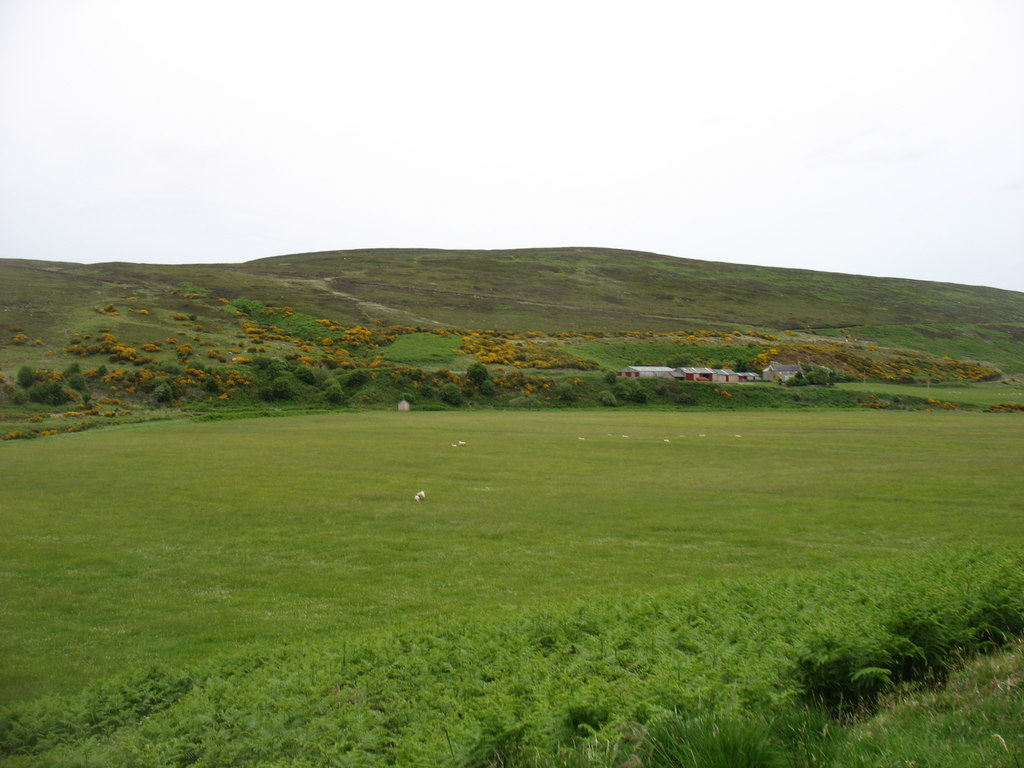
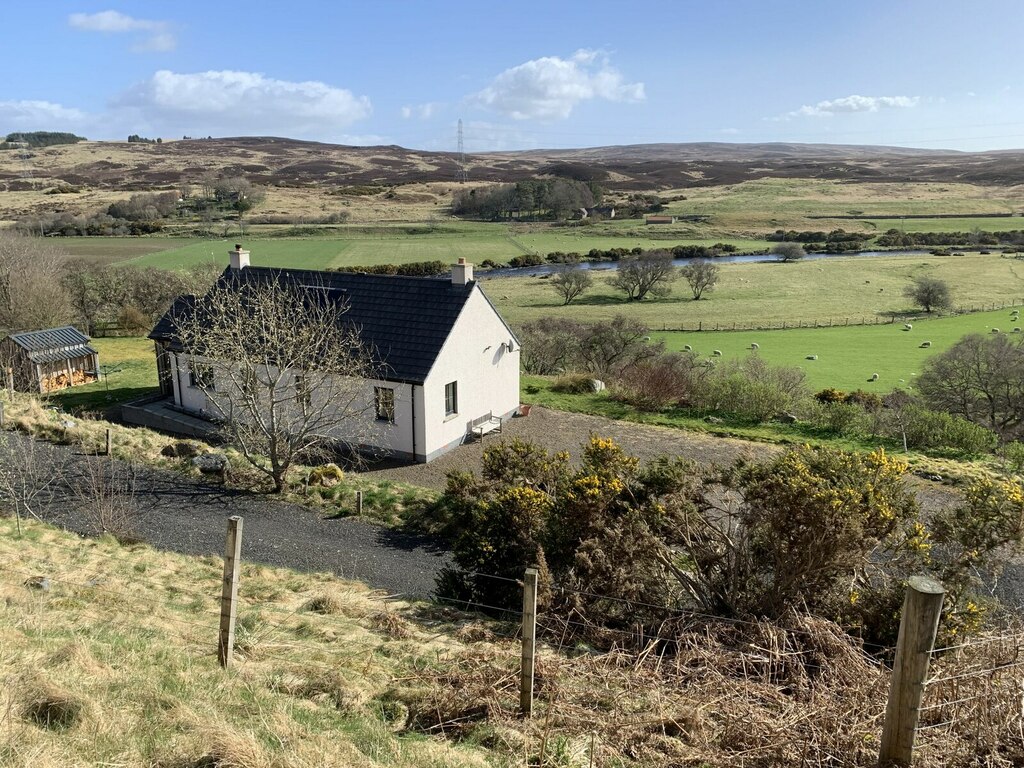
The scene above is from a view point on Campbell’s Hill, southeast of the village of Scotsburn.  It is a spring day in which the leaves are just beginning pop out. In the near distance is the tower on Bethel Presbyterian Church. A bit further in the view is a ridge adorned with farms in the community of Heathbell.  In the distance is the blue waters of the Northumberland Strait and, on the horizon, the eastern end of Prince Edward Island.  It is a peaceful spot that gladdens the soul.

It was not always that way.  In 1819, a few dozen feet from this viewpoint, the most horrendous murder in Pictou County, (at least up until 1877), was committed.

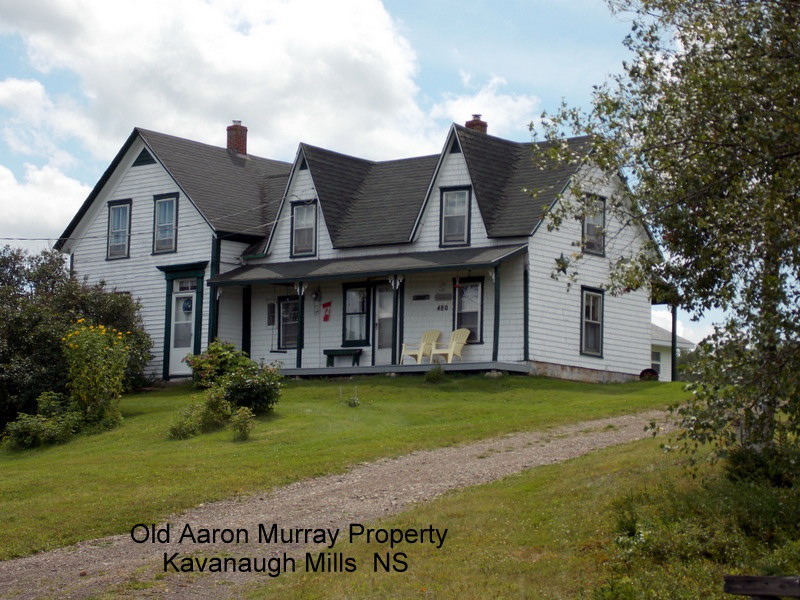
This farm was first settled by a Campbell family, probably around 18031.  They were from Rogart in Sutherland.  The next farm up the hill was also settled by a Campbell family2, most likely a sibling or near relation.  The names of the parents are presently unknown.  Their graves, whether in Scotsburn or Durham, are unmarked.  The mother died before 1819 after which the father took a second wife, also a Campbell, who was part of a Campbell clan on Scotch Hill.  Of the first marriage, we only know of one son – Donald – the principal character in this story. 

George Patterson in his 1877 publication The History of the County of Pictou, describes the events which I will paraphrase here.

Donald Campbell, then settled in the Earltown district, was returning from errands in Pictou and took the opportunity to stop at Campbell’s Hill to visit his father and stepmother. It is unknown whether something was said during the visit to upset Donald or if he was already angry when he stopped for a visit. It is believed that Donald resented the second wife of his father as he felt she was going to delay or diminish his eventual inheritance. The visit ended with Donald resuming his trip back to Earltown.  He stopped at various farms between Campbell’s Hill and West Branch, giving the impression that he was trying to get home to Earltown before it became late.

However, Donald retraced his steps back to Campbell’s Hill after dark.  He fastened the door of his father’s log cabin with withes attached to the latch handle to prevent the occupants’ escape and then set fire to the cabin while his father and stepmother were asleep.  Awakened by the fire, the father managed to force the door open and started to remove the contents.  Donald, lurking in the dark, struck the father with a stick and pushed him into the flaming house where the bones were found the next day.  While this was unfolding, the stepmother managed to get out.  She was a sturdy woman and would have won a fair fight, but was struck down by Donald’s weapon.  He only partially succeeded in putting her into the flames, as she was “quite a load” to borrow an old phrase.

Hearing shouts and seeing the fire on the crest of the hill, a MacIntosh neighbour arrived to see a man fleeing whom he then believed to be a ghost.  A small dog was also found at the scene which belonged to Donald and later aroused suspicion.

The remains were buried without an investigation.   At the funeral, Mrs. Campbell’s brother, Angus Campbell, expressed his belief that there had been foul play.  The authorities opened a case, exhumed the body of Mrs. Campbell, and determined she had been dealt a deadly blow.  The scene of the crime was examined where a missing button from Donald’s coat was found as well as a flint that matched a gun Donald owned.  It was suggested that Donald lost the flint, causing him to resort to using a bludgeon.   Upon arrest in Earltown, it was noted that Donald had scorch marks on himself.

The subsequent trial received considerable attention.   S.G.W. Archibald of Truro presented the case, which was adjudicated by a jury with Judges Haliburton and Wiswall presiding. Archibald presented a strong case after which the jury was quick to find Donald guilty.  He was immediately sentenced  “to be taken from where you now are to Prison whence you came and from thence to the place of execution and there hung up by the neck until your body is dead”.  A clerk later noted: “Exactly a week later on the 22nd September Campbell was executed at Rogers Hill within a few yards of the spot where the crime was committed, pursuant to a warrant from the Earl of Dalhousie, our Lieut. Governor”.

Executions were a spectator sport in those times, appealing to the darker side of the human spirit.  On the appointed day, Donald was loaded on a cart and transported to the Kirk then located beside St. John’s Cemetery.  This was the end of a proper road.  Access to points beyond was by way of paths.   Guarded by the militia and accompanied by a group of clergymen, the procession climbed the 3 km path to the remains of the incinerated cabin.  Once at the scene of his crime, Donald confessed to his crime but showed no interest in repentance despite the efforts of Rev. Dr. James MacGregor and other clergy. 

Acadian Recorder – October 9, 1819 – The paper didn’t report the proceedings but instead published a separate account. At least one copy survived into the 1960’s in Earltown.

The execution was supervised by the High Sheriff of Halifax County.  The ineptitude of the chosen executioner added to the drama.  Hanging, despite the image it conjures, was somewhat merciful.  The process involved releasing a trap door or a push off the gallows platform.  The sudden drop of the body would cause the noose to break the neck, thus bringing instant death.  In this case, the bolt on the trap door didn’t release fully thus causing the rope to slowly tighten instead of snapping the neck. The result was death by a slow strangulation 3. So disturbing was the spectacle that many in attendance vowed never to view another hanging.

Patterson was silent on the particulars of Donald’s own family and life back in Earltown.

Two and one half kilometers east of Earltown Village on the Berichon Road, an old road branches to the north.  This was once a listed shortcut between the Berichon and Clydesdale.  (It is now gated by the owner of the surrounding woodland).  About 250 meters in, a logging road branches northwest into a grown-over clearing.  A few meters off this road is the cellar of Senoid Sutherland.   Senoid is Gaelic for Janet and is pronounced Shawna, which morphs into Shawney, the equivalent of Jennie.  This farm was once known as the Shawney place4

The land grant map found online shows this to be the 150 acre grant to a Janet Campbell.  Another version of the land grant maps show it to be the grant of Donald Campbell.  Some deeds of surrounding properties reference the line of Janet Sutherland while others state Janet Campbell.   

This confusion of names confirms the oral tradition around Earltown that this property was that of Donald Campbell, convicted killer.  It also confirms another interesting story that Donald’s widow, in shame and horror, changed her surname and those of her children to Sutherland to distance themselves from the crime at Campbell’s Hill. 

Sutherland was Janet’s maiden name.  There is a tradition that she was connected to John Sutherland “Doula” who settled an adjoining farm but the connection has yet to be confirmed.  She was born in Sutherland and came to Nova Scotia prior to 1815.  She had at least one brother in the Scotsburn area who gave evidence at Donald Campbell’s trial.

Janet and Donald’s eldest son, John, was born at Rogers Hill in 1816 which would place their marriage around 1814-15.  Janet’s eventual land grant was among those petitioned by a group of second generation immigrants living at Rogers Hill.  These petitions were in 1817, suggesting that Donald and Janet may have begun clearing their farm that summer. The deeds would not be granted until later in the 1820’s hence Donald’s name is absent. A second son, George, was born in 1818  at Earltown.

It is hard to imagine the situation that Janet found herself in on that 22nd day of September, 1819.   Widowed, two children ages 3 and 1, a crude log cabin, a partially cleared farm, no immediate family in close proximity, and an epic scandal to overcome.  Donald Campbell was characterized as an ignorant and unsavory character with obvious violent tendencies.  The scandal may have been a blessing.  Domestic abuse is as old as matrimony. 

A return to the Rogers Hill area was not likely an option given the circumstances.  Earltown was still in infancy and new settlers were arriving with no ties to the victims or accused.  It would appear that Janet stayed on course and made the small farm work.  Undoubtedly, there would be some assistance from siblings in Roger’s Hill, possibly a kind father was still living.  The Highland culture ensured that widows had help.  Hard labour, such as the annual threshing and wood cutting, was often a collective labour in the neighbourhood.  It must be remembered that back in Scotland, the women were the gardeners and looked after the dairy livestock. 

The 1838 census confirms that “Widow Sutherland” with two males over 14 were still living on the Berichon Cross Road.  The next census in 1861 finds her son John as the head of household, which indicates that Janet had passed away in the intervening years.   No tombstone marking the grave of either Janet Sutherland or Janet Campbell exists but she most certainly rests in the village cemetery.

The eldest son John took over the homestead.  In 1857 he married Catherine, daughter of “Laughing” Sandy Sutherland and Christy Baillie of The Falls.  They had one daughter Betsy.  John’s brother George is absent from the  farm in 1871 but returned in 1881.  When John died in 1885, he left the farm to George with the stipulation that Catherine be provided a living for as long as she would live.  By 1911, both George and Catherine are absent from the census.   As for John and Catherine’s daughter Betsy, we have no further information.

The property was later purchased by George MacIntosh.  It is a short distance through the woods to the main MacIntosh farm on the Denmark Road.  The Shawney place continued to used for pasture and crops by the MacIntoshes and later the Van Veld family.

Sources:

Patterson, George “Old Court Records of Pictou County, Nova Scotia published by The Canadian Bar Review, Vol13 No 3 1935

Patterson, Rev. George  A History of the County of Pictou, Nova Scotia  Dawson Bros, Montreal 1877

Gladys Sutherland MacDonald – Interview – 1978

A. Howard Murray and Mary Douglas Murray – Interview – 1978

Layton Lynch – assistance in locating the Campbell – Sutherland homestead in the Berichon.

  1. The Dunwoodie family were the next to occupy this farm for a couple of generations. After the farm was vacated, James and Harold Forbes of Lyon’s Brook farmed it for many years. ↩︎
  2. The farm owned by Hugh and Stanley Campbell in the mid 20th century. ↩︎
  3. The executioner was brought by the Sheriff from Halifax. Pictou had its own executioner at the time who served the courts in Prince Edward Island as nobody on the Island would accept the responsibility. ↩︎
  4. The current owner has it gated to keep out traffic. His number is posted on a sign for people to call for permission to enter. ↩︎

The Lubeag Sutherlands

Late in the summer of 1819, Robert Sutherland “Lubeag”, his second wife Eliza MacKay as well as the sons to his first wife, found themselves on a Pictou wharf beginning a new chapter in their lives.  They were collateral damage in an agricultural and social experiment beyond their control.  Their arrival in Pictou was within their control. While they had the option of remaining in their native shire, Northern Nova Scotia offered more opportunity – or so they hoped.   

Lubeag comes from the Gaelic lub, which means a loop or curve, and beag, which means little. In this case, it perfectly describes the geographic setting where this family lived prior to the clearances.  It is the name of a pre-clearance farming hamlet on the Skinsdale River in the back country of Clyne Parish in Sutherland.   It is over a dozen miles from the parish center near Brora and was home to six or seven families.  One of those families was that of Robert Sutherland (1779-1861).

Lubeag from the air. (Crown Copyright- Canmore)

The aerial photo shows the pronounced curve in the river, giving the area its name.  Lubeag is located on the far side of the river.  Arable land for crops is found along the river, while the homes and animal enclosures are located on a terrace above the fields.  Beyond is an expanse of rough grazing land on Cnoc na Lubeag and beyond.  In the foreground is another pre-clearance settlement known as Muiemore. 

Lubeag to the right with Cnoc na Lubeag in the background (George Brown Photo)

Wild and remote today, that was not always the case in those times.  It was located along a droving route through the centre of Sutherland.  The route commenced near Kinbrace in Kildonan where cattle were aggregated from various routes coming out of Caithness and the northern valleys of Sutherland.  The cattle were driven down this trail collecting more cattle from communities along the way.  It passed through Lubeag and continued on to Sciberscross, then crossed into Rogart and ultimately crossed into Easter Ross at Invershin. The cattle would end up at livestock markets in the south of Scotland.  Cattle were the primary cash income for farmers before the influx of sheep.

Strath Skinsdale was originally not part of the Sutherland Estate.  It was owned at the beginning of the 19th century by William Munro of Uppat.  His leases with his tenants were due for renewal in 1819.  In 1812, Munro sold Strath Skinsdale to the Sutherland Estate with the existing leases being assumed.  After 1812, Widow Sutherland appears as the sole tenant of Lubeag1. That doesn’t mean that her family was the sole occupant.  Tenants would usually sublet portions of their lease to a secondary class of farmers and labourers.   

Grazing land near Lubeag (Andrew Tryon Photo)

Small and targeted evictions had been occurring in Clyne for several years as leases expired or opportunities arose.  Most of Clyne was slated for removal in 1819 however most of the downstream communities were spared that year for a variety of reasons.  Skinsdale was not.  It was cleared in May along with parts of Kildonan and Strath Naver.  There is no indication that violence was employed in the Skinsdale communities however the constables did set fire to the dwellings to prevent re-occupation by the evicted2.

This was not unexpected.  Those with means likely had an exit strategy in place as would appear to be the case with Robert.  He was among a boatload that left Sutherland that May for Pictou and beyond.  This passage was known about the previous year when Donald Ross of Earltown reported to the Court of Sessions in Truro that twenty-five families from the highlands were expected in Earltown the following year.  Most of these families were from Rogart and most of those had ties to the upper settlements of Strath Brora within the Rogart boundaries. 

From the obituary of Angus Graham, Plainfield, we learn that he was a passenger on the ship Diana in 1819 that brought many of the first settlers to Earltown3.  Robert and his family were most likely on this passage as well as future next door neighbour, Alex Sutherland “Ballem”. 

We know that Alex Sutherland “Ballem” left his wife with relatives or former Rogart neighbours in Scotsburn while he went ahead to construct a crude cabin and start a clearing.  There is no narrative as to how Robert handled this first step but he likely left Eliza with connections in the Caribou-Toney River area4.  That area has been receiving Sutherland immigrants since 1813.  One of those families, also a Robert Sutherland family, was said to have been closely related.

Roads in Earltown in 1819 were still rough trails through the forest marked with blazes on trees.  Their guide would have been Donald Ross, an early settler at Rossville, who seemed to working in tandem with Donald Logan of Lyon’s Brook.  Logan, a native of Creich, was an active recruiter in Ross and Sutherland.   Robert’s ticket of location was a 200 acre parcel of land which began at the junction of Highway 311 and Kemptown Road and then extended along the left side of the road leading up Gunn’s Hill.  The parcel extended southerly almost to Earltown Lake.   His fellow passenger, Alex Sutherland, settled on the right of the road leading up Gunn’s Hill.   The cabin and eventual house were located over a ridge from the current 311 highway.

The site of the Lubeag Sutherland farm on Gunn’s Hill. (David Heatley site confirmation and photo)

As already indicated, Robert was married twice.  His first wife, Elspeth, died in Clyne.   She was the mother of two sons,  Donald (Big Donald, and  Alexander (Alex Lubeag).  Before leaving Scotland, Robert married a second time.  His new wife was Eliza MacKay, daughter of Donald.   She was the mother of Betsy, James, John, Annie, William, Isabel and Donald M.5.  

“Big Donald”  (1811-1881) married Catherine Sutherland “Ballem”, the girl next door.  She was born near Scotsburn in 1819 shortly after her parents arrived in Pictou.  Donald and Catherine lived on the north branch of the Alex MacDonald Road.  They had no family.

Alex “Lubeag” (1813-1866) married Marion Baillie, daughter of Marion Baillie (later married to Donald MacKay “MacComish”).  Alex and Marion lived at Central Earltown on what is now the Alex and Linda McNutt farm.  They had six children:

  1. Robert on the home place and was married to Annie Sutherland “Mighty”;
  2. Christy, unmarried;  
  3. Nancy, unmarried;
  4. Donald “Little Donald”  was a carpenter and coffin maker in Earltown Village. He was married to 1. Christena Matheson and 2. Isabel Lynch;
  5. Isabel married 1. William Matheson, Matheson Corner and 2. Alex Graham of Graham Settlement;
  6. William who died young.

Betsy (1820-1892), never married and lived on the home place.

James (1823-1878), remained on the original farm.  He married Christy MacKay “MacComish” of West Earltown, daughter of Donald MacKay and Marion Baillie6.  This branch of the family was more commonly known by the descriptor “Lake” due to their proximity to Earltown Lake.  Their issue:

  1. Elspy 1848-1932  unmarried
  2. Donald 1850-1858
  3. Marion 1851-1931  married Alex MacKay “Tailor” who lived further up Gunn’s Hill on the left.  After his parents died, they moved to Boston.
  4. Ann  1853-1907  married William Ferguson, Rossville
  5. Margaret 1855-1931 unmarried
  6. Elizabeth  1856-1932 unmarried
  7. Dolina  1858-1938  married Dan Munro of Upper Kemptown and lived on the College Grant Road.
  8. Robert  1862-1945  went to Boston as a young man and married Martha Sanborn.  They lived in Plymouth, NH.
  9. Alexander 1863-1947  went to Boston as a young man and married Clista Sherburne of New Hampshire.  He died in Boston.
  10. John William 1865-1944   aka  Johnny Lake.  He remained on the home farm unmarried with his sisters. 
  11. Jennie Bell 1869-1898  married Dan MacKay “Ross” of Rossville. 

Johnny Lake worked at carpentry for a brief period in Halifax and was employed by Strachan Matheson of Upper Kemptown.  Johnny observed the importance of family devotions until death.  Ruth Sutherland Chisholm of Bible Hill recalls his evening visits to her family’s home on Sutherland Road and he would conclude visits by asking that the “books be brought down” and prayers be said kneeling by the kitchen table.

After Johnny’s death, Finley and Jessie MacDonald lived in the house briefly, as did their son, Willard Kitchener MacDonald, who would later become well known as the Hermit of Gully Lake.

Annie  1827- 1870’s married Alexander MacKay “MacComish”.  They lived on Cnoc Na Goidthe, West Earltown where they raised twelve children.  Many of them left home young for unknown destinations.

William 1828-1862  unmarried

Isabel 1831-1864   married William MacKay “MacComish”, brother of Alexander and Christy noted above and a half brother of Marion Baillie, wife of Alex Lubeag.   They had six children.  Isabel died relatively young after which Will married Ellen MacKay “Hector” of West Earltown7.  They removed to New Truro Road.

Donald MacKay 1833-1921 was better known as Donald M and gave rise to another descriptor – the M’s.  Although Robert already had a Donald to the first wife, this Donald was named for Eliza’s father. It was rare not to have a child named for a particular grandparent.   Donald M. first married Mary MacKay “Judge” from Rossville.  They appear in the 1871 census as living near her parents on Stewart Road.   Donald was a lumberman so this may have been a temporary home while working in the woods nearby.   Mary died in in 1873.  They had the following issue:

  1. Robert William  1865-1874  
  2. Janie                       1866-1927 
  3. Alex MacKay        1869- before 1893
  4. Lila                          1872-1973   married John Baillie, East Earltown
  5. Thomas                   1872-1907   in Plymouth, NH.

Donald M’s second wife was Catherine Graham of Graham Settlement.  They were married in River John in 1877.  By this time, the family had moved to a farm at Nuttby which is still in the family.  He continued in the lumber business.   Donald and Catherine’s family:

  1. Daniel G.          1881-1941   married Georgie Matheson and operated a mill at Balmoral.
  2. James A.           1880-1976  married Sadie MacLean and lived in Roxbury, Ma.
  3. Robert              1878-1947  married Minnie Myers. He lived in Winnipeg for many years but returned to Nova Scotia and died in Bible Hill.
  4. Hugh Finley “Hughie M” 1887-1976  lived on the home place at Nuttby. He was married to Mildred Purdy. He continued his father’s sawmill and lumbering business.
  5. Isabel                1883-1924  married John Blakely, Brookside, Colchester County
  6. John J.  “Johnnie M”  1885-1980  married Christena Matheson and farmed on Sutherland Road, Nuttby.  They retired to Balmoral.
  7. Alexander Murdoch “A.M.” 1893-1943 married Catherine MacKenzie.  He took over the Earltown general store from his mother in law.  He was the local county councillor for twelve years and the Warden of Colchester County for six years.  The family moved to Bible Hill where he operated a store before his death.

John 1837-1928    married Jessie Sutherland “Ballem” from next door.  They lived in Bigney near River John where John was a tailor.  They had no natural family but brought up at least one girl.  John died at her home in Trenton in 1928.

There is a local tradition that Robert Lubeag had at least one brother who emigrated to Ontario and settled in the predominantly Sutherlandshire settlements of Zorra and Nissouri.  A descendant, Donald Sutherland, was a senator. 

Final resting place of Robert Lubeag – Earltown Village Cemetery

Footnotes:

  1. We can only speculate that the Widow Sutherland was Robert’s mother. Based on naming patterns of his children, Robert’s father was likely a Donald Sutherland. ↩︎
  2. These areas were hard to police. The estate learned from previous evictions that former tenants would return to the area and reoccupy the houses. Therefore the estate field officers, much to the dissatisfaction of the administration, sensitive to bad press, burned the dwellings. Some of the roof timbers belonged to the tenants. These were assessed and paid for by the estate but not before deducting eviction costs ! ↩︎
  3. Angus Graham received a grant at Earltown Village. He quickly lost interest in favour of Plainfield and sold the property to John MacKay “Miller” and Neil MacKay “Tailor” who made permanent homes thereon. ↩︎
  4. Maria Sutherland, wife of John Ferguson, Matheson Brook, had a blood connection to Lubeags. Her father, also Robert Sutherland, settled in the Caribou district. ↩︎
  5. The genealogy which follows is bare bones to give a sense of how the family spread out in the community and beyond. More precise details are available from the author of this post. ↩︎
  6. This family lived at Dalvait, Strath Brora. They were cleared out in 1821 and came directly to West Earltown. ↩︎
  7. Ellen’s father Hector and her grandmother Eleanor emigrated to West Earltown from Muiemore, across the river from Lubeag. ↩︎

Sources:

Adamson, Donald Beck Commercialisation, Change and Continuity: an archaeological study of rural commercial practice in the Scottish Highlands 2014

Hunter, James Set Adrift Upon the World , The Sutherland Clearances Birlinn Limited, 2015

MacDonald, Gladys The Lake Sutherlands unpublished manuscript

WIlson, Margaret The Lake Sutherlands unpublished genealogy

Sutherland Estate Records – Rent Rolls

Nova Scotia Crown Land Grant Map 79

1871 Canada Census, Earltown, Colchester County

Special thanks to David Heatley of Nuttby for the generous sharing of geophysical data in locating old homesteads.

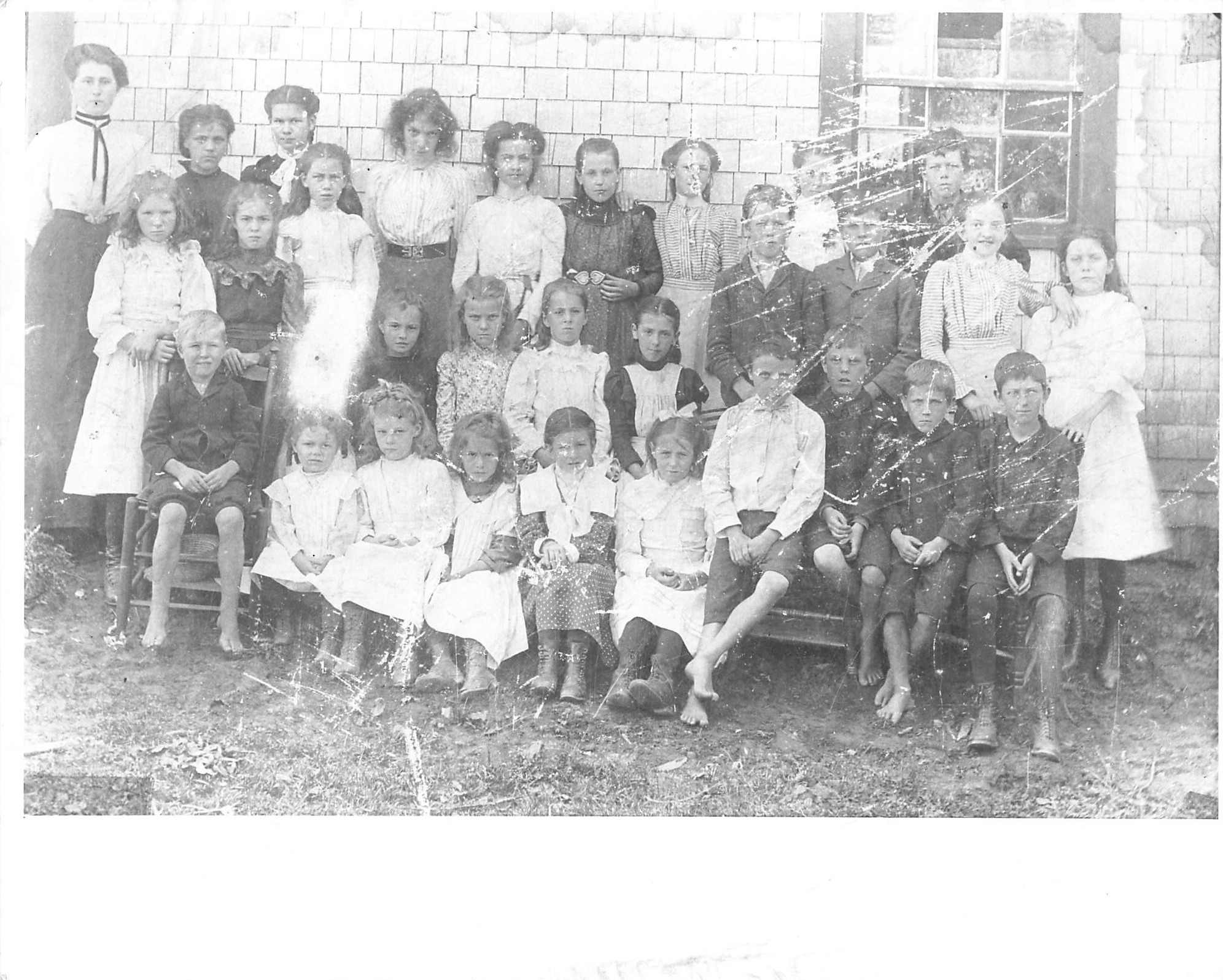
East Earltown School 1901

Recently we were able to share a picture of the 1889 class of the East Earltown School. Since then, Ian MacCara has shared the following picture of the 1900-1901 class of the same school. There are a few older students who appeared in the 1889 photo but the majority are new faces.

Unlike 1889, this group includes a couple of families from across the line in Pictou County. The Munro and MacLeod families lived on the College Grant Road. College Grant had its own school for many years, located near the junction with the main road between West Branch and River John. It would be a similar hike either way for the MacLeods but East Earltown was 1.5 km closer for the Munro family.

What the future had in store for these students was typical of most rural schools in that era. Some of the girls married local boys and settled into rural life. Some of the boys, not many perhaps at this stage, took over the family farm. Several went west across the continent for better opportunities. Some died before finishing school and in this class, one died on the battlefield.

The names were documented at the time. The comments are mine and subject to correction

Doorway L-R

Jessie MacKay – Teacher
Jane Matheson -Daughter of John and Annie (Murray) Matheson, Back Mountain

Back Row L-R

Josie MacLeod – Daughter of Dan and Jessie (MacKay) MacLeod, College Grant.
She married George MacIntosh, Earltown.
Sarah Gratto – Adopted daughter of Peter and Christy (MacKay) Gratto, MacBain’s
Corner. She married Ed Carruthers in Boston in 1902 and settled in Claresholme,
Alberta where she died in 1907.
Bertie Langille – Albertena Langille, daughter of Solomon and Emily (Langille) Langille,
Mountain Road. She married William Haldane, Red Deer, Alberta
Bessie Sutherland – Possibly from Mountain Road
Christy Baillie – Daughter of John and Johanna (Sutherland) Baillie, Balmoral Road
She married Allister Hamilton and lived on Brule Point.
Alex Matheson – Son of John and Annie (Murray) Matheson, Back Mountain.
He married Ellie McNutt and took over the family farm and later moved to
MacBain’s Corner.
Jamie Murdoch – Foster son of James and Ann (MacKenzie) Langille, Balmoral Road.
Believed to have gone west after finishing school.
Lawson Langille – Son of Solomon and Emily Langille, Mountain Road. Lawson died at
Vimy in World War I.

Middle Row LR

Margaret MacLeod – Daughter of Dan and Jessie (MacKay) MacLeod, College Grant.
She married Bert Rae of West Branch. She died in 1916.
Millie Priest – Daughter of Barbara “Pensioner” MacKay and George Priest, Vasselboro,
Maine. She lived for a few years with her grandparents, Dan and Jane MacKay “Pensioner” before returning to Maine.
Bessie Matheson – Daughter of John and Annie (Murray) Matheson, Back Mountain.
She married George Ferguson of Balmoral. They first lived in Montana, returned to Balmoral and later moved to Brule Point.
Gus Gunn – Angus Gunn was a son of Dan and Jessie (MacKay) Gunn, Squire MacKay
Road. The family moved to New Glasgow when the father took ill. Gus married Margaret Hadley and lived in Moncton.
Willie Munro – Son of Dan and Dolina (Sutherland) Munro, College Grant Road. He married Libbie MacKay and lived at East Branch River John.
Jim Munro – Son of Dan and Dolina (Sutherland) Munro, College Grant Road.
He married Jessie MacKinnon and lived in Massachusetts
Jack Gunn – Son of Dan and Jessie (MacKay) Gunn. He married Irene Douglas, New
Glasgow.
Peter Matheson – Son of John and Annie (Murray) Matheson. he married Hilda
Poignant and lived in Bellingham, Wa.
George Murray – Son of John Murray “Hodge” and Mae Sutherland “Dearg”, MacBain’s
Corner. He married Berte Handschu and lived in Ashcroft, BC

Front Row L-R

Stanley Langille – Son of Solomon and Emily Langille, Mountain Road. He married
Jennie Murray of West Branch. He was a merchant.
Johnnie Munro – Son of Dan and Dolina (Sutherland) Munro, College Grant Road. He
married Bessie Baillie and lived at College Grant Road.
George Robert Munro -Son of Dan and Dolina (Sutherland) Munro. Died young
Georgie Matheson – Daughter of John and Annie (Murray) Matheson, Back Mountain.
She married 1) Dan G. Sutherland, Balmoral 2) John D. “Jack” MacKay
Christena Matheson – Daughter of John and Annie (Murray) Matheson, married
John J. Sutherland. They farmed at Nuttby and retired to Balmoral. Christen lived to 103.
Rena Ferguson – Raised by Jim and Ann Langille, Balmoral Road
Little Willie MacKay – This guy is a mystery at the moment but seems to be connected to the Achany MacKays. (Notice that the plaid leggings match the dress panels of the two MacKay girls).
Lena MacKay – Daughter of Robert and Margaret (Murray) MacKay “Achany”. She
married Gardiner Forbes, Denmark Merchant.
Marion MacKay – Daughter of Robert and Margaret (Murray) MacKay. Died in 1903 age 12.
Lena Munro – Likely Tena Munro, daughter of Dan and Dolina (Sutherland) Munro
and wife of Dan Bain, West Branch.
Jennie Murray – Daughter of John Murray “Hodge” and Mae Sutherland “Dearg”,
MacBain’s Corner. She was better known as Jennie Hodge. She married Dan MacDonald of PEI and lived at Saltsprings.

Jessie MacKay, the teacher, was a student in the 1889 photo when she was living with her aunt, Marion A. MacKay who was the teacher that year. Jessie was the daughter of Joe MacKay “Strathy” and Margaret MacKay, Spiddle Hill South, West Earltown. Jessie’s mother was from East Earltown. In 1905, she became the wife of Thomas Murray, “Bonesetter”, formerly of Earltown and then the minister at Mount Stewart, Prince Edward Island. Not finding the ministry to his liking, he went to work in the Westville mines until he secured the position of Town Clerk of Westville. Jessie died in 1919.

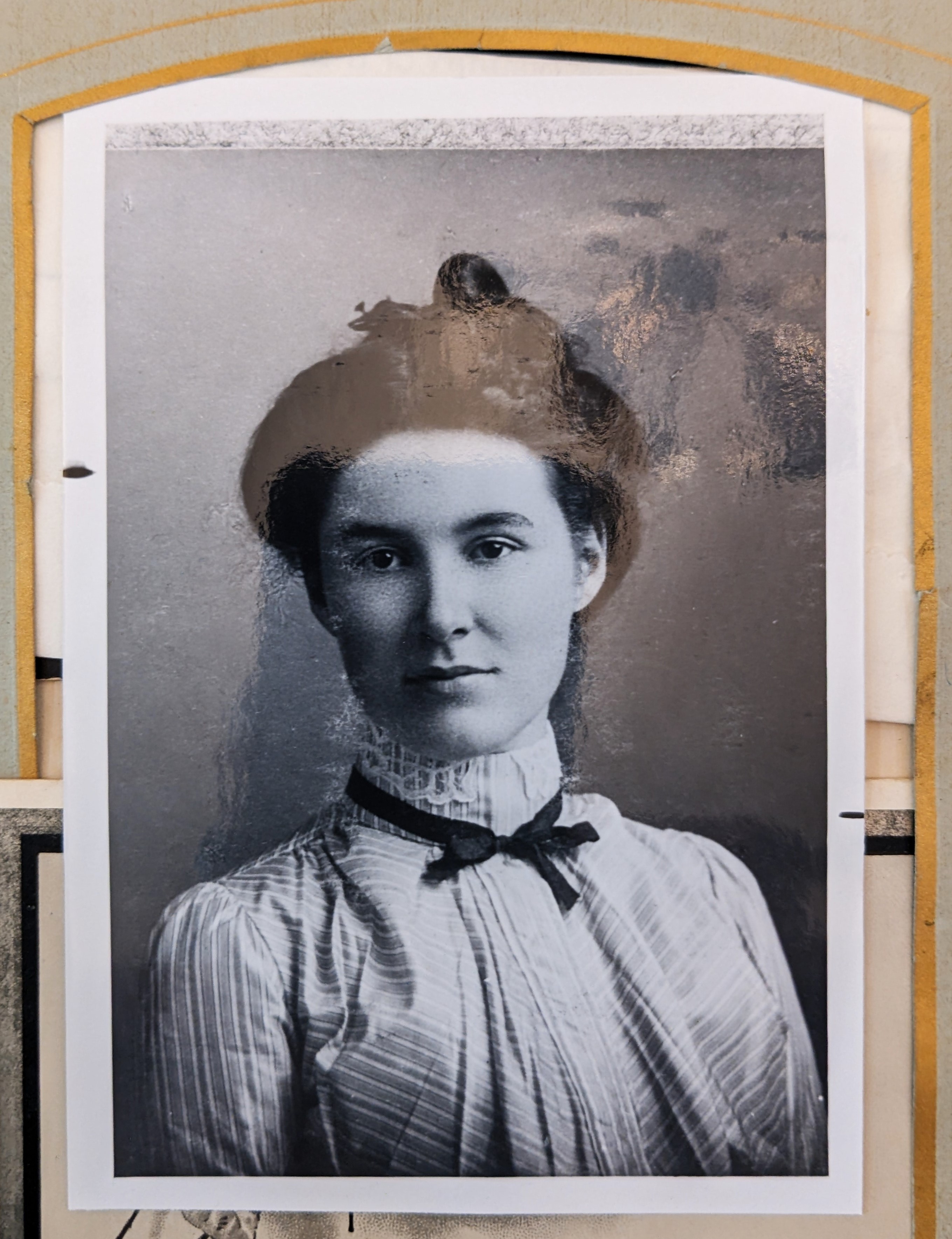
Janie Matheson, standing next to the teacher, would have been 18 at the time. With only
eleven grades offered in those days, she was likely assisting the teacher on this occasion. She showed great promise as a teacher her career and life was cut short on December 29, 1903 when she died of TB1.

Janie Matheson (Ruth Sutherland Chisholm Collection)


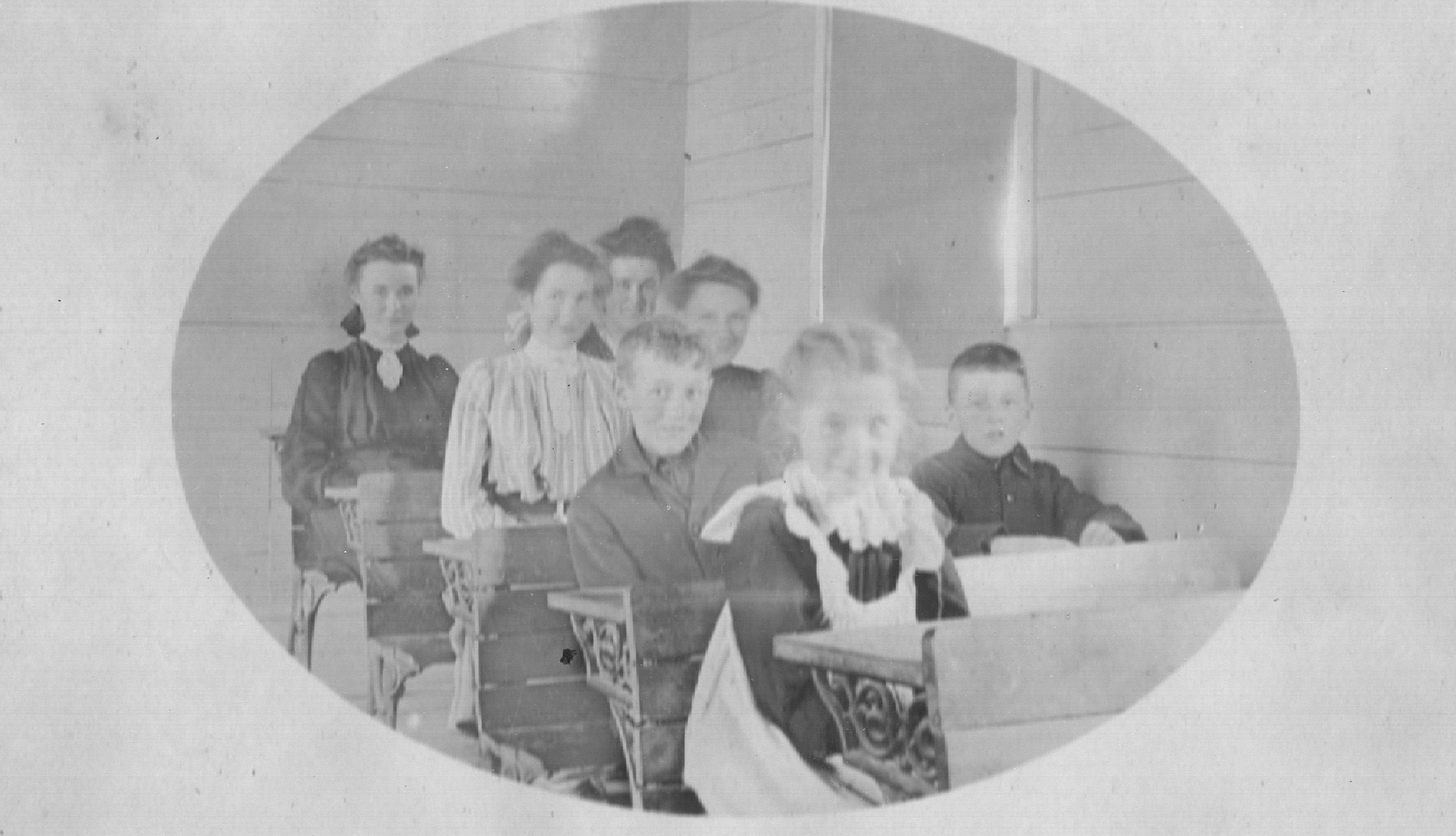
Many may have seen this last photo which is in the North Shore Archives. This digital copy was provided by Alex and Mary Ann MacKay. It was taken inside the school in 1909 and shows what a difference eight years can make.

East Earltown School – 1909 (Alex and Mary Ann MacKay Collection)

Back to Front, Left to Right

Georgie Matheson, __________ , Tena Munro, Jennie Murray, John Munro, John A. MacKay, Margaret Matheson.
Georgie Matheson, Tena Munro, Jennie Murray and John Munro are described after the first picture.

John A. MacKay “Bratten” lived on the farm behind the school most of his life. He was a son of Alexander F. MacKay of Diamond and Marion MacKay, East Earltown. The father died when John A. was an infant compelling his mother to return to her home at MacBain’s Corner. He married Jessie Murray.

Margaret Matheson was the daughter of John Matheson and Annie Murray, Back Mountain. She died in 1922 age 22 of TB.

Sources:

Census of Earltown, Nova Scotia 1901

Census of River John, Nova Scotia 1901

MacCara Reid, Mary, John Alexander Matheson – A Collection of Family History and Memories, 2019

Ian MacCara


  1. TB was fairly common in those days and followed certain families. Georgina and her sister both died of TB. Two other sisters successfully survived it. Their mother Annie died of it in 1904. She was a Bonesetter Murray from The Falls. Many in her family were afflicted with TB which was traced to the house at The Falls. That house burned down around 1900 thus sparing future generations. ↩︎

The Reay Immigrants

For the most part, Earltown was overwhelmingly settled by families from the Parishes of Rogart and Clyne in Eastern Sutherlandshire with some from townships lying across their borders in Lairg and Dornoch.  There were some exceptions.   A notable one would be the Parish of Reay families who settled at West Earltown between 1832 and 1845.

Reay is a parish on the northern coast of Scotland.   It straddles the boundary between the old shires of Sutherland and Caithness.  The parish church is in the village of Reay within Caithness and therefore most families identified themselves in documents, obituaries and on monuments as “Native of Caithness-shire” regardless of which side of the county border they came from.   All of those arriving in Earltown were residents of Strath Halladale within the bounds of Sutherlandshire.

Strath Halladale is a strath, or broad river valley,  commencing on the heights near the border with Kildonan and runs northward for 22 miles to Melvich Bay on the north coast.  The surrounding hills  are of a height similar to the Cobequid Hills around Earltown and are interspersed by huge areas of blanket bog.1 Arable land is found along the course of the Halladale River which is backed by grazing lands on the surrounding hills.

Halladale River near Trantlemore (D. Bremner photo)

Unlike Kildonan and Strathbrora to the south, Strath Halladale, as a whole, was not subject to the widescale clearances of the early 19th century.   Parts of  Upper Strath Halladale were cleared in the early 19th century with further minor clearances in the 1830’s. Over time it was subject to the normal regression of small holdings or crofts with families migrating to urban settings or overseas. 

This was an area of Scotland with a strong Norse presence prior to the 13th century.  During the 12th century, a tribe known as MacEth or MacIye migrated north from Moray and spread across the north coast with Reay being the eastern reaches of the clan’s influence.  Without going into the politics, feuding and strategic marriages of medieval times, suffice it to say that the MacKays eventually gained legitimate but fragile superiority.  The chieftain was known as Lord Reay and the northwest of Sutherlandshire became unofficially known as Lord Reay’s Country. 

Strath Halladale was under the leadership of a cadet family of MacKays who styled themselves as the MacKays of Bighouse.  Bighouse is the name of a community at the mouth of the Halladale, the name of an estate and predictably the name of the mansion that once housed the gentry.  Despite the obvious, its origin is the Norse bygdh-hus meaning village house.

Bighouse Mansion (Bill Henderson photo)

The MacKays of Bighouse retained their lands and estate, (albeit with some genealogical diversions), until 1830.  At that time the estate was sold to the Marquis of Stafford, (later the Duke of Sutherland), who was married to the Countess of Sutherland.

A fascinating aspect of migration into Earltown, or any Scottish settlement in Nova Scotia, is how incoming families would seek out and find ways to settle near former neighbours or relatives.  In some cases, a generation would have passed. 

The root of the Reay migration goes back to approximately 1816 when a newly wed couple,  Alexander MacKay 2 and Elspie Murray, arrived in Scotsburn from the Parish of Reay.  While Alex, a tailor, had ancient ties to Reay, Elspie, was a native of  Sciberscross in the Parish of Rogart.   Her father and uncle,  William and Alex Murray respectively,  moved their families to Autanduin in Kildonan prior to 1810.  In 1814, they were cleared from Altanduin and fled north to Strath Halladale.  They found temporary shelter on Sletill Hill but were eventually warned off.  They found a permanent home in the community of Craigton. 

Craigton area (David Purchase Photo)

Shortly thereafter, in 1819, one of Elspie’s cousins, daughter of Alex, arrived at Scotsburn with her husband’s family and “great with child”.  Nancy Murray and her Rogart husband Alexander “Ballem” Sutherland settled at the foot of Gunn’s Hill.   In 1822, her sister Eliza and her Rogart husband,  Peter Murray “Bonesetter”, arrived in Earltown and settled next to Nancy on what is now the Alex Macdonald Road.

 We often discount transatlantic correspondence.  While the evidence is scant,  messages and letters did cross the Atlantic both ways.  Before the days of formal postal service,  the immigration agents, such as Donald Logan and Hugh Denoon, were back and forth to the Highlands and were likely happy to report that earlier migrants were succeeding in their new homes.  In 1831/1832, a significant number from Sutherlandshire arrived in Pictou and many proceeded to Earltown to join relations and former neighbours.  Among them was Jane Murray,  sister of  Nancy and Eliza Murray, and her husband, Robert MacDonald “MacClaharn”.

Robert was the son of Donald MacDonald, alias MacClaharn, and his wife Ann Sutherland. Donald and Ann lived in Achoultivillin in Strath Halladale. (The location seems to be an earlier rendition of the present-day Allt a’ Mhullin, which translates into Nova Scotian English as Millbrook.)

Allt a’Mhullin in the distance (Mackenzie photo)

Robert and Jane cleared a farm at West Earltown to the east of Ferguson Brook and south of the Waugh River.  The land in this area had been granted to individuals from the North River area who never attempted settlement.  The MacDonalds did not get title until later but they most certainly settled there shortly after their arrival.   This was common among the families arriving in the 1830’s leading us to believe that the Onslow farmers accepted unregistered promissory notes and retained title until the debt was extinguished.

They had a family of ten.   Betsy was married to William Morrison3 and they first lived on Cnoc Na Gaoidthe before moving to Ardoch, North Dakota; Donald married Mary Elizabeth MacDonald “Macadie” of The Falls and lived at Balmoral; Alexander, possibly died in infancy in Scotland; Peter married Christena Munro “Captain” and lived at Tatamagouche Mountain;  William died young; Alexander emigrated to Massachusetts where he enlisted in the 18th Regiment in 1861 and was discharged due to wounds received in the Civil War in 1862; Christy was the second wife of Robert Aikenhead, East New Annan;  William who studied for the ministry but had to return to the farm for health reasons;  Robert, unmarried, remained on the home farm and Rev. Angus who married Flora MacLeod of Wallace and served as an Anglican minister in New York state.

The MacDonalds were accompanied by Robert’s sister,  Elizabeth, (aka Betty), and her husband John MacKay “Strathy”.   They lived in the Strath Halladale hamlet of Nahar near Croick. This family had two descriptors.  The name “Strathy” appears in early Earltown records and would seem to indicate that John’s people had their origins in the Strathy area to the west of Strath Halladale.   Later this family was known as the “Gouda” MacKays.

Nahar looking across to Croick area (Alan Reid photo)

John and Betty settled a farm to the East of Robert and Jane MacDonald.  This is on an old road that would once have been an extension of the current Campbell Road and connected up with the Alex MacDonald Road. 

Their family included  Christy,  wife of Hugh MacDonald “Paulie”;  William who married Janet Ferguson and lived on Ferguson Brook Road;  Donald, NFI; Catherine wife of Donald MacKay “Uhr”, West Earltown;  Nancy, unmarried; Hugh married  1. Margaret Mackay and 2. Annie Ferguson and lived at Tatamagouche Mountain; and Angus born in 1830, NFI.

The aforementioned  William “Gouda” who lived on the late Harold Ferguson’s farm,  left Earltown after the death of his wife and settled at Grand Forks, North Dakota.  Most of the sons went west leaving only his son Joseph at West Earltown.  Both of his daughters remained in the area.  Elizabeth married  Sandy Ferguson and took over the home farm.  Mary married Albert Drysdale of Tatamagouche Mountain.

Another family coming from Strath Halladale in the early 1830’s was that of William and Dorothy Gunn. William was from the community of Achintoul located in the upper reaches of the Parish of Kildonan. In 1800 William married Dorothy MacKay of Dalhalvaig, Strath Halladale. The family moved about and eventually put down roots in Achiemore.

Achiemore in the distance (Rupert Fleetingly photo)

William and Dorothy are believed to have lived briefly in Pictou County before arriving in Earltown.  In 1838 they are listed in the Kemptown census as living on or near Boodle Hill4 although he had already purchased what is now Sweet Earth Farm5 on the South Spiddle Hill Road in 1837. This would suggest he was clearing the West Earltown property while living at Boodle Hill.  

Their family:  Donald, the eldest, married and remained in Strath Halladale;  Jane married Hugh Campbell in Strath Halladale6; Catherine, NFI; Hugh married Janet MacKay prior to emigrating to Pictou around 1831.  They lived for a few years at Middle River before moving to Clydesdale in 1841.  William married Catherine MacKenzie and lived in Stellarton;  John married Barbara MacKay at MacLellan’s Mountain and moved to Red Oak, Illinois;  Barbara married Donald MacLeod of The Falls shortly after arriving in Earltown; and Alexander took over the property near Boodle Hill.  Alexander married Eleanor Sutherland of Middle River.  In the 1870’s, he moved his large family to a farm known to many as the Geordie Fraser farm on Brule Point.

William died at West Earltown in 1850 after which the farm was placed with the Sheriff and later sold to a MacKenzie from Stellarton7.

In 1837 Earltown received the Joseph MacKenzie family.   Joseph was born to Alexander MacKe8nzie and Ann MacKay in Coul,  Parish of Reay.  In 1833 he married Esther Bruce of the Parish of Latheron9, Caithness.  The couple settled at Croick where their eldest two children were born.   Joseph’s brother Hector came to Nova  Scotia at the same time and settled near Stellarton where he was a schoolmaster.  Another brother, Angus, remained at Croick on the original holding and his grandchildren were still in the area in the 1950’s. Kenneth MacKenzie, grandson of Joseph, in his personal memoir, Sabots and Slippers, claims that most of the MacKenzies in the northeast sector of MacKay Country descended from Joseph’s great grandfather, Hector MacKenzie of Gairloch. The move to Strath Halladale, and Croick in particular, was around 1730 at the behest of a MacKay chieftain, likely the local laird at Bighouse.

Croick (Alan Reid photo)

After a brief sojourn in Pictou County,  Joseph and Esther acquired a property at Central Earltown which was roughly across from the end of the Matheson Corner Road10.   Joseph was one of the early Catechists in the area as reported in this blog post.    Joseph died of pneumonia on July 1st, 1848, a short time before his youngest daughter was born.

Their family were:   Alexander, died unmarried in 1871; Elizabeth unmarried;  Janet, unmarried; Hector Munro, a schoolmaster and unmarried; Annie, unmarried; William, married to 1) Christy Sutherland, Croucher and 2) Barbara MacKenzie;  Hugh, a lawyer in Truro and Josephine Margaret, unmarried.  Many of this family, including Widow Esther, died of TB.

The son William eventually took over the farm that was the home base for his door to door general merchandise business.  He later acquired what is the current general store in Earltown which he operated in the late 1800’s and early 1900’s.

1845 marked the last of the migrations from Strath Halladale to Earltown and involved two family groups.

We return to Alexander Murray. The twice-removed miller of Altanduin, finally made the move to rejoin his three daughters who were well-established and matriarchs of large families.  One can imagine the novelty of meeting approximately 30 grandchildren for the first time within the span of a couple of days!

The journey was not without drama.  Alex,was up on the ship’s deck for fresh air.  A gust of wind blew his cap into the ocean.  The cap had been handmade by his mother and prized as a remembrance of her.  He pled the captain to turn the ship around to retrieve his beloved ‘corrigan’ but to no avail and he wept as his cap bobbed out of sight.  The family has since been known by the descriptor “Corrigan”. 

Alex was about 84 years old at this point.  His wife, Christy Sutherland, was about 76.  However Alex was still in his middle age as he lived to be 102. 

Along with Alex and Christy came their sons Donald and Robert as well as their unmarried daughters, Ellen, Catherine and Isabel.  They settled atop Spiddle Hill.   Shortly thereafter Robert acquired the MacLeod farm on the South Spiddle Hill Road.

The family has extensive tentacles throughout the genealogies of North Colchester.  In summary, the family were:

  1. Eliza, wife of Peter Murray, Bonesetter.  She lived to be 103 years old.
  2. Christy, died in Scotland
  3. Jane, wife of Robert MacDonald, West Earltown
  4. Nancy, wife of Alex Sutherland  “Ballem”  Gunn’s Hill
  5. Angus married Janet MacKay and remained in Craigton.  Angus was willing to emigrate but not Janet.
  6. Donald married Nancy Murray, Inchure of Clydesdale.  They lived on Alex’s farm on Spiddle Hill.
  7. Ellen, unmarried
  8. Catherine, unmarried
  9. Isabel married John Graham shortly after arrival
  10. William, nfi
  11. Robert married Ellen Murray, Valley.  In the 1880’s they and five of their children moved to Maple Plain, Minnesota. After they were first married, they lived on a farm on the South Spiddle Hill Road, originally granted to Hugh MacLeod. After they left for Minnesota, the property was acquired by Joe MacKay “Gouda”. He retired in the 1920’s to Balfron after which the farm went vacant.

“Uhr”  is Gaelic for late.  It is the descriptor put on this last family of MacKays to arrive from the old country. 

Widow Anne MacKay “Uhr” was the daughter of  Donald MacDonald “MacClarharn” and Ann Sutherland, Achoultivillin, Strath Halladale.  She was married to Robert Coupar MacKay of Bighouse.   He died around 1835.  

Upper Bighouse showing deserted croft houses (Chris Heaton Photo)

The family’s home base before dispersing was the farm behind the Brown School at West Earltown11. This became the permanent home of Donald Coupar MacKay, the second eldest son.

The family:

  1. James 1815-1873 did not stay long in Earltown if he even came to Earltown.  He settled in Halifax where he was a trader and also spent time in Boston.  He was married to Sarah Anderson.   An unmarried daughter, Bell, lived in Dartmouth and a son, Rupert Coupar MacKay, was an engineer on steamers between Halifax and Boston.
  2. Isabel  was the second wife of Robert Baillie, West Earltown and they were married shortly after her arrival.  Her last years were spent with her son Robert in Malagash.
  3. Donald Couper was married to Catherine MacKay  “Gouda”.  They had two daughters: Annabell married to Dan MacDonald and Libbie, unmarried.
  4. Jane – NFI
  5. Hugh, known as Hugh Uhr, married Margaret Baillie, his sister Isabel’s stepdaughter.  They lived near the Earl McNutt farm on Tatamagouche Mountain when first married but later settled atop MacKay Hill on the Corktown Road. They had nine children.
  6. Anne Coupar MacKay married Hiram Downing Jr. of Tatamagouche Mountain. They had seven children.   They emigrated to Oregon around 1872 and acquired a farm near Portland, Oregon. 

Widow Anne was living with her son Hugh at Tatamagouche Mountain when she died in 1863.

This family was closely connected to another MacKay clan who arrived in Earltown in this same period in the 1840’s.  Three siblings,  Angus, William and Jane, settled next to the  Gunn property and off the Kemptown Road.  This group were known as the “Boodles”.  (Boodle was a liquid or monetary incentive given out by candidates in an election).   William and Jane never married, but Angus married Jane MacKay in Strath Halladale.  Angus and Jane had three known children all born in Corkall in Strath Halladale:

  1. Margaret, unmarried
  2. Angus married to Annie Lynch of Nuttby
  3. Jane married to Charles Lynch of Gunn’s Hill
Kirkton Cemetery with Corkall in the distance (Alan Reid photo)

Angus and Annie lived on his parent’s farm along with his single sister and father’s siblings.  Their daughter, Bella, was married to Hughie “Kemptown” Sutherland, Jane married Woodbury Moore and lived in Washington State,  Dannie and Angus remained on the home place unmarried.

This is a very broad exploration of the origins and early family ties and a topic that could use some additional study.

Map of properties mentioned https://www.google.com/maps/d/edit?mid=1KhIphCm-6aEyFf6oKMX7izjLa0RNomw&usp=sharing

Sources:

Baldwin, John (Ed) The Province of Strathnaver, The Scottish Society for Northern Studies, 2000 – In particular the chapter From Clanship to Crofting: Landownership, Economy and the Church in the Province of Strathnaver by Malcolm Bangor-Jones

Baldwin, John (Ed) The Province of Strathnaver, The Scottish Society for Northern Studies, 2000 – In particular the chapter Bighouse and Strath Halladale, Sutherland by Elizabeth Beaton

MacKenzie, Kenneth, Sabots and Slippers, Ross & Main Press Limited, 1954

Sage, Donald Memorabilia Domestica W. Rae, Wick 1899

Old Parish Register, Reay, Caithness (online via Scotland’s People)

Beeler, Donald The Descendants of John and Elizabeth MacKay unpublished

Whiston, Norris The History of Nuttby and Nuttby Summit unpublished

Bighouse Estate Population List from Sutherland Papers, (Courtesy of M. Bangor-Jones)

Alice Manchester – Correspondence on Gunn family 1979

James R. MacKay, late of New Annan – Various interviews on the Uhr MacKays

Mary Douglas Murray, late of Earltown – Various discussions on the MacClarharn MacDonalds

Mary MacDonald MacArthur, late of Woburn, Ma. – Correspondence on the MacClarharn MacDonalds 1980

Colchester County Land Deeds, microfilm, Provincial Archives of Nova Scotia

1838, 1861, 1871, 1881 and 1891 Census of Earltown

Free Church Records, Congregation of Earltown

Malcolm Bangor-Jones, direct correspondence and helpful suggestions on the lay of the land.


  1. This is now part of a World Heritage site and the first peatland world heritage site. ↩︎
  2. Alex, a tailor, always referred to his native homeland as “Lord Reay’s Country”, which is what his family put on his death certificate. This family lived in Millsville near Scotsburn. ↩︎
  3. William Morrison, born in 1820 in Scotland, has been a genealogical brick wall. He came to Earltown as a single man. There are Morrisons on the north coast of Scotland so one wonders if there was a connection with MacDonald family back in Scotland. William died in Ardoch, ND, in 1886. Betsy died in Lordsbury, California in 1915. The Morrison sons were heavily involved in citrus farming. ↩︎
  4. Boodle Hill is the area between the John Sutherland and Kemptown Roads located within the old boundaries of the Kemptown district. The name came from a nickname applied to a MacKay family featured later in this post. ↩︎
  5. Otherwise known locally as the Charles McGill farm. ↩︎
  6. Hugh and Jane Campbell had at least two daughters born in Strath Halladale. They are gone from the area by 1841. A Hugh Campbell settled on the first farm near the bridge on Campbell Road, Central Earltown. He appears with family in the 1838 census and the 1861 census but gone by 1871. The late Gladys Sutherland MacDonald, who grew up near the Campbell farm, heard as a child that the family mysteriously disappeared without telling anyone. To add to the mystery, a peddler working the area abruptly disappeared the same day and he was seen heading to the Campbell home. ↩︎
  7. The property became the home of Angus Baillie of Spiddle Hill. Angus left it to his daughter Maggie, wife of Jimmie Stewart. The Stewarts had no children. It later became the home of the McGill family. ↩︎
  8. Latheron borders on Reay in the back country. Rev. Donald Sage in Memorabilia Domestica notes that there was a mission in the back country that served those in remote parts of Latheron and Reay. ↩︎
  9. Latheron is southeast of Reay in Caithness. While is it a considerable distance from Strath Halladale by today’s roads, in times past it was not far as the crow flies. The church had a mission in the back country that served people living in the remoter parts of Reay, Latheron and Kildonan. ↩︎
  10. An old house was still standing on this property in the 1960’s which people referred to as the Nicky Baillie place. Nicky was the grandson of Nicholas Sutherland who annexed the MacKenzie property to his own to the east. ↩︎
  11. This property was granted to a John Murray. Donald Uhr purchased the property in 1846 from John Murray and wife. To date, I have not been able to identify John Murray but it is believed he never attempted to settle the property. ↩︎

In Flanders Fields

It is that time of year when our thoughts turn to those who died in service to King and Country in our two World Wars and other conflicts.  Canada provided human resources disproportionate to its population.  Few, if any, communities were spared the loss of young men.  Below are accounts of the final few months of five of our native sons in World War I.

Pte. Dan Sutherland, West Earltown.

Daniel was born at West Earltown  on April 5, 1886, a son of George Sutherland “Macin” and Margaret Baillie.  The family farm was located near the halfway point on the road to Kavanagh’s Mills.  He was a logger by trade, spending the fall and winter months in the logging camps and the summers on the family farm.

He enlisted September 23, 1914 in Truro, a mere month after war was declared in Europe.  He was attached to the 7th Battalion with origins in British Columbia but assembled and trained in Quebec. On October 3rd, 1914, Dan was among those who sailed from the mouth of the St. Lawrence River for Europe.

After a few months in training and reserve in England, the 7th was shipped to St. Nazaire, France, and from there they were transported by train and other means to Flanders.  The following two months were spent in the trenches along the border between France and Belgium, enduring heavy shelling, gassing,  muck and depressing weather.  Occasionally things would go quiet but they still had to endure the discomfort of life in the trenches.

Trenches near Festubert

May 19th found them at Festubert, a few miles north of Vimy Ridge.  A battle had been in progress since May 15th and the Canadians were put at the front of the attack on the 18th.  The battle raged on until the 25th with a small three kilometer advance at the cost of 2,200 Canadian casualties.

On the 25th Pte Dan Sutherland was reported missing.  For official purposes, he was presumed to have died in battle on the 24th

Pte. Alexander Hugh Henderson

Alexander, (aka Albert), was born August 22, 1894 per his personnel file.  Family records claim he was born in 1886.  He was a son of Norman Henderson and Annie MacKay “Uhr” of Kavanagh’s Mills.  He was a double first cousin, once removed, to Pte. Dan Sutherland as well as a neighbour and former classmate.

Alex enlisted in Truro on June 14, 1916 and was attached to the 106th Battalion rifles.  One month later he sailed from Halifax and arrived in Liverpool  on July 25th.   While in training and reserve in England, he was first transferred to the 40th and finally to the 25th which was also known as the Nova Scotia Rifles.   On November 28th they arrived in France.   By late December they were in trenches near Agres, a short distance north of Vimy.  They were mainly occupied as snipers picking off predetermined enemy positions.

While on respite on March 12th, it was reported Pte. Henderson was seriously ill.  He was transported to Casualty Clearing Centre 30 in Aubignay les Artois where he died of pneumonia on March 15th, 1917.

Pte.  Donald Elmer Sutherland

Donald was born at Central Earltown in 1898 the son of John L. Sutherland “Ballem”  and Jane Sutherland “Loibheg”.   At the age of 18 on November 29, 1916  and while a student in Halifax,  he enlisted and was attached to the 246th Battalion.   On Christmas Day, 1916 he was diagnosed with measles and transferred to hospital.   He died in hospital on January 14th, 1917.

Pte.  Hugh William Henry Ferguson

In his personnel file the Hugh was dropped, and he was known as William Henry.  He was born at West Earltown on December 6, 1889 to Alexander (Big Sandy) Ferguson and Mary Graham.  The farm is now a blueberry plantation located about a half kilometer east of the Spiddle Hill South Road.   He was a descendant of the Spiddle Hill branch of the Fergusons.

Prior to the war, William Henry went west as did so many young men in the early 1900’s.  This took him to the mining town of Sandon, British Columbia, where he was working as an insurance broker prior to enlistment.   Sandon is in the Selkirk Mountains south of Revelstoke.  Today it is better known as a ghost town.

William Henry enlisted at Nelson, BC,  on November 7th, 1917.  He was sent to Vancouver where he was attached to the 72nd Battalion which is better known as the Seaforth Highlanders.  In April of 1918 he was cleared to be shipped overseas.  He likely caught up with the 72nd in July while they were training in reserve in region around Ferfay, France, about 10 miles west of the front.  The month of August was spent in various trench positions around Amiens holding the enemy line.

By September 26th, the 72nd was in Arras preparing for a major assault in the region.  On the 27 they began the offensive which included the clearing of the town of Sancourt.  It was here on September 29th that Pte. Ferguson was killed in action.

Sgt. John Robert Murray

John Robert Murray was a half brother of William Henry Ferguson.   He was born on March 26, 1879 to Robert Murray and Mary Graham.   Mary Graham was born in Earltown to James Graham and Catherine Graham.  James belonged to the Lairg Grahams of the village and Catherine to the Clyne Grahams near Matheson Corner.   Mary’s mother died young after which her father married Dorothy Gunn of East Earltown and moved to Plainfield.  Robert Murray is a genealogical mystery at the moment.

John was first married to Cassie Waugh in 1900 and they had one son George before her death.  John married Julie Sweet of Truro in 1906 and they had seven children in the following decade.  They lived in Truro where he worked at woodworking.

John enlisted in Halifax in  October of 1916 and was attached to the 85th Battalion better known as the Nova Scotia Highlanders.   In February 1917 he was dispatched to Europe, arriving at Boulogne on February 10th.

Books have been written about this Battalion so we will only hit a couple of the high points.   The first couple of months they served as a labour battalion – running supply lines, digging trenches and erecting barricades.  In April they were called into action for the Battle of Vimy Ridge.  This was a predominantly Canadian battle involving 170,000 men and costing 3,600 lives. 

After a short reprieve, they found themselves in the Battle of Ypres in Flanders, a campaign that lasted from July to November in 1917.

In December of 1917, John was appointed Acting Sargeant replacing a wounded officer.  The following March he was confirmed as a full Seargeant. 

On November 6, 1918,  5 days before the end of the war,  Sgt. John Robert Murray was killed in battle while the 85th was capturing and clearing the town of Quivrachain on the Belgium border.

On January 29th, 1919,  Sgt. Murray was posthumously awarded  the Distinguished Conduct Medal for conspicuous gallantry and distinguished services in the field.

Sgt Murray and his half brother Pte. Ferguson died 39 days apart and were serving within 100 kilometers of each other.  It was not a good year for their mother, Mary.  She also lost her husband on May 10th.

Sources:  Most of the above information can be found online at Library and Archives Canada, specifically   Personnel Records of the First World War – Library and Archives Canada for individual digital records. 

Information on Battalion movements was found in the War Diaries at War Diaries of the First World War – Library and Archives Canada  .

Remembering some WWI Veterans

As Remembrance Day approaches, it seems fitting to remember two of my granduncles who served in the World War I.  Although not from Earltown “proper”, they grew up a short distance east at College Grant and were well known to the folks in the eastern parts of Earltown.  Their names were Alex and George Murray and they belonged to the tribe otherwise described as the “Craig” Murrays.

Their parents were Robert Murray and Annie MacLean.   Robert was born and raised on the Craig to the south of Loganville and close to the Berichon. His wife Annie was a MacLean from MacIntosh Road.  The family farm was located on MacIntosh Road on the south side of the Nabiscamp Brook. The buildings, although abandoned, are still standing today.

The two eldest sons,  Dan and Alex, at an early age acquired a steam powered threshing machine and serviced farms in College Grant,  East Earltown, Clydesdale, West Branch and Loganville.  The revenue from this business enabled them to purchase a portable sawmill to keep them busy for the remainder of the year.  This endeavour took them to various sites in West Pictou.  Their crew included younger brothers Johnny and George as well as their sister Maggie as camp cook. 

Dan, later known as “D.W.”, was the entrepreneur of the two while Alex was the “hands on” component of the partnership.  Around 1910  DW  took a trip to the Annapolis Valley after conducting some business in Halifax.  He came across a mill/factory for sale in the town of Hantsport and proceeded to acquire it.  It was the Hantsport Fruit Basket Company which provided baskets and crates for the Annapolis Valley.   It was a business that thrived for over fifty years.

Alex, for the time being, remained in College Grant assisting with the family farm and possibly continued with the portable mill on his own.    In 1913  D.W. was finding the growing business too much for one man and summoned his brother Alex to manage the woodland operations and oversee sawing. 

Being single,  Alex took leave of the business in August of 1915 and enlisted in the army at Aldershot.  He was placed in the 40th Battalion of the Canadian Expeditionary Force, a reserve battalion which trained replacements for other units depleted by casualties. He arrived in England on October 28, 1915. In March of 1916 he was attached to the 8th Battalion and sailed to France on April 5th. He joined his new unit in the field on April 14th.

The field posting was to the trenches in the vicinity of Ypres in Belgium. While subject to constant shelling over the following six weeks, there was no full engagement until the enemy launched an attack on an allied strategic position on Mount Sorrel overlooking the city of Ypres on June 2nd. Some trenches were lost to the enemy and it was then that Alex was taken prisoner. He was initially reported missing in action but later unofficially reported as a prisoner at Dulmein near Dusseldorf.

Mount Sorrel – Collection of Dept of National Defense

With most of their young men in the army,  the Germans had a labour shortage in the lumber industry and were experiencing a shortage of lumber. One day a German officer went through the camp asking if any of the prisoners had sawmill experience.  Alex indicated that he was a millwright by trade.  He was shipped off to work in a mill in East Prussia near Heilberg.  (Heilberg is now known as Lidzbark and is located north of Warsaw, Poland).

The narrative of his sisters indicated that Alex felt he was better treated working in the mill than sitting around a prison camp.  That appears to have been sugar coated spin to alleviate worries at home.  His grandchildren tell that conditions were not much better in the mill camp. 

By December 18th, 1918, Alex had arrived back in England and was stationed at a camp at Seaford, Sussex. He was cleared to return to Nova Scotia in February of 1919 and was discharged in Halifax on March 8th. Papers of the day reported that Alex Murray, POW in East Prussia, returned to Hantsport and was welcomed in celebration by the townfolk.

Alex married Odessa Frizzell and had three sons.  He returned to his duties at the factory and also found time to chair the school board, serve on town council, and become involved in lodge and the United Church.

   D.W[1]., long time mayor of the town, was equally active in civic duties and also sat on the board of other business concerns[2] in the region.

Alex died November 4, 1947 at the age of 65.

George Murray began his work life barrowing sawdust in his brothers’ mill.  While his eventual calling would take him in a much different direction, he always spoke with fondness of his days in the lumber camp.  One of his camp acquaintances was Keiller MacKay of Plainfield whom he would later meet on the battlefield.

George was attending university in Halifax during the 1914-1915 term. One winter day, some of the lads were discussing whether they should enlist.  A dare or challenge to enlist came forth and off the lads went to an enlistment drive downtown.  What may have started out as an act of youthful bravado,  quickly evolved into an act of enlistment.

He was attached to the Canadian Army Medical Corp and was immediately sent to the 1st General Hospital in England. By June he was promoted to Corporal. He remained on medical duty in England for the next two years. In August of 1917 he was posted to the 85Th Battalion, (Nova Scotia Highlanders), in France as a Captain. He eventually ended up on the battlefront near Ypres in Flanders. 

A notation in the War Diary of July 5th, 1918 quotes the London Gazette :” For conspicuous gallantry and devotion to duty, when all the officers of the attacking company had become casualties, he led his platoon forward to reinforce and overpowered the enemy’s resistance. he took command of and reorganized all troops on the objective and sent in a valuable report”. For this he received the Military Cross.

In a 1976 interview, he spoke of some awful situations he found himself in.  He was often on stretcher duty retrieving the wounded from the trenches and field.   He was wounded not once but twice in a two-week period during the autumn of 1918. The second wound was serious and he was shipped by to England for treatment in Manchester. He returned to duties in England when able in late January 1919. He returned to Canada in the summer of 1919 and was discharged with the rank of Captain.

George returned to his studies towards becoming a Presbyterian minister.  By 1922 he was an ordained Presbyterian minister.   The West Branch Congregation held a special service that year to wish him well in his posting to a missionary position in Trinidad.  The Trinidad mission had strong ties to West Pictou.  It was founded in 1870 by Rev. K.J. Grant of Scotch Hill.

While on furlough in 1924,  George was visiting his brothers in Hantsport and was invited to a social function just prior to returning to Trinadad.  There he spied a lady from Mount Uniacke who took his fancy.  There was no time to make a proper acquaintance but upon his return to Trinadad, George took up correspondence with Miss Sadie Robertson.  This resulted in a proposal by letter which was accepted.  The couple were married shortly thereafter in Trinadad.

Upon church union in 1925,  the Trinadad mission was transferred to the United Church and Rev. George transferred as well.   His rural upbringing served him well in the field as the missionaries were active in promoting improvements in gardening and agriculture. 

After his retirement from the field,  Rev. George served in interim positions with pastoral charges in New Brunswick and Nova Scotia.  His full retirement was spent in Halifax.   In recognition of his work in the missionary field, he was awarded a Doctor of Divinity degree from Pine Hill Theology College.

He died in Halifax on March 22, 1977.  

Alex, George and D.W. Murray in Hantsport

[1] D.W. and Alex set up an electrical utility for the town.  The steam driven generating equipment, used for the plant machinery, would be switched over to the  town grid after hours.

[2] D.W. was involved with several of Roy Joudrey’s companies including Minas Basin Pulp and Paper.