CONCEALMENT SHOES AND WITCHES’ BOTTLES

by Joyce Ferguson

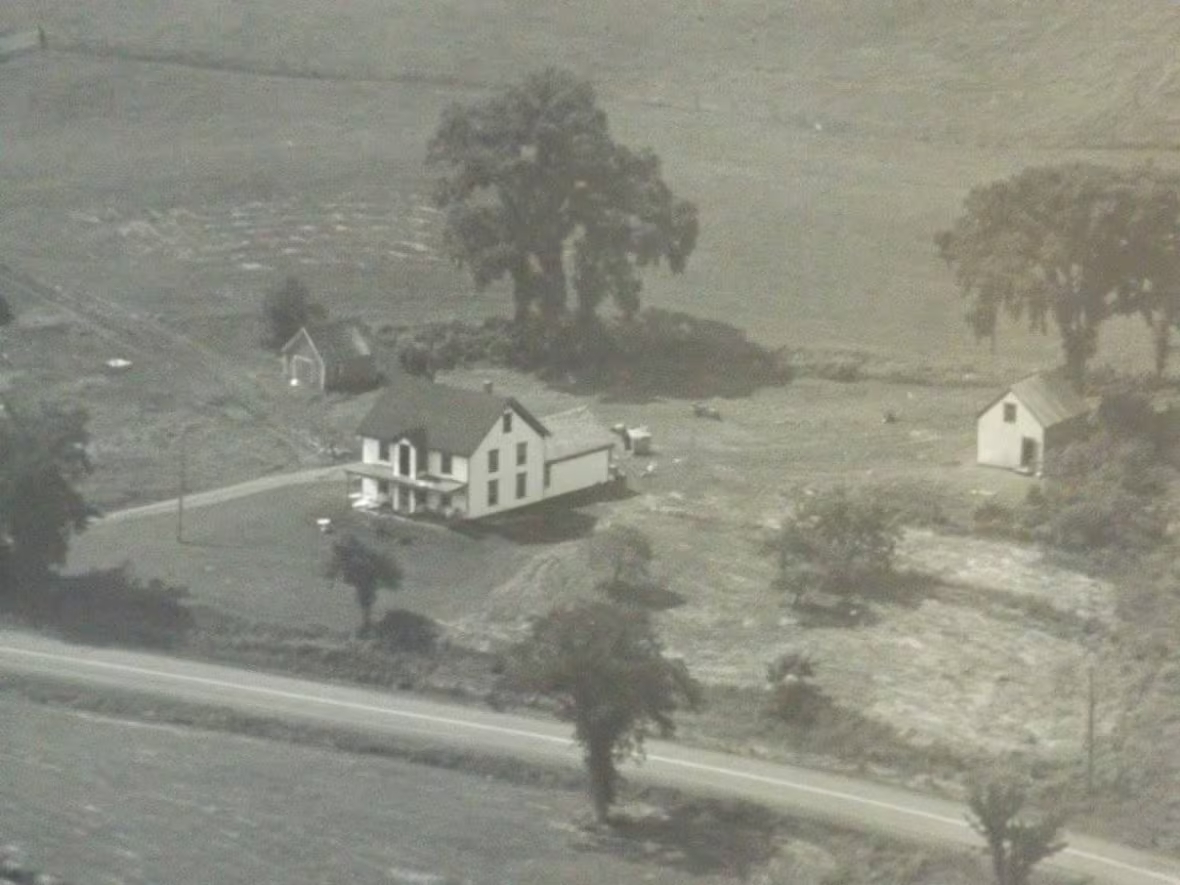
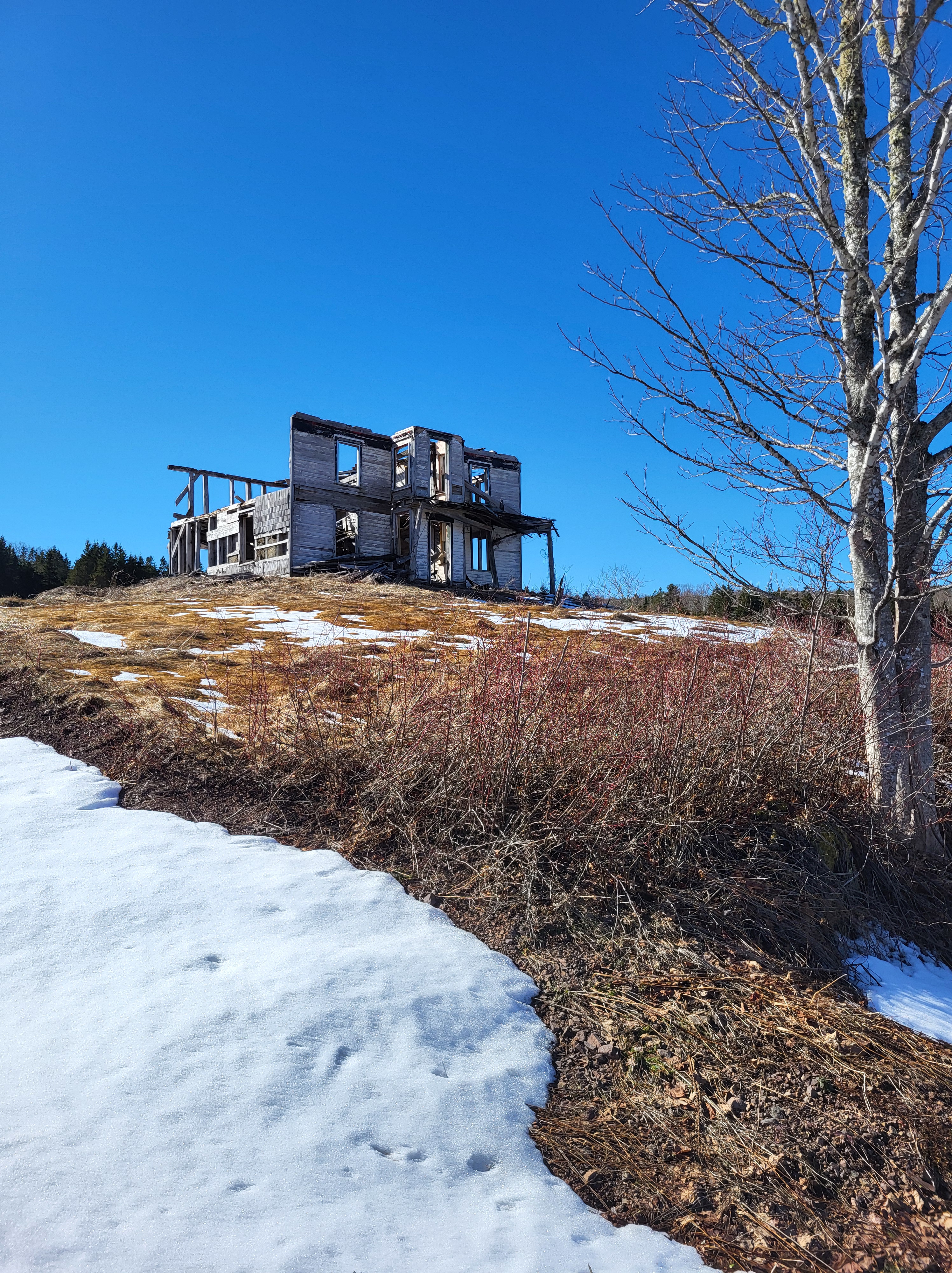
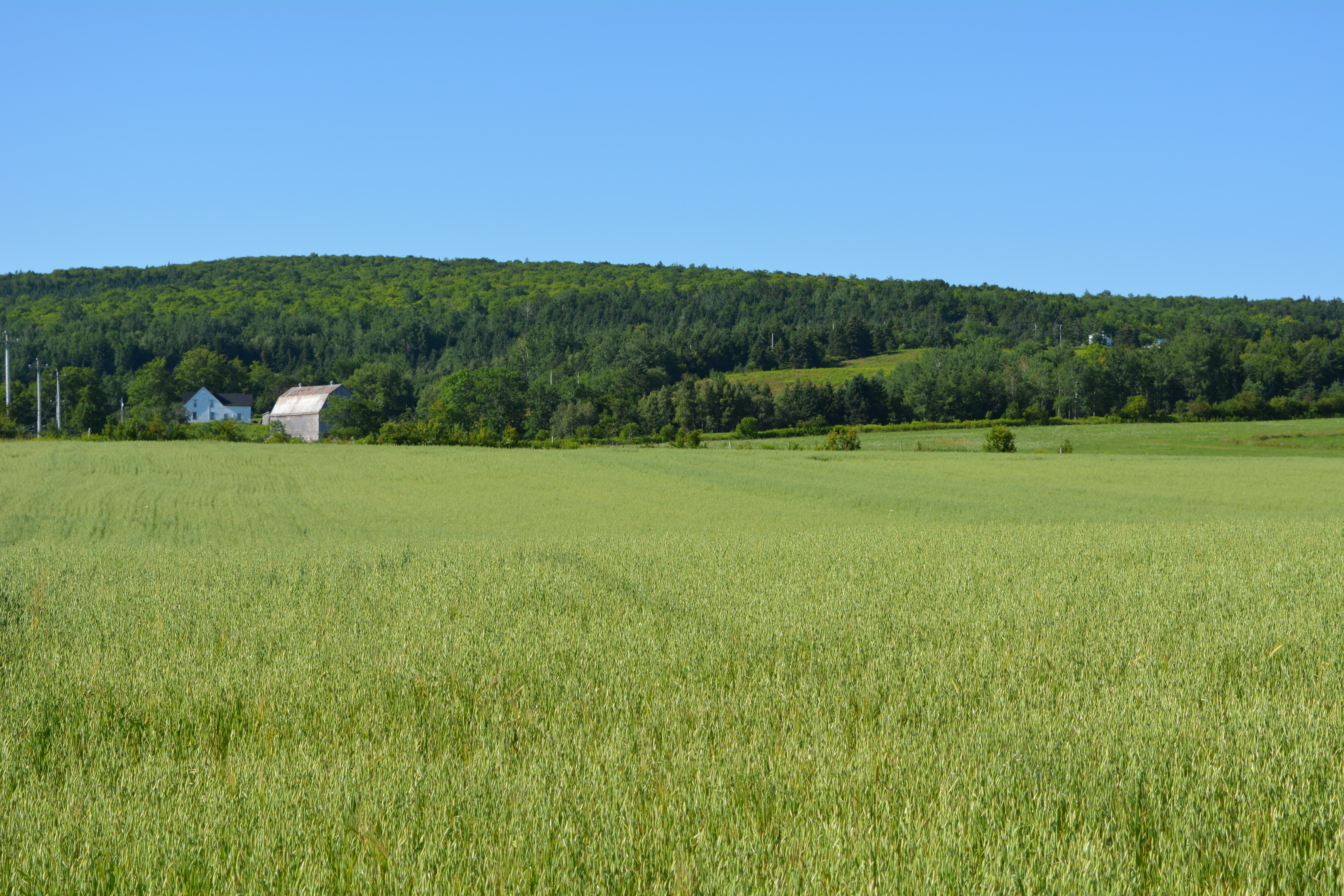
In 1980, my father Jack Ferguson moved to the John Will MacLeod farm on the McLeod Road. The large white house is perched on the rise of a steep hill and the barn (built in the early 1900s) is still in use. In 2011, my husband (Rémi Lemoine) and I purchased the Don & Joyce MacLeod house in The Falls, located on Highway 311 just south of the McLeod Road and in 2017, we took possession of my father’s  property.  John Will and Don both descended from Donald MacLeod & Barbara Gunn: John Will would have been a grandson and Don a great-grandson.  (See a detailed history of the land ownership in posts on the MacLeod Road Farms (September 2014) and the MacLeod Family series in the past few weeks).

John Will MacLeod Property, MacLeod Road

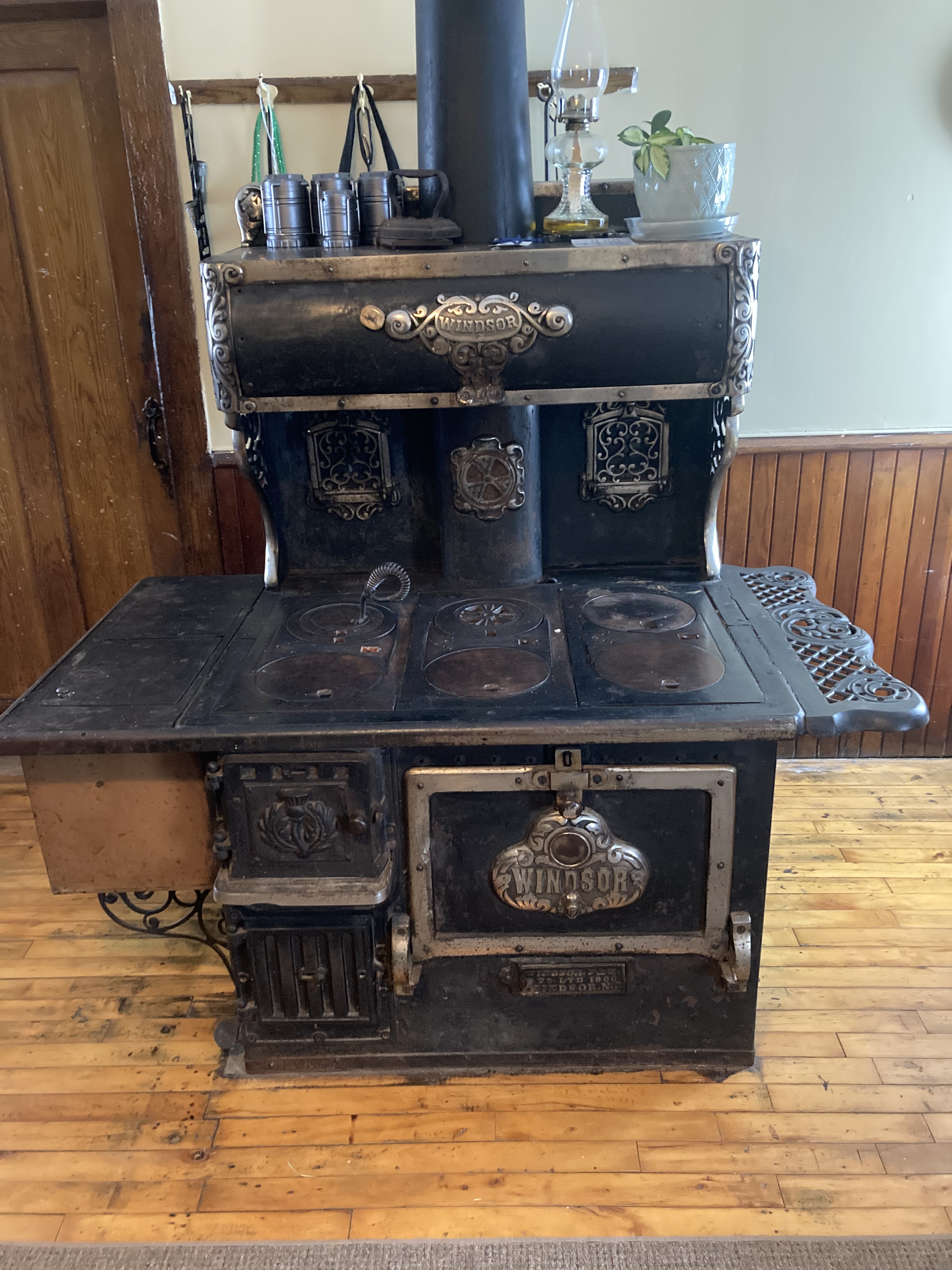
My father came to the John Will farm in 1980 with a “rent to buy” agreement and the formal sale was finalized within a few years. My siblings and I were always sure that Dad would eventually purchase the farm as the “out kitchen” contained a huge wood stove with a raised thistle design on the firebox door. Dad was very proud of the Ferguson crest with its thistle and a bee on the blossom. Alice Sutherland MacKay (the daughter of John Sutherland & Mary Henderson and was the mother of Dan MacKay) remembers that when she was a small child all the neighbours came to see the MacLeod’s wondrous new stove.  Alice would have been a very young child. The stove was built in Windsor, Nova Scotia in 1906. It had a metal receptacle attached to the left of the firebox to create and hold heated water for washing. Imagine the magic of having warm water at the ready without the hassle of large pots on the stove!

As previously posted, a portion of the farm to the south was given to Donald & Barbara’s son William and his wife Georgena (gravestone spelling) Sutherland and then passed to their son George (Geordie) and his wife Anna Ferguson.  Anna was a daughter from the Big Sandy Ferguson & Elizabeth MacKay family of the Ferguson Brook Road.  Elisabeth MacKay’s mother was Janet Ferguson, a sister to my great-great-great-grandfather Alexander Ferguson (wife Mary Gordon) of Spiddle Hill who also had immigrated to Nova Scotia from the Parish of Clyne in Sutherlandshire around 1821. This means I have a “cousin connection” to the property.

Not only the MacLeods, but the women they married (Gunns, MacKays, Sutherlands and Fergusons) were from Sutherlandshire and were Highland Scots.  These people were not very far removed from the ways and traditions of the old country as they established themselves on their land.  Highland Scots of this time period were known to be strict church adherents but there was also a strong streak of the old superstitions, a love of ghost stories and tales of those who possessed the second sight (such as my great- grandmother, Christena Gunn Ferguson).  The renovation of the two houses revealed a piece of this tradition.

 The first house I will talk about is the one we currently live in. We believe this house may be the second home built on the property by William & Georgena. Most couples starting out built a small house and as fortunes improved would build a larger structure for their growing family. In the 1871 census, they are living in a separate dwelling from William’s parents and have two children plus a Margaret MacLeod living with them.  I am making a guess that this was William’s unmarried Aunt Margaret (the 1871 census has her age at 69 and born in Scotland).  The early residents of The Falls were no strangers to tragedy. Sadly, Georgena died less than three weeks after giving birth to Geordie in 1886. It is probable that Geordie was born in this house

During renovations of the house we found two newspaper sheets in the walls that dated from 1885. It is possible that the newspaper could have been added at a later date to the house but how it was placed in the wall would make this seem unlikely. There were also some pieces of newsprint recording the prime ministers of England ending with Mr. Gladstone who served until June 1885.  On the back of this paper are some written notes listing the duties of a school trustee and a partial sentence about the “…attempt to establish a school”.  I wonder if this was the foundation for establishing the school at The Falls. An inquiry to Glen revealed that a school was in two former nearby locations before the present site. The final location also resulted in a new building constructed around 1896.  There were also some math calculations on a ragged piece of paper with Jessie Hayman written on the back.   

We were gutting the house to install new wiring and insulation when my husband, Rémi, called for my help. He was tearing out the inside wall boards of the house (neither of the MacLeod houses had lathe and plaster but instead had wide horizontal planks for walls).  He had found a small bottle, similar to a vanilla bottle in size, in the wall above the window.  The bottle was very dirty and had some dried “gunk” coating the inside.  I took the bottle and rinsed it out.  The drained water was stained a reddish yellow colour.  I put more water in the bottle and gave it another swish and out came more discoloured water and a feather.  I surmised that this must have a meaning.  I walked up the hill to get some service for my cell phone and Googled “bottle with a feather in it found inside an old house”.  Straight away up popped “witches’ bottle”.

In Scotland, Ireland and the rest of the British Isles, there is a tradition of putting witches’ bottles in a hidden spot in the house to, of course, keep witches away.  A bottle would usually be filled with personal items such as hair, nail clippings, thread, buttons, iron nails, or as in our case, a feather.  The vessel would then be topped up with either urine or blood and closed up inside the house.

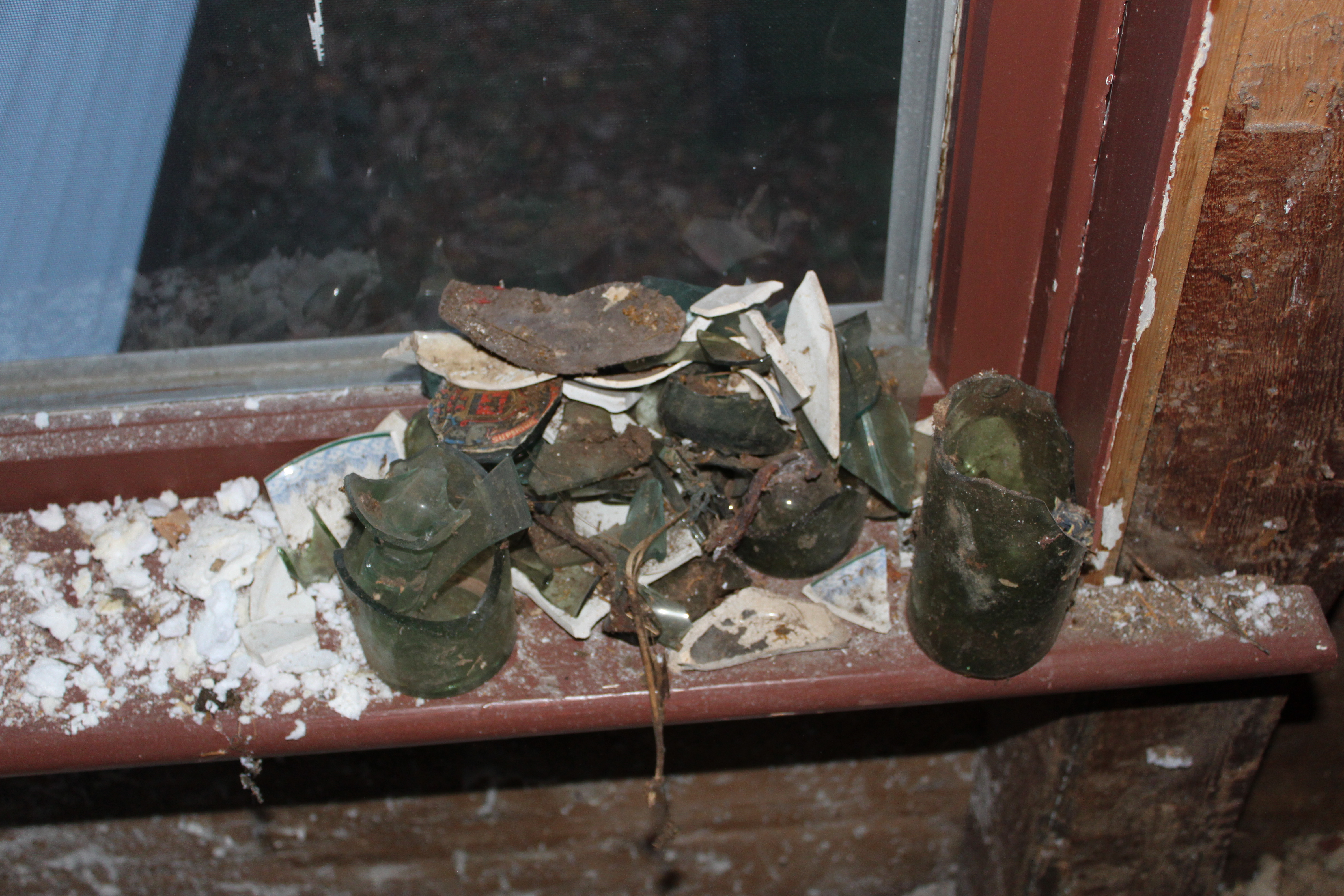
My next call from Rémi was to come and help him remove a vast quantity of broken glass and chards of crockery above two other windows.  There were two intact glass bottles but the rest was just a mess of broken bits.  Pieces of the crockery showed that someone liked pretty dishes with lots of blue and white and some of the red and white transferware that I am partial to.  The glass and pottery were certainly deliberately placed above the windows top sill. Mixed in with the glass were items of clothing and some papers.  The clothing seemed to be small such as children’s clothing would be.  The cloth was in complete tatters as mice and squirrels had used them for nesting materials so we burned them.

Next came the footwear.  There were three complete pairs of shoes and parts of one or two others.  The three pairs we could identify were of a man’s, a lady’s, and one small child’s copper- toed shoes. These are called concealment shoes. The shoes are supposed to protect you.  Sometimes it might only be one shoe that you find.  One theory is that the sole of a shoe is basically the symbol of your soul.  The imprint your foot makes in a well-worn pair of shoes is very personal and considered powerful.  No other piece of clothing moulds to your body the way footwear does.  Concealment shoes are usually found near openings to the house such as windows, doors, and fireplaces.  They can be found under the hearth or in old wall bread-ovens. Ours, as I said, were all found above windows. 

The shoes can also be a fertility charm.  Remember the very old tradition of throwing slippers at newlyweds? That tradition morphed into stringing shoes to the bumper of the honeymoon car in later generations.  In Lancashire County, England, there is a tradition that women who want to get pregnant try on the shoe of someone who has just given birth.  However, it seems most historians adhere to the theory that the main reason for concealment shoes was for protection.  In Scotland and England, brownies and hobs were domestic fairies and could be gotten rid of by the gift of clothing.  Perhaps that is why there was clothing in the wall.

The earliest known concealment shoe comes from 1308, and was found in Winchester Cathedral behind choir stalls that records show were installed during that year.  The shoes have been found in many types of buildings-from humble homes to grand country houses, inns, factories and two Oxford colleges.  The tradition is mostly British but the shoes can be found in Australia, the New England States, Germany, and, of course, here in Canada.  There is a museum in Northampton, England, that maintains an index of concealment shoes which stands at over 2,000 reports.  The practice of concealment shoes seems to have died out around the late 1800s and early 1900s.

We also found a metal button, a metal fork with a wooden handle, a small iron shoe-last (the form used to make shoes), and a piece of ornate iron that looks like it came off an old woodstove.  Iron is thought to ward off or provide protection from devils, fairies, spirits and witches.  I remember this from Helen Creighton’s book Bluenose Ghosts and other publications on folklore that I have read. Iron horseshoes were particularly powerful and still today are hung over the entry way to a house or barn (always hung like a U to keep your luck from running out!). Folklore suggests witches and spirits do not like to pass through iron.  That is why iron fences were put around graveyards to (hopefully!) keep spirits in.

There were also some wooden items: a stave from a wooden bucket, a piece of moulding like that of a chair rail, a wooden spoon, a piece of tree root (that might have been used as a binding for a bucket or small cask), a long twig (which my Uncle Ralph wonders might have been used for water divining), and a small wooden child’s shoe last. We found pieces of harness, leather and nails. 

The oddest item we found was a wooden bedpost placed upright between the studs in the wall near a window.  The carving of the bedpost had not been completed. The question is why wasn’t it finished? There seems to be something about unfinished items put in the walls although I could not find anything in a Google search about this practice. We have friends in New Brunswick who found a concealment shoe and with it was a piece of unfinished embroidery sampler with the needle and thread still in place waiting for the woman to come back to complete it.

In all, we had one heaping laundry hamper plus the bed post found in the walls.

Our story continues.  A few years later, I was cleaning up the shards of glass and bottles for a presentation and I came across one of the intact bottles.  It was dirty but I could tell no strange liquid had been left in it although there was some dust and debris in the bottom. When I washed out the bottle out dropped a lump.  It seemed to have a backbone.  On closer inspection it was a small bat. I believe this was also a witches’ bottle as there was no evidence of bats having ever been in the house.

We started the renovation of my father’s house (the house of Donald MacLeod & Barbara Gunn) in 2017.  We believe this house was built around the mid-1800s.  The windows were made with wooden pegs and the window glass was very wavy.  The boards used for the walls were much wider than those in our house of circa 1885.   The timber beams in the basement are hand hewn.

Above a bookshelf on an outside wall beside a window we found some more items: a horseshoe, wooden lady’s shoe last, broken glass and crockery, part of a horse bit, wooden thread spools (which were invented in Paisley, Scotland, in 1820), pieces of wood, bones, wooden tool bits, a hammer, a clasp for suspenders, and metal hooks.  We have not torn out the walls over the windows so who knows what else lies hidden behind the walls!

I have talked to some other people in the area who have also found items in the walls.  I knew someone who owns the Gavin Bell farm in West New Annan who was going to do some renovations to the house. I suggested he keep a lookout for items hidden in the walls.  Over one of the doors to the outside he found a large iron key.  Again the key was completely sealed into the cavity so it was not likely it was a key someone was expecting to use. This would indicate that those who settled from the Dumfriesshire area of southern Scotland also partook in these traditions.

To finish off our story, in William & Georgena’s house put some items back into the walls.  They will stay on the property and I have some objects displayed in a cabinet such as the witches’ bottle and some crockery.  When we built the addition on our house we placed a pair of our daughter’s ballet slippers and sneakers belonging to our boys underneath the west windows.  We did this to honour the tradition of the house and, since to date we haven’t seen any witches or nasty spirits “out and about” in The Falls, it must work!

Witches, Goblins and the Grim Reaper

(In a forthcoming post, a subscriber will be sharing her discovery of various artifacts during a renovation of her properties at The Falls.  Before posting her very interesting research, it might be useful to review the topic in general as it relates to the district).

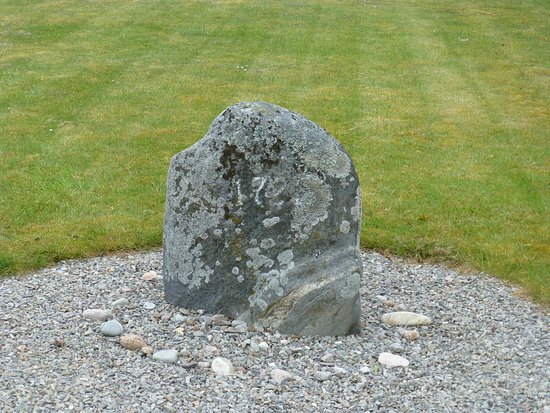
In 1727 in the shire town of Dornoch in Sutherland, Janet Horne made history as the last witch to be executed in Scotland.  To put into local perspective, the spectacle of this execution was likely witnessed by some grandparents of the early settlers to Earltown.

Janet Horne was likely not her real name.  It was a title of derision applied to presumed witches and others living outside the norms of the times.  She was a one time maid originally from Loth to the north of Clyne.   Her neighbours, for motivations unknown, accused her of turning her daughter into a pony and having Satan shoe her.

In real terms, Janet was likely suffering from what is now known to be dementia and thus living in an alternate reality.   The daughter was said to suffer from physical deformities of the hands which may have had a likeness to hooves.   Both were arrested on suspicion of witchcraft and tried at Dornoch. Unfortunately the magistrates, who were no more enlightened than the general population,  found both women guilty and ordered that they be burned to death the following day.

The stone marks the spot in Dornoch where Janet Horne was executed on charges of witchcraft. It is inscribed 1722 but correct year was 1727

The daughter mercifully escaped but Janet, as a result of her natural confusion, made no effort to follow.  On the appointed day she was stripped naked, covered in tar and paraded through the town on a barrel.  Before a large assembly, she was set on fire at which time she smiled and said that was “bonny warm”.   Whatever the theatrics of the event, it was a gruesome event.   Nine years later it became unlawful to execute anyone for alleged witchcraft.

Because it was unlawful to prosecute supposed witches, it didn’t mean such accusations didn’t persist for many years and the concept migrated with the Scots to Nova Scotia.

Patterson’s History of Tatamagouche makes mention of the persistence of witchcraft beliefs during the 19th century in North Colchester.  He recounts the cherished story of  Mrs. Mac, a old lady generally believed to have been a witch.   Mrs. Mac went to her neighbour Mrs. M to procure pigs and was annoyed that the pigs on offer had already been sold.   Likely there was a regrettable exchange before Mrs. Mac went home.   That evening  Mrs. M’s milk cow went inexplicably dry leading to the conclusion that Mrs. Mac was extracting revenge through the cow.   Mrs. M was not to be put off by this devilment and conjured a remedy whereby she boiled a sod of grass that the unfortunate cow had grazed.  The sod was tortured with pins.   The cow miraculously returned to production.   Later neighbours visiting Mrs. Mac reported that the old lady was nursing sore feet that were inexplicably scalded.   And from there the tale continued with its embellishments.   Patterson in 1917 wisely spared the surviving children embarrassment by not publishing the name but descendants assured me the alleged witch was Margaret MacKay “Black”, wife of Jim “Tailor” of Balfron.   [1]

On a related note, the late Dick Gordon of Golspie, Sutherland, told me several stories of underperforming milk cows being bedeviled by witches who often took the form of hares.

Another story told around The Falls pertained to Laughing Christy.  The daughter of an overzealous catechist, Christy was a bit of a rebel and never shy with opinions.   On one occasion she and her husband Sandy were visited by the local tax collector, Strachan Mackay.   Like present times, nobody enjoyed their interaction with the tax man.   After a tense visit, MacKay prepared to leave with his horse and wagon when Christy inquired about how many horses he owned.  MacKay replied that he had three of the finest horses in the district.   Christy replied that one or more would be dead before long.   A few days later one of the horses died or, as some versions proclaim, all three died.   Perhaps she knew her horses but the local consensus was that it was witchcraft.

Another story tells of Christy asking a neighbour for a ride home from The Falls church in his horse drawn carriage.  The request was denied because, to be polite, she didn’t meet certain standards of hygiene.   In retort, Christy hoped they would have to walk just like her.   As one would expect, the horse died in the shafts a short distance up the road.

Every culture has ghosts and the Gaidhealtachd of Earltown was no exception.  There are scattered stories of the sightings of  deceased relatives or strange sounds in certain buildings were death occurred.   (That was every house as there were no hospitals or nursing homes in those days).  Vacant houses, which abounded in the early 29th century, were venues for the imagination to run wild.   Strange lights have appeared in the area cemeteries at night.   Murray’s Cemetery, remote and spooky at the best of times, is said to be the scene of floating objects.   That can probably be explained as fog rising from the nearby river and swamps. 

Bluenose Ghosts by Helen Creighton recounts a dramatic scene on the night that Dump MacDonald took leave of this world.  He had been ailing of influenza and was nearing his end. A group of neighbours assembled to assist Mrs. MacDonald as Dump was a big man and difficult to manage.  While eating some pablum, Dump took to staring at the wall before suddenly rising from his bed, yelled and fell back dead.   At same time the upstairs of the house shook violently followed by a gust of wind that  blew off the henhouse door with the result being a hail of chickens hitting the house windows.  Various phenomena was experienced in the house and a man believed to be Lucifer was spotted in a window.  This story was given to Miss Creighton by John George Ferguson of Bayhead whose parents were living at Central Earltown when these events occurred.

John Dan Ferguson of Balmoral and Bayhead  shared the story of a recurring ball of fire that used to rise over Spiddle Hill at Ross’s Rock.   It was called Ross’s Torch but didn’t seem to be an omen of anything in particular.   When the Ross family moved to Wallace, the Torch was no longer seen.  It should come as no surprise that  Mrs. Ross was a sister of Laughing Christy.[2]

Complementary to the belief in such things, there were measures taken to protect a household from witches and unsavoury supernatural experiences.   Stay tuned for a future post by Joyce Ferguson on Concealment Shoes and Witches Bottles………….


[1] Patterson, Frank H.,  History of Tatamagouche, Royal Print and Litho, 1917

[2] Creighton, Helen Bluenose Ghosts,  McGraw-Hill Ryerson, 1957

The North Colchester Railway


A plan for several railroad routes to connect North Colchester to Truro – 1890 (Colchester Historical Museum Collection)

After confederation in 1867, Canada’s future prosperity and sovereignty were thought to lie in a network of railways between the Atlantic and Pacific coasts with spurs and loops to include growing communities away from the main lines. The Intercolonial Railway connecting Halifax, via Truro, to Central Canada was established in the early 1870’s. It expanded upon local railways between Halifax, Windsor and Truro as well as a railway system in Pictou County linking the industrial towns.

In the mid 1870’s another project was proposed to construct a short line between Pictou and Oxford Junction which connected Scotsburn, Denmark, Tatamagouche, Wallace and Pugwash to the outside world. The project was fraught with financial difficulties but eventually went into operation in 1889.

With the main lines from New Brunswick to Halifax and Cape Breton functioning along with the Short Line from Oxford Junction to Pictou, further regional lines were being explored. It must remembered that this was long before cars and trucks were being imagined to transport people and freight from rural villages to the major towns and beyond.

The idea for a railway through the Cobequid Mountains to the Northumberland Strait was considered as early as 18601. At that point, the proponents suggested, it would afford the shortest route between Halifax and Charlottetown. It was only 129 miles from downtown Halifax to the Brule Corner wharf whereas it was 175 miles between Halifax and the port of Pictou. Brule Harbour was more easily navigated than the narrow river channels approaching Tatamagouche. In winter, the mails and freight could be sledded across the Strait in a straight line to Charlottetown. Tatamagouche had some “goose holes” that didn’t adequately freeze for heavy traffic. By the 1860’s, Brule was already being used to convey passengers and mail to Prince Edward Island with help from a stage coach service out of Truro2.

In the end, the idea was shelved in favour of a link by the Nova Scotia Railroad between Stellarton and Pictou. Pictou was, to be fair, a shire town with a mature port in place and a rail link with nearby New Glasgow would be a bonus to the domestic economy of West Pictou. One would imagine the costly pier style bridge across the upper reaches of Pictou Harbour was an engineering challenge yet so were the 15 or so miles of steep grades through the Cobequid Hills near Earltown. The Pictou link was completed around 1867 and interfaced with a substantial shipping to major ports in the Gulf of St. Lawrence.

In 1890 Provincial Engineer Dr Mitchell Murphy came to North Colchester to survey potential routes from the Short Line through the Cobequid Hills to Bible Hill. area.

Brule Harbour figured prominently in all the routes explored. At that time the wharf at Brule Corner was a busy spot with resident sea captains, foundry, a cannery and was a convenient port for the shipment of timber to the United Kingdom. Brule’s nearest access point to the Short Line was at Denmark, four miles inland. Both Earltown and New Annan were well-established farming and lumbering areas at the time with far larger populations than today. It was likely felt that rail access would further enhance the prosperity and standard of living for these inland communities.3Brule Harbour figured prominently in all the routes explored. At that time the wharf at Brule Corner was a busy spot with resident sea captains, foundry, a cannery and was a convenient port for the shipment of timber to the United Kingdom. Brule’s nearest access point to the Short Line was at Denmark, four miles inland. Both Earltown and New Annan were well-established farming and lumbering areas at the time with far larger populations than today. It was likely felt that rail access would further enhance the prosperity and standard of living for these inland communities.

The most easterly option explored began at Brule Corner crossed the Denmark road and proceeded south to the east of the settlements along that road. It joined up with the Short Line at the Denmark station and then continued due south to Mountain Road and eventually MacBain’s Corner. Crossing the Scotsburn Road, it followed the Nabiscamp Brook through the valley to Rossville, cut behind the Presbyterian Church and struck off above and behind the MacIntosh farm. It emerged again to the east of the Earltown Village cemetery.

Judging from the photographs of the day, it would have followed the Berichan Road down behind the DOT garage and cut along the side hill towards the Kemptown Road. To avoid the grade of Gunn’s Hill, the route appears to go up the Kemptown Road and then follow the ravine to the south of Highway 311 to Sutherland Road. Beyond Sutherland Road it would have followed the MacGill Brook behind the farms on the Summit until it reached the North River. From there it followed the banks and descending grade of the North River and then on to join the ICR near Marshall’s Corner.

A proposed centre route shows a spur starting at Brule Harbour and heading southwest to a point near Ferguson’s Crossing on the Upper River John Road where it would have intersected with the Short Line. From there it would continue through the forest to Balfron and cross what was then the main road near the Simon Cameron Road. It would cross the Waugh River near Balfron Hall. This would likely have warranted a siding as there was an active grist mill, sawmill and tannery at nearby Urquhart’s Bridge. The route would then follow to the west of the present 311 to a point behind St. Andrew’s Kirk at The Falls and later cross the main road to follow the course of the Waugh River through the valley to West Earltown. At the end of the Ferguson Brook Road, it was to tack to due south and follow what is now an electrical line right of way through the pass to Nuttby and would have emerged behind the Baptist Church. From there it follows the same route as the first option. One would suspect that a station or platform siding would have been constructed at Ferguson Brook Road to serve Earltown Village, four miles to the east. One can also imagine a “whistle stop” at The Falls to serve the mill and stores in that community.

The third option is the same between Brule and Balfron Hall after which it turned westward towards Central New Annan. Between the New Truro Road and Central New Annan, it would have made a sweeping turn to navigate the grade and follow a dale through to the crossroads at East New Annan. From there it followed the New (or Old) Truro Road through the hills to MacCallum’s Settlement and on to Marshall’s Corner.

The scheme lay dormant for a few years until the Midway Railway, the operator of the line between WIndsor and Truro, was granted the exclusive franchise to extend their line northward through the Cobequids to the Northumberland Strait. The survey continued to be updated with an extensive review of the 1890 survey in 1901 followed by a meeting in Earltown in November at which time “… a committee was appointed to interview the directors of the M.R. (Midland Railway) of N.S., with a view to securing their aid in promoting a line to be called the North Colchester Ry., and to run between Truro and Brule. It was also decided that the committee should draft a bill for the next session of the Provincial Legislature and the Dominion Parliament next year.”4

The Provincial Government of the day was very anxious to see this happen and it would appear that they were more enthused than the residents of Earltown. Whether it was a matter of political opposition, fear of expropriation or general apathy, there is no narrative of these events either orally or in Sutherland’s “Rise and Decline of the Community of Earltown”.5

A view from Ross’s Rock on the west flank of Spiddle Hill overlooking the Waugh River valley at West Earltown. This photo is from the collection of Edmund Haskett-Smith, an surveyor from Britain who came to Tatamagouche and worked on some of these surveys. He employed a photographer by the name of Adams from Truro. In the days before satellite images and topographical maps, the photos were likely used to illustrate the lay of the land to company officials and government bureaucrats. Haskett-Smith collection courtesy of John Crawford

The February 1903 issue of The Railway and Shipping World trade magazine reports that “Surveys have been completed for a railway from Truro, N.S., where a connection would be made with the Midland Ry. to Tatamagouche across the Cobequid Mountains, about 35 miles.” The reporter goes on to explain “Some years ago surveys were made for a line from Truro to Brule over much the same country and it is understood that the first 18 miles of this old survey, (from Truro), will be followed. This would carry the line to Earltown, from which point P.S. Archibald, CE, recently made a survey via the Waugh’s River, a little to the west of the survey to Brule, and crossing the Oxford branch of the ICR about a mile above the railway bridge at Tatamagouche.”6

In June of 1903, it was announced that the Waugh River route had been chosen subject to minor modifications. The junction with the ICR Short Line would be about a mile east of Tatamagouche Station and a spur would run north to the narrows of Barrachois Harbour7.


It would seem Brule had lost some of its strategic importance by that point whether through a reduction in harbour traffic or it just made sense to connect up with the Tatamagouche Station. This route seems to be the chosen one but not the shortest. By looping east, much like the current 311 highway, there was more exposure to the populated areas of the Waugh River valley than across the mountain to East New Annan.

Here is a (link) to a map showing the four routes contemplated. Without precise historical maps of the routes, this is my attempt to plot the potential routes while respecting the topography of the area.

The project was likely the subject of much excitement at the time and probably generated some healthy skepticism. Like the Short Line before it, capital for such a difficult terrain was not forthcoming anytime soon. These connector lines were heavily dependent on Provincial and Federal subsidies. A few years later, the writing was on the wall that internal combustion engines would adequately serve those inland communities. The writing was also on the wall that the farms of Earltown and East New Annan were vacating at rapid pace. However it is fun to imagine what things would be like today had the project gone forward.

  1. The Railway and Shipping World April 1902 as reproduced in the Dominion Atlantic Railway Digital Preservation Initiative (DARDPI) ↩︎
  2. Fun fact: In 1864 delegates from Nova Scotia travelled to Charlottetown to attend the conference that would begin the process of creating Canada. The delegates traveled from Halifax to Brule Corner by stage coach from Truro through Earltown to Brule Corner where they boarded a vessel for Charlottetown. Per “A History of Brule and Brule Point” ↩︎
  3. Beeler, Donald A History of Brule and Brule Point, 2008 ↩︎
  4. The Railway and Shipping World November 1901 as reproduced in the DARDPI ↩︎
  5. One wonders about the politics. This was a pet project of Liberal Premier George Murray. Murray, while a descendant of the Sutherlandshire diaspora, probably didn’t have a lot of support in Earltown where there was a predominant conservative affiliation from the times of the colonial elections. We will talk about politics in a later post. ↩︎
  6. The Railway and Shipping World February 1903 as reproduced in the DARDPI ↩︎
  7. The Railway and Shipping World June 1903 as reproduced in the DARDPI ↩︎

Part II Marion MacLeod and husband “Billy Ban”and Donald MacLeod

William “Ban” Sutherland, commonly known as Billy Ban, was also a native of Clyne and a son of John Sutherland and Margaret MacKay.  Ban or Bahn is Gaelic for blond or fair-haired.   This descriptor was essential as there were three first settlers within a mile named William Sutherland: William “Ban”, William “Caribou” and William “Ruidh” or red.   By 1868 there were three Williams living in a row: William Ban, William Caribou and William Sawyer all of whom were visible from the stoop of William Ruidh across the river.  Add to this Rev. William at West Earltown ,  Willie Cairn and Billy Buidh in Balmoral, followed a few years later by Gib’s Willie across the river.   As an elderly interviewee quipped several years ago, Will Sutherlands were standard equipment in those days.

In addition to carving out a farm on the side hill, he conducted classes before a formal school came to the district.

The descendants of this couple will be fully featured in a future post but for now we will notice that they had eight children:  Christy Sutherland in Idaho,  Jane MacKinnon in Malagash,  Lillian MacDonald “MacAdam” at East New Annan and later California, Hughena MacDonald in Bayhead, three children who died young plus John “Ban” who inherited the homestead and, with Mary Henderson, produced thirteen children.

Donald MacLeod

As mentioned previously,  Donald MacLeod acquired the western 100 acres of the Moore grant which was located on the west side of the river.  The farm was almost entirely cleared to support the large family therefore woodlots were acquired further afield.

 He married Barbara Gunn in the mid 1830’s.  Barbara was born in Strath Halladale in the far north of Sutherlandshire.  Her parents,  William Gunn and Dorothy MacKay, emigrated around 1830 to Pictou County and a few years later acquired an uncleared farm immediately to the south of Hugh MacLeod’s grant at West Earltown. 

This couple had ten children:

  1. Marion  (1838-1865) was married to James Nelson of Balfron. Her marriage was tragically cut short by her untimely death a couple of months after the birth of their twin sons.  Donald and Barbara partially raised the two boys.
  2. Hugh – died in infancy
  3. Dorothy or Dolina (1840-1924) married George Sutherland “Ruidh” across the river.  They had a family of eleven
  4. William MacLeod 1843- 1908 to be noticed later
  5. Catherine MacLeod 1845-1917  married John Urquhart, Merchant, at Urquhart’s Bridge in Balfron
  6. Hughena  1847-1916  married William Gaillie Fraser of Durham and lived in Truro where William, or “WG” as he was known, was an accountant.
  7. John died at the age of 2
  8. Donald, known as Dan, 1857-1922, to be noticed later
  9. John, 1858-1933,   heir to the main homestead
  10. Alexander  1864-1906  married Charlotte MacCulloch.  Alex was employed by the railway out of Truro and was killed in a train accident in Bible Hill leaving a widow and young son, Daniel.

William MacLeod, oldest surviving son of Donald, was given the southmost 50 acres of the farm.  The homestead still exists as the Ferguson-Lemoine property.    William married Georgina Sutherland “Square”, daughter of   Gilbert Sutherland “Square” and Marion Campbell. Her childhood home was located near the junction of the Gil Sutherland and Spiddle Hill North roads.

This couple had nine children:

  1. Dolina  1867-1909  who married John Sutherland “MacIan” of West Earltown.  They lived at Balfron near Urquhart’s Bridge.  After her death John married Marion Urquhart and moved to Vancouver.
  2. Marion 1868-1950   was known as Minnie.   She married Alex Murray “Corrigan” of Spiddle Hill.  When their family was young, they moved off Spiddle Hill to the old Murray bonesetter farm down by the river near Murray Cemetery.   They had a family of eight children: Donald Murray of Pictou, George William who died in his early twenties, Anna (Mrs. Archie Cameron), Gilbert (Beatrice MacLeod) on the home place, John R. in Massachusetts, Aubrey in Ontario, Jean (Mrs. Gordon Baillie) and Christene (Mrs. Archie MacDonald).
  3. Barbara (1872-1952) married Donald S. MacKay “Uhr” of Kavanagh’s Mills.  They lived in Watertown, Massachusetts, where Donald was manager of an elevator company. They had four children.
  4. Jane 1873-    married Robert MacKay, Tailor, of Earltown. They lived in Marshville and had a family of three.
  5. Dorothy died in infancy
  6. Alexander  1879-1939
  7. Catherine 1880-1960 married Dan Baillie of  Spiddle Hill.  They lived at The Falls where Dan operated a sawmill.   They had two children, Jean and MacLeod.
  8. Christena 1883-1973  married George MacKay “Achany” of The Falls. They operated the general store at The Falls before moving to Tatamagouche where they also ran a well known store.  Until recent years it operated as MacKay Brothers.   They had five children.
  9. George 1886-1966    who was well known as Geordie MacLeod.  He continued to farm the home place until his retirement. He married Anna Ferguson of West Earltown.  They had five children,   William in Ontario,  Donald in Ontario and later the homeplace at The Falls, Avis (Mrs. Lloyd Dickie in Middle Stewiacke), Georgine (Mrs. Ross MacKay, Balfron) and Roy in Ontario.

Dan MacLeod, son of Donald, married Margaret Baillie of West Earltown.  Their first home was near Wallace but they returned to The Falls when the Sutherland farm to the west and above that of his father became available.  Dan was an elder of St. Andrew’s Church.  His obituary sums up his character: “The late Mr. MacLeod was very kind hearted and hospitable and his home was always open to the way-farer, and the stranger was often entertained there.  He never turned any one away hungry from his door.”

Dan and Maggie had three children:

  1. Daniel   1883-1953 was unmarried and lived with his unmarried uncle and aunts,  Alex, Georgie and Bessie Baillie, at Kavanagh’s Mills.
  2. William John (Willie John) 1886-1959
  3. Barbara  1886-1932  who lived in Brookline, Ma., where she was a domestic. 

Willie John lived his entire life on the family farm.  He married Sadie Hayman of Balmoral and had  Harold of Tatamagouche,  Christene Morrow, Helen Loughead and Kathleen Geddes all of Truro.

John MacLeod, son of Donald,  retained the original homestead of 50 acres.  He married Elizabeth “Betsy” MacKay, daughter of  John MacKay “Black” and Janet MacDonald “Salt” of Balfron.  The writer’s father and aunt often spoke of when they were youngsters visiting  John and Betsy  at their home.  They were very fond of children and went to great lengths to entertain their young guests.   Their family:

  1. Barbara   1882-1971  married W.R. “Rod” Murray of Rossville
  2. John          1885-1891
  3. Dan Robert 1888-1970 married Mabel Murray “Og” of West Earltown.  They lived in Trail, British Columbia
  4. Jessie        1889-1987  married Alex Gunn of Brule
  5. John Will  1891-1971  never married
  6. Marion       1895-1918
  7. Catherine 1898-1967   married Gordon Murray “Og” of West Earltown.  They lived for a few years on his father’s property on Cnoc Na Guidhe before moving to Upper River John Road.
  8. Alexander  1902-1989   never married and lived in Trail, British Columbia

John Will was a unique and kindly character in the writer’s youth.  He retained many of the old ways, particularly in speech, and had his own sense of humour.   He was often on the receiving end of pranks played by his first cousin  Geordie who lived across the field.   John Will drove an old Model A Ford into the late 60’s.   The old car was driven slowly.  Whenever one of the students at our school at Balfron noticed the car approaching from The Falls, the teacher was alerted and we would be dismissed to go outside to watch John Will creep by and toot the horn.   On one occasion a young businessman originally from the area went to see John Will about buying the Model A.   In hindsight it was probably unwise of the young fellow to arrive at the MacLeod homestead driving a bright red Corvette.  When asked whether he would consider selling the Model A,  John Will glanced out the window at the Corvette and replied,   “I think the car you already have out there is plenty good enough”.

Hugh MacLeod – Patriarch of The Falls

On June 25th, 1821 Hugh MacLeod and his four children caught their last glimpse of their native hills of Eastern Sutherland from the deck of the Ossian bound for Pictou in far off Nova Scotia.  Until May 30th of that year, the family had lived for generations in the declivity they could see on the horizon, the river valley known as Strathbrora. 

They were not alone on this adventure. They were one of twenty-one households all from the same parish of Clyne in Sutherlandshire and some would become their neighbours in the new land.

On the morning of May 30th of that year, and not without warning, an eviction crew under the direction of the Sutherland Estate began the removal of the final inhabitants of the Strathbrora.  There had been previous evictions in Clyne and several folks left voluntarily the previous year for either Caithness to the north or the colonies in North America.  Most of those families had the financial means to acquire farms elsewhere or pay passage across the ocean.  The last remaining group first delayed the action by claiming an exemption brokered by their minister[1] when eviction became a possibility.   Although small lots had been offered near Brora, the remaining inhabitants waived the offer and were prepared to mount a resistance. [2]

While the actual work of eviction was carried out by some thuggish characters in the employ of the estate, a small regiment was dispatched to the area as a violent resistance was expected. In most cases, the families gathered their belongings and left while the more militant fled through the back country to Caithness.  As was the pattern, the homes and crops left behind were burned to discourage people from returning.

Assurances from their minister aside, the evictees of 1821 were mostly of limited means otherwise they would have emigrated to Pictou during the previous two years.  By 1821, a son of their former laird, Joseph Gordon, an Edinburgh lawyer, had raised funds to subsidize passage to Nova Scotia.  The funds were primarily raised by his brother George Gordon, a merchant in Bombay, India. 

Between May 31st and June 25th, Hugh MacLeod and his family made the journey south to Cromarty in Easter Ross.   No legends were handed down as to how they lived during this three week time period but other accounts would suggest they lived in the open or sought shelter in byres of people along the way.  

The manifest of the Ossian’s voyage lists Hugh MacLeod, age 50,  as head of a party of six adults which would most likely include his wife, Mairead Sutherland, and four known children:  Marion, Margaret, Donald and John.  The fare was four Guinies and half for each adult which equates to $102 Canadian dollars in 2024. [3] 

The departure of an emigrant vessel from the port would draw spectators both acquainted and just curious.   As the sails snatched a breeze and proceeded to glide from the bay, many on shore would be greatly affected and brought to tears.

Pre emigration

The MacLeods, as a clan, were primarily based in the Northwest Highlands and Islands.  It is not known how they came to be in Clyne in the 18th century or if they even had ties to the main clan.  Hugh and Mairead (Margaret) first appear in the Old Parish Register in 1799 presenting their daughter Marion for baptism.   They are listed as living at Kilbraur.   This residence was also listed for the baptism of Margaret and Donald.   By the time John came along, the residence was noted as Dalvait and Hugh is noted as being a tailor.

Hugh is not listed on the various rent rolls as a direct tenant of the Estate. Most likely he was a subtenant.  Pre-clearance Strathbrora was arranged in a manner that tenants or sub-tenants would have a strip of arable land along the river and grazing privileges in the back country.  For a subtenant, this would not be a substantial farm hence the need for Hugh to ply another vocation as he did tailoring.

Hugh’s likely marriage around 1798 at age 31 would suggest that he likely served in the military like many of his neighbours and fellow emigrants.  

Arrival in Pictou – Now what?

It is not known how long it took the Ossian to cross the ocean to Pictou but the time would be measured in weeks.  Whatever the exact date, summer was well along and there would be no crop that year.   The scene that greeted the passengers would be much different than their countryfolk would have seen back in 1773 or even in 1803.   Pictou was now a well-established town accustomed to a stream of emigrants landing on the wharves and looking for directions to a possible new home.

Hugh Denoon, a former emigration agent in the Highlands, was now employed as the land agent in Pictou doling out acreages of unsettled land along the Northumberland watershed.  The land agent would assist with preparing a petition to the colonial government for a grant of land.   In the meantime, he would direct migrants to the main settlements receiving settlers.  By 1821 this could be the upper settlements of Barney’s River, the upper settlements of the Middle and West Rivers of Pictou or the headwaters of rivers ending at River John and Tatamagouche.

A contingent of Clyne immigrants arrived in Pictou in 1820 with a noticeable proportion taking up land in the Earltown area including The Falls.  Consequently, it made sense for the MacLeods to head in that direction where there would be some familiar faces with experience in pioneering.  Hugh was a given a ticket of location on the Tatamagouche River.[4]  A petition dated February 5th, 2022 describes Hugh MacLeod, about 50 years of age, wife and 4 children emigrated from Scotland in 1821.  MacLeod asks for land at Earltown. He was approved for 200 acres.[5]  This eventual grant was located on what is now known on the Spiddle Hill South Road approximately a half mile north of Highway 311 at  West Earltown  The grant straddled the river, included some potential meadowland on the east side of the river and extended up the slope of Spiddle Hill.

Across the river on the hill, three generations of the “Black” Robert MacKay family put down roots.  They were fellow passengers on the Ossian and hailed from Aschoilbeg near Dalvait.  To the east was land granted to Robert and John Baillie of Clyne who chose not to settle in Earltown and likely settled in Pictou County.

While most settlers were very content with the land they were granted, ownership being something neither they nor their ancestors had ever experienced, Hugh later petitioned the government to exchange his grant for another location.   The land, he explained, was wet in places and was situated in a valley that was very susceptible to early frosts.   His request was denied and the family remained at West Earltown for the time being.   In 1830 John and Susannah Moore[6] started selling off their substantial reserved land grant at The Falls.  In that year individual deeds were granted to each of Donald MacLeod and John MacLeod.   Donald, his wife and one child were settled on their land at the time of the 1838 census but John was still living on the original farm at West Earltown with his bride, infant son, mother and sister.

The John MacLeod homestead with Donald MacLeod’s homestead on the hill across the river. Note an earlier dwelling in the foreground between the current house and the barn.


The elder son Donald settled on the west side of the river and a homestead was established on MacLeod Road where it exists almost 200 years later.  Many will identify this as the John Will MacLeod property.   The younger son, John, acquired 150 acres on the east side of the river.  The homestead was on site of the current house and barn which is still owned by descendants.

Homestead of Donald MacLeod as seen today from the local community hall. It looks much the same today as it did 100 years ago.

Immediately to the south of Donald lies the homestead of Hugh’s eldest daughter Marion and her husband William Sutherland “Ban”.   The barn still exists on the shoulder of Highway 311 at the junction with the Gil Sutherland Road. This lot was also acquired from the Moore family in 1830.

Hugh died on April 13, 1830 at his home at West Earltown.   He transformed his family from being lotters or sub-tenants to collective owners of a picturesque 350 acre chunk of The Falls. It is interesting to note that the neighbours on either side of this lot were former residents of Kilbraur, Hugh and Mairead’s original home. William Sutherland “Ruaidh” lived to the north and Gilbert Sutherland “Square” to the south.

   Over the following four generations, the tentacles of this family wove its way through the majority of the local inhabitants of The Falls. Almost nothing is known about Mairead Sutherland.  She would appear to be living in 1838 and the head count of Donald’s family in the 1861 census would indicate she was still on this earth at that point.   Hugh’s stone in Murray Cemetery makes no mention of his wife.   It is worth noting that Hugh is the first recorded adult burial at that location.

[1] The minister was Rev. Walter Ross.  Ross was not well liked by the common folk having been appointed by the Countess, as was the case in those days, and was more attentive of his four legged flock than the two legged variety.  He was often absent from duty which led to the catechists being the true spiritual leaders in the community.

[2] Hunter, J. (2015). Set Adrift Upon the World. Casemate Publishers; and direct correspondence with Dr. Hunter is the primary source for the events surrounding the evictions from Strathbrora

[3] Campey, L. H. (2002). Fast Sailing and Copper-Bottomed. Dundurn. Appendix B

[4] Tatamagouche River was the description in early documents in The Falls and West Earltown.  The name did not survive and the river is Waugh River and named after an early settler of Tatamagouche.

[5] Whiston, Norris  (2009) Northern Colchester Land Grants

[6] Susannah was the daughter of Dr. John Harris, Truro, one time shareholder in the old Philadelphia Company that owned most of West Pictou and the hilly sections of North Colchester.   Their prior stature enabled the descendants of Dr. Harris to acquire some strategic land grants throughout the regions.   John Moore was a miller and had grants on steams suitable for constructing mills.  The Moore’s settled near the junction of the West and East branches of River John.

I

The MacAdie MacDonalds – Postscript

Recent DNA matching is making a compelling case for identifying two more siblings of Alexander MacDonald, settler at The Falls.

William MacDonald was born in Clyne in 1791 and married Mary Murray of that parish in 1836. They lived at Badnellan near the town of Brora where he died in 1861.

Donald MacDonald was born in 1794. In 1813 he took up duties as a laborer with the Hudson Bay Company at York Factory, Rupert’s land. Two years later he was transferred to the Cumberland House trading post where he served until being transferred to the Edmonton trading post 1816. In 1817 he attempted to board a ship for Britain without leave and was fined 10 pounds. He was dispatched to Fort Carlton thereafter. In 1820 he was back in Fort Edmonton. 

He married a Metis woman by the name of Jean Beaudry in 1840 although they had been together with several children by this point. (Clergy were scarce in the outposts so marriages were legitimized when the couple would return to civilization). They had twelve children who eventually settled in Manitoba.

    In 1834, “Big Donald of the Blackfeet” retired from the Hudson Bay Company and took up farming at St. Andrew’s, Lisgar, Manitoba which is in the Red River Settlement.

    The MacAdie MacDonalds – Part 3

    Mary Elizabeth MacDonald (1832-1914)

    Mary Elizabeth, named after both grandmothers, married Donald MacDonald on May 11th 1855. He was born in 1825 in Achoultiville, Caithness and came to West Earltown with his parents as a young boy.   His mother was Jane Murray “Corrigan” of Rogart whose siblings and parents came to Earltown at various points between 1819 and 1840.   His father was Robert MacDonald of Achoultiville.

    Mary and Donald purchased a Sutherland farm1 on what is now the Peter MacDonald Road overlooking the Matheson Brook valley.  In 1885 Mary was heir to the original Alex MacDonald homestead.  There is no evidence that she and  Donald ever lived there but for many years it was inhabited by their bachelor sons Alex and Robert.

    They had a family of 6:

    1. Christena who married Dan Henderson of Kavanagh’s Mills and lived in River John.
    2. Alexander who lived in the United States in his younger years before taking over is grandfather’s farm at The Falls.   He never married.
    3. Robert, never married, lived back and forth between his brothers’ homes and died in 1939.
    4. Jane 1864-1934 went to New England as a young woman and married Robert MacCausland
    5. Mary Elizabeth 1870-1924, a teacher, was the wife of Alexander S. Douglas, Earltown.
    6. Peter 1871-1939 took over the home place.  He married Marion Sutherland “Mighty” of Central Earltown.  They had 7 clever children who went on to succeed in business, teaching, and engineering.

    William Baillie MacDonald 1835-1882

    William was deeded the north  50 of Alexander MacDonald’s remaining 100 acres.  William established a homestead close to the crossroads at The Falls.  At this point we are uncertain as to whether it was the old house and barn on the Power House Road or the former Stanley Matheson home on the hilltop.

    He married a girl three farms upstream.   She was Lillian Sutherland, 1836-1918,  daughter of William Sutherland “Ban” and Marion MacLeod. 

    In the early 1870’s, with a growing family consisting of 7 children at that point, they were outgrowing the small acreage.   William acquired a farm at East New Annan opposite the end of the Alex MacDonald Road.2   While there, William took on duties as a sheriff or sheriff deputy with the County of Colchester.  At that time, the main road from Tatamagouche to Truro ran through East New Annan instead of Earltown thus making it a more convenient location for carrying out his duties.

    William died on November 25th 1882. Of his 14 children, 11 were still living and the youngest was only 4 years old. Some of the older boys had already left for the west but there were sufficient children in their mid to late teens to help Lillian keep the farm functioning.  By 1891 the older sons were settled in California and they moved Lillian and the younger children to the west coast.   Lillian spent her last years in Santa Ana, California with her son George.   She is buried in California and William is buried in Murray’s Cemetery at The Falls.

    1. Christena   1857-1857
    2. Adam 1858-1892     Adam was accidentally killed by a runaway horse in Bardsdale, Ca.
    3. John Willliam 1860-1883 was a prospector in Leadville, Colorado
    4. Alexander Sutherland 1862-1885 lived in Cripple Creek, Colorado
    5. Marion  1864-1864
    6. Marion MacLeod 1865-1953 married John Lockhart Card of Kempt Shore, NS.   They married in Newton, Ma., and returned to Hants County where they lived for a number of years before moving to Palo Alto, Ca..   They had six children including Dr. Thomas Card who maintained connections with his relatives in Nova Scotia.
    7. Christena 1867-1932 married John Vincent MacNeil of Benacadie Glen, Cape Breton.  Christy met John V. while working in Boston.   He moved to Los Angeles in 1886 and Christy followed him where they married in 1887.   John was a carpenter by trade and established a contracting company that built several of the early commercial buildings in that city.  They were the parents of Father Dan MacNeil who was an early visitor to The Falls exploring his roots.   The MacNeil’s had eleven children and countless descendants in the Western United States.
    8. John Sutherland 1869-1944 lived in Santa Ana and was married to Annie Brady and had six children
    9. Mary Jane 1871-1940 married John Lebard in Santa Ana and had a family of ten
    10. Hugh Murdoch 1874-1913 married Bessie Huff and lived in Santa Ana with a family of six.
    11. Danield 1876-1954 married Eva Sangston and lived in Everett, Washington
    12. Marguerita Ann 1877-1881
    13. George Henry 1879-1966 married Justine Dubois and lived in Ventura, Ca..  They had 3 children
    1. This farm has been in the Pope family since the 1940’s and it is still inhabited. ↩︎
    2. This Alex MacDonald, whose name appears on this road, was not a relative of this family although there may be a distant connection back in Sutherland if one subscribes to the legend that all MacDonalds in Eastern Sutherland descend from a soldier who settled there around 1700. ↩︎

    The MacAdie MacDonalds – Part 2

    The Next Generation

    Alex and Christy MacDonald had three children:    Adam, Mary Elizabeth, and William Baillie.

    Adam was born in 1824.   In the 1840’s he received the back 100 acres of the grant with the stipulation that his father retain the right to harvest wood for his own use.  Adam cleared a homestead near the summit of the grant which had a commanding view of the Waugh River valley and beyond across the Northumberland Strait to Prince Edward Island[1].   He was joined on this farm by his bride, Margaret Matheson, daughter of Donald Matheson and Christy Sutherland, Matheson’s Corner.

    Descendants know very little about this man.   He was only 31 years old when he died on October 14, 1855 leaving his widow with four small children under 5, one of which was an infant.   How Margaret coped with raising this young family and managed to keep the farm is remarkable.   She never remarried.  One can assume that her father-in-law made sure that food was on the table and no doubt there were plenty of hands available among Adam’s dozens of first cousins not to mention the Matheson web of relations around Earltown.   The family narrative suggests that Margaret was a weaver like her father and sisters. In later years she was joined by her Glasgow-born cousin, Eliza Matheson – the Scotch Lady, who earned her keep by weaving as well.

    Although Adam and Margaret are recorded as been buried in The Falls Cemetery, that burial ground was not in existence in 1855.  They are buried unmarked in the Murray Cemetery inside the gate.   A daughter-in-law recorded them on her stone at The Falls for convenience.   Also buried in the lot at Murray’s is Eliza, the Scotch Lady, and Adam’s youngest daughter Eliza.

    Margaret Matheson MacDonald

    As mentioned above, Adam and Margaret had four children.

    1. Alexander MacDonald, 1850-1931, married Harriet MacLean of Nuttby.   She was a daughter of Alexander MacLean (Ally Og) and Christy MacLeod.   Harriet was an only child and heir to the property on the John Sutherland Road therefore Alex moved in with the MacLean family.  Unique in those days, an in-law suite was added to the back of the house for the older generation.  Grandchildren remember Alex as an easygoing sort, more inclined towards playing the violin and looking for ceilidhs than managing the farm.  However, he ended up no better or worse off for it.   Alex and Henny had three children: 

    1. Adam, 1874-1947, who married Isabel Martin of Lewis Mountain near Little Narrows, Cape Breton.  The farm at Nuttby was his home base but the family moved from place to place as Adam operated a portable saw mill.  The family eventually moved to a farm near Loch Lomand,  Richmond County, Cape Breton for a few years.  Adam later abandoned farming and took up mining in New Waterford.  He is buried at The Falls.  They had 8 children of which two remained in Colchester, – Joanna Redmond at Waugh River and  George in Truro.
    2. Alexander Lane, 1877-1944, better known as “A.L.” married Willena Lynch, daughter of Charles Lynch Sr. and Jane MacKay, Nuttby.   In 1902 he acquired the Balmoral Grist Mill from the MacKay family which he operated for the remaining 42 years of his life.  Many of the surrounding mills were not continued by his generation so he ended up servicing area that included Waugh’s River, Earltown and West Branch.  They had two children, Archie who continued with the mill and who was it’s last miller before becoming a museum, and Mabel, Mrs. Alan Collins of Ontario.
    3. Christena “Christy”, 1881-1948, was married to Charles Lynch Jr., brother of Willena.  They lived on a farm at the crest of Gunn’s Hill overlooking Earltown Village and the surrounding area.  The farm is now a blueberry plantation.  They had two children,  Annie who died young, and Russell who continued on the farm for a number of years.  Russell was married to Belle MacKay of New Truro Road.  After she died in an auto accident in 1940, Russell moved to Ontario.  They had two sons, Donald and William, and also brought up  Harry MacKay, Belle’s son.

    2. Donald Matheson MacDonald, 1852-1932, went by Dan and was also known as Donadam to distinguish him from others of the same name. He was the heir to the farm at The Falls.  In 1880 he married Agnes Menzie of Brule, daughter of William Menzie and Agnes Donaldson.  They had one daughter Catherine who died unmarried at the age of 30. Agnes died in 1908 after which Dan married Christena Baillie of Balfron, daughter of Donald Baillie and Annie Sutherland.  She had spent some years working in Boston before returning to the area.  After Dan’s death, she sold the farm and moved in with her siblings at Balmoral.

    3. Christena, 1853 – 1932, married George G. Matheson of Upper Kemptown in 1875.   They first lived at the Beck farm in Balfron for a short period before purchasing an undeveloped farm off MacLeod Road.    Details of this family can found here on the Macleod Road post.

    4. Elizabeth 1855-1897   Eliza’s story is sort of sad from beginning to end.   She was born the year her father died.   In 1876 she was blessed with a beautiful daughter Margaret outside of legal marriage.   This precipitated a public rebuke at the church, likely administered by her grandfather MacDonald who was a senior elder of the congregation.  The father was a married man which didn’t help the situation.

    In the 1880’s  Eliza went to Boston.   Margaret was partially brought up by her grandmother at The Falls and also spent periods of time in Newton, Ma., with her mother.

    Eliza married Moncton native Jacob Harris Gibson on Christmas Day in 1886.  However, this relationship did not survive and ended in divorce.  At the age of 40,  Eliza died at her home in Newton.   Her remains were brought home to The Falls and she was buried in Murray’s Cemetery.

    Margaret remained in Newton where she married James Henry Kivell in 1908.  In 1909 they had a daughter who died in infancy.  There was no further family and Margaret died in 1918.   James, a mechanic in the employ of the US Army, died in 1925.


    [1] This farm is accessed off the road leading to New Annan.  After the MacDonald family expired, it was the home Jimmie and Frances Langille for many years.  It is now a study centre and retreat for Buddhist practitioners operating under the name Dorje Denma Ling.

    The MacAdie MacDonalds

    In August of 1822, a young and single 24-year-old Alexander MacDonald arrived in the port of Pictou on a ship the identity of which had never been found. He was not alone as a few settlers around Earltown and West Branch appeared that same year. Several of his fellow passengers likely went east to join relatives in the Upper Barneys River area.

    In his native Clyne, he would have been known as Alex MacAdie, (son of Adam), part of the Cadaich MacDonald clan that were small tenants at Aschoilmore in mid Strath Brora and with ties to other holdings further back along the Blackwater River. He was the son of Adam MacDonald and Mary MacKay.

    This MacDonald family was very much in the center of events surrounding the near total removal of inhabitants from the upper two-thirds of the Parish of Clyne. Adam MacDonald was one of the negotiators on behalf of a number of tenants seeking to find an alternative to removal.  Adam, his brother-in-law Mad Donald MacKay, and others approached the Sutherland Estate through their minister, Rev. Walter Ross, and secured what they thought to be an extension on their leases. A year later they learned that they were destined to be removed. Rev. Ross, who drew his stipend from the Countess, denied witnessing such an extension. MacDonald, MacKay et al then offered to match, pro rata, whatever rent the large sheep farmers, would be paying. The offer was rejected. The estate was adamant that Strath Brora would be totally cleared in 1821.  Many of the subtenants had already booked subsidized passage to Pictou and were glad to be done with the Estate factors and the less than scrupulous Rev. Ross.

    View looking down Strath Brora from Ascoile near home of Alex MacDonald. Photo by Valenta, Geograph.org.uk

    A few families chose to stand their ground including the MacAdie MacDonalds and Mad Donald MacKay.

    Mad Donald, whose descendants in Barneys River share DNA with MacAdie descendants in Earltown, appears to have been a brother to Mrs. MacDonald. Mad Donald earned his name while working as a trapper/trader with the Hudson Bay Company in Manitoba, the Dakotas and elsewhere on the prairies. He retired back to Clyne with sons born to his indigenous wife[1]. His legal wife, Mary MacKenzie,  had remained in Clyne those years and might have had something to say about this unexpected expansion of the family. Hardened from years of adventure and independence in the wilds of the prairies, he was not going to walk away from his lease in Aschoilmore without a fight.  Yet despite the resolve of  Donald MacKay and Adam MacDonald, among other tenants, to stay put, they had already secured small farms in Caithness to which they could retreat if they were unsuccessful.

    When the authorities first arrived to enforce removal, they were met by a mob armed with sticks and stones. A request for help was sent to London and a very reluctant government sent troops to enforce a peaceful removal. Resistance was attempted once more but was unsuccessful. Several of the ringleaders fled to Caithness.  The township of Aschoilmore and others were burned and destroyed.[2]

    Having missed the voyages of the summer of 1821. The MacDonalds, MacKays and likely others of that group spent the winter in Caithness[3]. The following spring many sailed for Nova Scotia. Alexander’s parents are believed to have stayed in Caithness but he and his MacKay kin chose to leave Scotland.

    Alexander was given a location ticket for a 200 acre grant on the Tatamagouche River[4]. Compared to his fellow Clyne emigrants, he lucked out. His grant, surrounding the intersection of the Balmoral Road and Highway 311[5] at The Falls, is a gentle sloping strip gradually ascending the front slope of the Cobequids. This would be his home for the next 60 years.

    New Beginnings

    Alex MacAdie constructed his homestead on the bank of the river near the house known locally today as that of the late Sterling and Odessa Matheson. His clearing extended down to the crossroads by the church and westward to the treeline you see today. (A map showing the homesteads for the family can be found here:https://www.google.com/maps/d/edit?mid=1EINnzQcAQWh_ThMIVdQwrAVJUsIcW0k&usp=sharing )

    One might envision a lonely existence for a single man in the wilds of Nova Scotia carving a clearing out of a dense forest while learning to use a not too familiar axe.  But this was not the case as former neighbours were near at hand.   Immediately across the river was the expanding homestead of William and Mary Sutherland “Ruidh” and William’s elderly parents, James and Catherine (Ferguson) Sutherland.  They had arrived two years before.   Donald Baillie of Dalfolly was looking down on Alex from his cabin on the summit of Spiddle Hill.   Alexander Sutherland “Sawyer” and Elizabeth Baillie were established a mile upstream.  Another single man,  William Sutherland,  aka Billy Ban, was settling a short distance away as was Laughing Sandy Sutherland and his brothers.   To north was Fred Hayman.  Although not a Sutherlandshire native, Hayman’s father was a Gael from Argyle and said to have been fluent in Gaelic.

    Even more notable in this not-so-lonely quarter was a family of Baillies.  A short distance downstream was a homestead occupied by Widow Elizabeth Baillie and three of her children,  Donald, Janet and Christiana.  One can only speculate whether Alex’s settlement at The Falls was a coincidence or planned as the following year Alex and Christiana were a newly married couple.

    Despite Alex and his family being betrayed by their parish minister, Rev. Ross, and the Church of Scotland in general which encouraged parishioners to submit to the evictions,  he remained a firm and unwavering adherent of the Church of Scotland in Nova Scotia. When the Church of Scotland formerly organized a congregation in Earltown,  Alex MacDonald and George Baillie were elected to serve The Falls section as elders.  This was considered the height of influence and power in a Highland protestant community and elders performed their function with zeal.  These two men were instrumental in developing a preaching point at The Falls under the roof of St. Andrew’s Kirk which stands to this day.

    In 1843, Christiana died at the young age of 46.   She was laid to rest in the MacKenzie Cemetery at Earltown  where several of the Clyne settlers are buried.

    Alex married again, this time to Annie MacDonald.  Her origins are a bit of a mystery.  She was a native of Clyne but doesn’t appear to have any connection with other MacDonalds families living in the Earltown region.  It is a possibility that she may have been part of the contingent that settled Upper Barney’s River in the early 1820’s.    This was a later in life marriage to which there was no issue.[6]  She died on December 28th, 1884.

    Less than three months later Alex died on March 2, 1885 after leading a full life that witnessed one of the most turbulent and violent chapters in the clearances after which he was one of several to form a cohesive and distinctly Clyne community in the new world.  He carved out a pleasing and prosperous farm and wide spread network of descendants.

    To be continued with the next generations


    [1] The country wife was Hannah Sutherland, a Metis woman from the Red River area. His legal wife was Mary MacKenzie.

    [2] The complicated events surrounding the destruction of Strath Brora cannot adequately be explained in a couple of paragraphs.  Intrigued readers are encouraged to read James Hunter’s detailed description of events in “Set Adrift Upon the World – The Sutherland Clearances”

    [3] While the evictees were encouraged and expected to relocate to small coastal properties to staff the fishing and mining activities on the Estate, it is likely the ringleaders would not be welcome. Various researchers claim the extended Cadaich family settled in Caithness permanently.

    [4] Today it is known as the Waugh River.

    [5] This intersection didn’t exist before the 1980’s. The Balmoral Road turned north immediately off the bridge and followed the riverbank to the edge of the MacDonald grant before turning west to join the highway.

    [6] An Ann MacDonald was one of four people arrested and jailed after the final skirmish in Strath Brora in 1821. She was later released without sentence. In that era there were advantages of not being an equal with men.  Magistrates were reluctant to prosecute women, (witchcraft aside), as they were not held to the same degree of accountability.   It has been suggested that this was the reason women were often found in the front lines of domestic riots or resistance.   There is no evidence to suggest this is the same Ann MacDonald, second consort of our Alex, but given that this Ann and our Alex would have been “shoulder to shoulder” in the final resistance, it leads one to wonder.