Here is an old school photo courtesy of Ian MacLean. It was among the personal effects of his step-grandfather, John D. “Long Jack” MacKay, who is one of the pupils. The teacher standing in the doorway is Jack’s big sister, Marion A. MacKay, age 19 at the time.
Scholars in the area surrounding MacBain’s Corner, (colloquial name for East Earltown), first attended the North Earltown school conducted by George Ross near his home at Rossville. At that time families paid a tuition to the schoolmaster although records show that a blind eye was cast on those families who couldn’t afford the tuition or were blessed with a surplus of children. As the surrounding settlements grew, North Earltown was split into three school districts: Rossville, Clydesdale and East Earltown.
It is not known exactly when the East Earltown district constructed its first school. It was likely long before free education was legislated in 1864. School was conducted in the community until 1968 after which elementary pupils were transported to Tatamagouche. Towards the end of its tenure, children inside the Pictou County line also attended this school. The last teacher was Christene Murray MacDonald of Balmoral.
Marion A. MacKay was a local girl. She was the daughter of Big Jim MacKay and Annie Murray, born in Clydesdale and raised near the Squire MacKay Road. She may seem young to be teaching by today’s standards but the trustees of the day would hire young people who had completed a grade higher than who she or he had to teach. The main qualifier was the ability to maintain order. If the teacher hadn’t gone straight to Normal College from school, they usually received their training after earning sufficient funds to attend college. Marion appears two years later teaching at Loganville and living with the family of her uncle, Andrew Murray. By 1911 it appears she had given up teaching to look after her aging parents. By 1931 she was being looked after by Bella Sutherland in Denmark and she died in 1943 at Balfron in the care of her sister Margaret.
Here are the names attached to the picture. The commentary is mine:
Isaac Murray Plainfield name. Likely a foster child of a local family
Alex H Sutherland Son of James and Jessie (MacPherson) “Croucher”1. Lived
in vicinity of John Matheson’s place on Back Mountain Road. He was a homesteader in Michici, Alberta
John J. MacBain Isaac MacBain’s son. Lived in the New Glasgow area
Neil Sutherland Son of James and Jessie (MacPherson) Lived in Winnipeg
John D. MacKay Jack went to Hanna, Alberta. He retired to Nova Scotia and
was the 2nd husband of Georgie Matheson Sutherland
Libbie Baillie Daughter of Alex Baillie & Johanna Sutherland “Croucher”
The Baillies lived on the Manning place. Libbie married Robert Whigham,
Beverly, Ma.
Janie Gratto Daughter of Peter Gratto and Christy MacKay, south of MacBain’s Corner
Bessie Ross Younger sister of Sandy Ross on Russel MacKay’s place. Daughter of John Ross and Christy Sutherland “Croucher”
Laura Munro Possibly niece of Angus MacBain
Marion Murray Daughter of Adam and Christy Murray, first clearing in Denmark area after leaving East Earltown. She married George Chandler, Lowell, Ma.
Ena Baillie Hughena, daughter of Alex and Johanna above, married Sam Cinnamond, Beverly, Ma.
Janie MacBain Possibly Mary Jane MacBain who married William Stewart, Scotsburn and daughter of Alex and Annie (Murray) MacBain
Robert Murray Unknown
Alex Murray Unknown
John A. MacBain Son of Alex and Annie (Murray) MacBain. Lived at MacBain’s Corner all his life
Dan Munro Possibly nephew of Angus MacBain
John A. Murray Son of Adam and Christy who lived in Lethbridge
John Pacey Foster son of “Mountain” Jim Langille
George Murray Son of Adam and Christy, Vancouver
Willie K. Sutherland Son of James and Jessie (MacPherson) Sutherland
Janie Matheson Daughter of John and Annie (Murray) Matheson, Back Mountain
Bessie Sutherland Daughter of James and Jessie, married James Lane, Bashaw, Ab
Christy Baillie Daughter of Alex and Johanna (Sutherland) married Allister Hamilton, Brule Point.
Jessie MacKay Possibly daughter of Joe and Margaret MacKay, West Earltown, a niece of the teacher
Lena MacBain Daughter of Alex and Annie, married Danny Ross, Balmoral
Croucher was a Gaelic term for fool’s gold. Traces of the deceptive mineral were to be found on the family leasehold in Sutherlandshire. The name followed them to Nova Scotia. ↩︎
The above photo recently appeared in my inbox from Mary Ann and Alex MacKay of East Earltown and Vancouver. It was among the photographs of Alex’s grandmother, Marion MacKay.
The event that gave rise to this portrait is unknown. Perhaps it was a community picnic, or it may have been agathering to take advantage of a travelling photographer. Identifying the subjects will be a challenge, but I am optimistic that readers may recognize an ancestor or discover a match to one of their own family pictures. Leave a comment or contact me when you do.
We know that some are from East Earltown, particularly the gentleman in the middle of the back row. The man second from the right seated on the front sideboard is most likely Little Donald Sutherland of Earltown Village and the man next to him somewhat resembles a picture of John L. Sutherland.
This article is being presented for two reasons. First, it is a good example of how families, once established in North America for a generation, quickly spread across the continent. Second, it is my direct paternal line. I also descend from another Matheson settler in Earltown which have been styled the “weavers”. If the family in this post had a descriptor, I have never heard it.
When traveling from Kemptown to Earltown one crosses a hilltop upon which sits the Urquhart Cemetery across a field to the left. The road then dips down a long hill to a hollow where a small brook crosses the road. This brook appears on maps as Matheson Brook and marks the beginning of the Gilbert Matheson land grant. The grant stretches along both sides of the Earltown Road through a recent housing development for about a half-mile.
On a relatively level area on the right near the brook, Gilbert Matheson, his wife Catherine Watson and infant son Gilbert Watson Matheson, started a new life in Nova Scotia.
Gilbert was born in the hamlet of Balblair, on the shores of Loch Fleet in the Parish of Golspie, on September 19th, 1798. His father, also Gilbert, was a corporal in the Sutherland Fencibles stationed at Fort George at the time of his discharge in 1799. Gilbert Sr’s discharge papers indicate that he was to return to his native parish of Rogart although this young family was clearly settled at Balblair both before and after 1799. His wife was Christy MacPherson, a native of Balblair and daughter of John MacPherson and Isabel Murray. In addition to Gilbert of Upper Kempton, the couple had children George, John and Ann.
Balblair, now a nature reserve, overlooking Loch Fleet – Thompson Photo
In the Sutherland Land Papers1, Gilbert Sr appears as a small tenant at Balblair along with Christy’s parents. In 1809, both the Mathesons and MacPhersons appear on a list to be evicted. For reasons unknown, this didn’t happen, as they appear on a subsequent list in 1818 as still living at Balblair. This second eviction was put into force, at which time they were instructed to remove their roof timbers2 and leave. They moved to a small holding at Morness in the Parish of Rogart. Morness is a community in the hills north of Strath Fleet where some earlier families had vacated and moved to the Scotsburn area of Nova Scotia. It was also the community where one of the “Weaver” Mathesons settled after being cleared from Leatty, Parish of Rogart. Most of the “Weaver” family emigrated to Earltown in 18203.
We lose track of Gilbert Sr, Christy and the children except for Gilbert Jr. One family tradition claims the family moved on to work in the woolen mills in Roxbury-shire. Another tradition claims that a brother or half brother of Gilbert Jr. settled in Ontario.
We next find a trace of Gilbert Jr. on January 7, 1831, when the Rogart Parish Register lists a child, Gilbert Watson, born to Gilbert Matheson and Catherine Watson, Morness. Catherine has been difficult to find in the records. Some claim she was from Galashields where the Mathesons seemed to have lived at one point. It is plausible as Watsons were a name associated with that area. Others suggest she was the daughter of southern shepherd who had come north to work the large sheep farms that gave rise to the clearances. This too is plausible as the Watson name starts appearing in Sutherland around that time.
Morness in Rogart – Alan Reid Photo
Gilbert and Catherine, with their infant son, joined a sizable group that emigrated to Nova Scotia in 1832. Upon arrival in Earltown, a logical destination given the sizable Rogart community already established there, they discovered that land available from the crown had been parceled out. Fellow passengers with financial resources purchased grants from absentee grantees. Those without resources, or a willingness to part with them, accepted grants at Upper Kemptown.
Gilbert Matheson, the emigrant
Gilbert received a 100 acre grant at the location described above. Two other members of the party settled nearby, Strachan Gordon and George Bannerman. Both had ties to Balblair in Golspie.
Gilbert constructed a crude cabin beside the brook that would later take his name. There were no further recorded children to Catherine Watson. Life in the forests of Nova Scotia was not kind to Catherine. She died December 28th, 1836 and was laid to rest in the Earltown Village Cemetery.
During this rough period, neighbours Elizabeth and Strachan Gordon came to the rescue and took over the upbringing of young Gilbert Watson Matheson. The oral tradition in Earltown was that Elizabeth Gordon was a near relative of Gilbert, (by now known as “Old Gibbie”), The name Strachan Gordon entered into the naming patterns of these Mathesons for the next four or five generations.
In 1842 Gibbie married for the second time. His bride was a young woman 22 years his junior. She was Nancy MacLean, eldest daughter of Alexander MacLean and Eiric MacLennan, Riversdale, whose parents had settled in that area a year before she was born. It was a productive union with the couple bringing 11 children into the world, all of whom survived childhood. It was a busy homestead and quite a feat to feed that many mouths on a hundred-acre upland farm. By the time the youngest two children came along, the older ones were leaving home.
Education was near at hand with the schoolhouse being the crest of the hill to the south. In religion, they adhered to the Free Church congregation in Earltown where services were available in Gaelic.
Gilbert died on December 18th, 1883, survived by his second wife, 12 children and 16 grandchildren.
Shortly thereafter, the old farm was vacated and Nancy went to live with her daughter on the farm immediately to the north on the Earltown Road. She lived to 1897. She was survived by 10 of her 11 children and 35 grandchildren.
Gilbert Watson Matheson (1831-1906)
By all accounts, Gilbert Watson remained with Elizabeth and Strachan Gordon after his father remarried. His relationship with his half-brothers and his half-sisters was agnostic at best, tense at worst. The Gordons, who had no natural children of their own, are remembered as exacting in moral standards and the way things were done. This appears to have rubbed off on Gilbert Watson. The Gordon farm was immediately behind the Urquhart Cemetery. Today it is a large blueberry plantation. When the Gordons passed on, it was left to Gilbert Watson.
Gilbert W. married Catherine Ross of whom nothing is known at the present. They had no natural children but were foster parents to Theresa Baker and Thomas Myers.
Gilbert was a staunch member of the Earltown Congregation and observed the strict Calvinist rules of the old Free Church. One story handed down through the Mathesons tells that Gilbert W. was so strict in the observance of the Sabbath that he harnessed the horse on Saturday afternoon in preparation for the trip to Earltown the following day. On Sunday, the poor beast would have to stand in the traces of the buggy or sleigh until the Sabbath was over on Sunday evening. Another story comes from Gertrude MacLean Wright. She and her father were crossing the mountain from Riversdale to Earltown one day and met Gilbert W. heading home. He was “fit to be tied” over the condition of the Earltown church on the previous Sunday. A group had decorated the church for Thanksgiving with sheaves of oats and garden produce. This was not okay with Gilbert W. who believed the sanctuary must be stark and unadorned in respect. She vividly remembered him striking the wagon repeatedly with his horsewhip to make his point.
Gilbert and Catherine are buried in Earltown.
Catherine Matheson Jollimore (1843-1920)
Catherine is listed as living with her parents at Upper Kemptown in 1871 but is also listed as living in Halifax at the same time. With so many mouths to feed at Upper Kemptown, she likely had to leave the family in her mid to late teens to enter domestic service. In 1871 she appears as a domestic servant in the household of Archibald Patterson on Victoria Road in South End Halifax. Her fellow servant, Mary MacKay, was likely from Kemptown as well. Patterson was an Inspector of Inland Revenue.
In 1874 Catherine, aka Kate, married James (Jimmie) Jollimore of Jollimore Village on the Northwest Arm near Halifax. Jimmie’s father and uncles settled next to what is now the Dingle Park. They were originally from Terrance Bay and moved to the “Arm” to be nearer the markets in Halifax. Jimmie was a successful farmer and gardener.
Jimmie Jollimore in his Jollimore Village garden
They had three children. (1) Gilbert Watson Jollimore left home young after a dispute and settled in New Waterford, Cape Breton. He dropped the Jollimore name and was known the rest of his life as Gilbert Watson. His descendants still live in the Sydney – New Waterford area. (2) Gordon Jollimore took over the family farm and married Isabella MacDonald of Scotland.
(3) Lucy Jollimore married Joe Boutilier. Joe and Lucy operated a ferry service between Jollimore and peninsular Halifax. The business was acquired from one of Lucy’s cousins. They lived in a large house on the shore. In addition to the ferry, they rented rowboats and canoes and later provided service to motor boats when they came into fashion4.
The Boutilier house with the boathouse and ferry terminal to the left. Dingle Tower would be to the right. Both were demolished in the late 1960’s.
Alexander MacLean Matheson
Alex is also listed in the 1871 census at Upper Kemptown with his parents. Again, this is false as Alex left for the west in 18665 and never returned to Nova Scotia. At an early age he was trained as a blacksmith, perhaps in Truro, before heading to Maine where he worked on the railroad for a short time. This was followed by a year in Illinois on a farm followed by a stint in Wells, Minnesota where he assisted in the building of a roundhouse for the Minnesota Southern Railroad. He had entered Freemasonry while in Nova Scotia which enabled him to help organize the first Masonic Lodge in that town. From there he moved to St. Paul where he furthered his knowledge in metal work in the railroad shops of that city.
Alex Matheson, Hoquiam
His next move was to Georgetown in Colorado, a mining town on the rise, where he presumably continued with blacksmithing. While in Georgetown, he met and married Rachel Jeanetta Shawl of Philadelphia.
The stay in Georgetown was short and the couple proceeded to Butte, Montana, another mining town where he continued in the blacksmithing business. Further opportunities beckoned on the West Coast. Alex and Rachel acquired a team of horses and a wagon to cross the mountains on a route leading to Spokane, Washington. Now a substantial city, then it consisted of a general store, saloon and butcher shop. This adventurous journey landed them near the village of Baker City in Oregon where he settled on the Owyhee River and engaged in farming. Farming never seemed to satisfy Alex and he became involved in the promotion and construction of the Owyhee Ditch, an early and substantial irrigation project in Eastern Oregon.
By 1892, opportunities further north in Washington captured his interest. He obtained employment with a shingle mill as an engineer and millwright in Ballard to the north of Seattle. After a few years in this capacity, he struck out on his own and built a shingle mill with two partners of which he was the promoter and lead manager. Once well established, he sold his share to his partners and moved to Hoquiam on Gray’s Harbour.
Two first cousins, originally from North River, Nova Scotia, were in the midst of creating what would become a major logging empire on the Pacific Coast. Together with Robert Polson, Alex organized and built the Polson Shingle Company to add value to the timber being extracted from the surrounding area. The mill produced 300,000 shingles a day. The other Polson brother, Alex, entered the picture and the mill was discontinued and a modern sawmill was built under Alex Matheson’s supervision. The new mill, Eureka Cedar Lumber and Shingle opened in 1914 with Alex Matheson as managing director. It was capable of 125,000 board feet per day.
Alex’s name was associated with several companies in Hoquiam. He and others acquired a sash and door company of which he was president.
Alex and Rachel had a son Gilbert who was a foreman in the sawmill and continued in the employ of the Polsons after Alex’s death in 1917.
On the personal side, A. L. Matheson6 was an unapologetic Republican and an unwavering promoter of the Masonic movement.
George Gordon Matheson (1847-1928)
Unlike all of his full brothers, George remained in Nova Scotia and stuck with farming. He is listed with his family at Upper Kemptown in 1871 as a farmer. With so many younger siblings, George likely spent considerable time working in lumber camps to take the strain off the family food supply. He also spent time helping his maternal uncle, “Ally Og” MacLean at Nuttby, with his farm as that uncle had no sons to help with the crops. Ally Og’s daughter, Harriet, was married to Alex MacDonald, MacAdie, of The Falls and through them, George met his future wife Christena MacDonald.
The couple married at the Earltown Manse in 1875 and acquired the Dan Baillie farm at Balfron. Although it was fully cleared and set up for immediate farming, it was an expensive property. Unable to keep up with the mortgage held by the previous owner, it was returned to Mr. Baillie and two remained friends for many years thereafter.
Ally Og came to the rescue and helped George purchase an undeveloped property at the end of a branch of the MacLeod Road near The Falls. George constructed a small house and sizable barn and began clearing the timber off what would eventually become a 75-acre farm. The property was conveniently located a short distance through the woods from Christena’s mother’s farm on the New Annan Road.
George G. Matheson, The Falls
George and Christena had four sons and four daughters. 1) Adam married Jane Lynch and farmed at Nuttby before moving to Montesano, Washington where he had a ranch, 2) Gilbert married a) Maude Hiscox and 2) Ellen Campbell. He learned the carpentry trade in Boston, had a contracting business at Balfron for a few years before settling in Trenton. He built coffins for 50 years in New Glasgow; 3) Donald William (Bill) was also a carpenter in Boston before heading to Hoquiam where he became a saw filer. He married Mary Welsh and settled outside of Olympia before his untimely death at age 32; 4) Gordon working in local logging camps before heading to Gray’s Harbour to work with cousins. He acquired land near Lethbridge but was called back to take over the home farm before the dream became a reality. He married Grace Murray, a teacher from College Grant. 5) Margaret married William Polson. They took over his parent’s farm on Polson Mountain, Upper North River. In 1912 they moved to Montesano, Washington, and lived on the 500 acre Polson ranch which supplied food for the Polson logging camps. 6) Cassie died young of TB: 7) Tena married Percy MacIntosh of Oliver. She also died young of TB; 8) Bessie married Ira Nelson, a farmer at New Truro Road. They moved to Nappan near Amherst.
George and Christy Matheson Homestead, The Falls
George died on May 1st, 1928. It was a late spring and the road to the farm was still blocked with snow although the roads coming from Tatamagouche were bare. In order for the undertaker to reach the farm, the men of the community formed a work party to shovel a kilometer long road.
Strachan Gordon Matheson (1850-1914)
Strachan became a carpenter at an early age and was first employed in Halifax where we find him rooming downtown in 1871. In 1874 he married Isabella MacDonald of East Earltown, daughter of Donald MacDonald and Betsy Matheson. She was working in Halifax at the time. This was not a chance encounter in the city. Isabel’s mother, Betsy, was born in Rogart, Sutherland, and came with her mother and stepfather to Upper Kemptown in the 1840’s.
In 1880 Strachan, Isabell, sons Gilbert and Gordon were living Ivanhoe Street in Halifax where Strachan was listed as a builder. Living with them at the time were Isabel’s brother Dan Matheson MacDonald and John Sutherland “Johnny Lake”. Both men were carpenters. Strachan’s younger sister Elizabeth was living with them as a domestic.
In 1882 the family moved to Winnipeg and first lived at 540 Main where Strachan had a shop producing picture frames. By 1890 he was back in the contracting business. His brother in law, Dan MacDonald also settled in Winnipeg and continued to work with him.
In a surprising turn of events, Strachan, Isabel and the younger children were back living in Upper Kemptown in 1911. Strachan was heir to the estate of his half-brother Gilbert W. who had died in 1907. The sojourn may have been brief as his grandchildren had no recollection of this move.
Strachan died in Winnipeg in 1914.
Strachan and Isabel Matheson, Winnipeg
His sons were Gilbert, Gordon and John. The daughters were Elizabeth Loos, Caroline Skidmore, Bell MacCallum and Sophie. John was a grain inspector and later a grocer. Bell MacCallum’s husband John was a Nova Scotian from Greenfield, Salmon River. Sophie came back to Earltown in the early 1920’s and eventually became engage to William “Billy Pentioner” MacKay at East Earltown. Tragically Sophie died in 1923 before they were married.
Eiric (Henrietta) Matheson 1851-1887
Eiric was an old Gaelic name often entered in church records as Erc. Henrietta and Harriet are both translations. Henrietta never marred nor did she ever leave the homestead at Upper Kemptown. She is buried in Earltown.
John Matheson 1853-1932
John also started his working career as a blacksmith and most likely apprenticed in Truro. Like his brother Alex, he migrated west to Colorado and settled in Silver Plume to ply his trade. In 1879 he met a young lady from Blue Mountain, Pictou County, by the name of Catherine Stewart Austin. The following year their daughter Una Jeanetta was born in Silver Plume.
Their only other child, George Stewart Matheson, was born in San Francisco in 1885 where they were still living in 1892 on Treat Street. In 1886, John acquired vacant land in Langley Prairie, British Columbia. For six years, John spent the winters clearing land and building a road to his property. His family remained in San Francisco until 1894 when the whole family became full residents of the area. In 1898, they constructed a farm house which today is a protected heritage site in Langley Prairie and the only 19th century farmhouse still extant in the immediate area.
Matheson Heritage House ca. 1894
John and Cassie Matheson, Langley, with Una and George in background.
John and Cassie were successful dairy farmers and passed the farm along to their son George. The writer’s father arranged a visit to the farm while on furlough from his Vernon posting during the second war. Although the area is now a city, it was a sparsely populated farming community at the time. He was instructed to inform the bus driver to watch for swinging buggy lantern when passing through area at night. As expected George Matheson was waiting at the end of a rural road with a lantern late at night. It was a bittersweet visit as the Mathesons were just getting over the loss of a son in a military air crash.
Elizabeth Matheson 1855-1901
Elizabeth (Bessie) followed her sisters to Halifax and made her home with her brother Strachan. When Strachan relocated his family to Winnipeg, she followed. In 1893 she married Albert G. Perry, a native of Pimlico, England, in Winnipeg. A few years later they moved to Vancouver where Albert worked on the trolley system. The couple had a child in 1895 who didn’t survive. Elizabeth died “before her time” in 1901 and is buried in Vancouver. Albert remarried and died at age 95 in 1960.
Christena Matheson 1857-1934
Christena followed her sisters to Halifax and in 1881 married Alexander Jollimore, first cousin of Jimmie Jollimore, her brother-in-law. He also farmed on a hill in Jollimore Village and worked locally as a labourer.
Four of their children died within days in November of 1891. Annie, Bessie, John W. and Violet are buried in the Old Anglican Cemetery on Purcell’s Cove Road. Henrietta, (Etta), lived unmarried on her home place. Alexander, (aka Bert), lived nearby and was a bridge builder with the Province. Strachan Gordon Jollimore was a painting contractor in the city.
Christy (Matheson) and Sandy Jollimore in front. George G. Matheson and unknown in back
Bert’s son Jack, who died in 2024, was the last of this pioneer family living in Jollimore.
William Lane Matheson 1859-1920
William, at age 20, set out from Upper Kemptown for the United States and eventually settled in the mining town of Butte, Montana. In 1888 he married Annie Hier, a Welsh girl from Maestege, Wales. Around 1905 the family moved to Hoquiam, Washington where his cousins, Alex and Robert Polson along with his older brother Alex, were developing a shingle mill and later a full lumber mill. William worked in the mills.
William Lane Matheson, taken in Butte, Montana
William (Bill) and Annie had nine children: Margaret Olson; Gilbert W, a sawyer; Glen J. a merchant; Dr. George, a dentist; Ruth Day; Elmer died in Butte; Ethel Sparling; Dr. John, a dentist; and Robert, a lumberman.
Many of his descendants remain in the Gray’s Harbour area.
Marion Matheson 1862-1909
While her brothers and sisters scattered to Washington Territory, Colorado, British Columbia, Winnipeg, Halifax and The Falls, Marion moved a half mile down the road. In 1881 she was living with her half-brother Gilbert W. and her sister Henrietta as a servant. In an interview with her son Richard a century later, he related that it was not a good experience as Gibbie W. was a “difficult old bugger”.
On February 11, 1885 in Truro, Marion became the wife of George Richard Munro, son of Donald Munro and Janet Urquhart. He was only a year old when his father died and two when his mother died. He was brought up his Urquhart relatives on the farm opposite the cemetery.
George and Marion continued on the Urquhart property. They had five children: Dan Gilbert, Annie and Jessie, all of whom died young of TB. John Alexander “Sandy” worked for the railroad in Truro before an injury after which he retired to The Falls; Richard continued as a farmer on the home place.
George died in 1902, leaving Marion with the five children to raise. Sometime before 1905, Sandy and Richard were dispatched west to live with George Munro’s sister in San Francisco. No doubt this move was to alleviate the strain at home and also shield the two boys from TB which often lurked in an infected household. The boys experienced the San Francisco earthquake of 1905. While in his late teens, Richard went to Hoquiam to work for the Polsons. After a year, he left Hoquiam to stay with his Uncle John Matheson in Langley. While there, an aunt persuaded him to enroll in a college at New Westminster. In his first year, a virus broke out necessitating a quarantine. After being released from quarantine, he returned to the farm at Upper Kemptown.
Marion died in 1909. She and her husband are buried in Earltown.
Robert Matheson (1866-1954)
Robert went to New England as a young man where he apprenticed to be a stone mason. While in New England, he met up with a girl who was born in Kemptown, Delia Florence Fenton. They married in 1887 in Laconia, New Hampshire. Together they returned to Kemptown for a few years where their eldest daughter, Florence, was born in 1891. Shortly thereafter they moved to Winnipeg where Robert, no doubt, worked with his brother Strachan in the building trade. In 1895 they were living in Michigan when daughter Mabel was born and by 1900 they were permanently settled in Goffstown, New Hampshire, where Robert continued to work as a mason.
Robert Matheson and a Marshall grandchild in Goffstown, NH
They had four children: Florence married Paul Marshall, Goffstown; Annie married 1. Melvin Radford and 2. Raymond Brown in Massachusetts; Mabel married Forest Johnson and lived in Enosburg, Vt. and William Robert married Josephine Leland and lived on the home place in Goffstown.
Sources:
Canadian Census – Kemptown – 1838, 1861, 1871,1881,1891,1901,1911
Canadian Census – New Westminster, BC 1901
US Census 1910 – Salem, Oregon
US Census 1910 – Hoquaim, Gray’s Harbour, Washington
US Census 1900 – Hoquaim, Gray’s Harbour, Washington
US Census 1900 – Butte, Montana
US Census 1880 – Silver Plume, Colorado
Montana Marriages 1865-1987
Colorado Marriage Records 1879
Hunt, Herbert Washington, West of the Cascades, SJ Clarke Publishing 1917
Van Sycle, Edward They Tried to Cut It All, Pacific Search 1981
Shea, Iris Ferries on the Northwest Arm – A Fond Memory Mainland South Heritage Society
Newspapers.com Various articles pertaining to the Polson Logging Company, A.L. Matheson and William Matheson.
Free Church Records, Earltown Congregation
Jollimore Cemetery
Deeds – Nova Scotia Property Online
Interview – Richard Munro – circa 1978
Interview – Margaret Munro circa 1977
Correspondence – Ruth Matheson Renner, Ariel, Washington
Correspondence – Shirley Jollimore Fraser, St. Margaret’s Bay, NS
Correspondence – Myrtle Boutilier Burton, Jollimore Village
Interview and correspondence – J. Stuart Matheson, Winnipeg
Interview and correspondence – Ronald MacCallum, Calgary, Ab.
Correspondence – Caroline Matheson, Langley, BC
Adams, R.J. Papers on Sutherland Estate Management 1802-1816 ↩︎
While the estate owned the stone buildings, the roof timbers belonged to the tenant and thus could be removed. ↩︎
There is an oral tradition that the two Matheson families had some connection back in Scotland. George MacKenzie of Earltown, a weaver descendant, claimed relationship to Richard Munro, son of Marion Matheson. The connection could also be through the MacPhersons as George Matheson “Weaver” was married to an Elspeth MacPherson while Gilbert Matheson’s mother was also a MacPherson. ↩︎
The operation of the ferry had its challenges. In addition to weather conditions, calls for service from the Halifax side would come at all hours. Lucy was very much “hands on” in the operation. The Boutiliers son continued the service until the mid 1960’s when Halifax Transit began bus service to the Northwest Arm. ↩︎
Per the 1900 Census. His biography in Washington, West of the Cascades claims he left home in 1867. ↩︎
Alex, like some of his MacLean cousins, changed MacLean to Lane after settling in the United States. There was considerable bigotry towards the Irish in the later half of the 19th century therefore those with a “Mac” surname or middle name often dropped the Mac. ↩︎
For the most part, Earltown was overwhelmingly settled by families from the Parishes of Rogart and Clyne in Eastern Sutherlandshire with some from townships lying across their borders in Lairg and Dornoch. There were some exceptions. A notable one would be the Parish of Reay families who settled at West Earltown between 1832 and 1845.
Reay is a parish on the northern coast of Scotland. It straddles the boundary between the old shires of Sutherland and Caithness. The parish church is in the village of Reay within Caithness and therefore most families identified themselves in documents, obituaries and on monuments as “Native of Caithness-shire” regardless of which side of the county border they came from. All of those arriving in Earltown were residents of Strath Halladale within the bounds of Sutherlandshire.
Strath Halladale is a strath, or broad river valley, commencing on the heights near the border with Kildonan and runs northward for 22 miles to Melvich Bay on the north coast. The surrounding hills are of a height similar to the Cobequid Hills around Earltown and are interspersed by huge areas of blanket bog.1 Arable land is found along the course of the Halladale River which is backed by grazing lands on the surrounding hills.
Halladale River near Trantlemore (D. Bremner photo)
Unlike Kildonan and Strathbrora to the south, Strath Halladale, as a whole, was not subject to the widescale clearances of the early 19th century. Parts of Upper Strath Halladale were cleared in the early 19th century with further minor clearances in the 1830’s. Over time it was subject to the normal regression of small holdings or crofts with families migrating to urban settings or overseas.
This was an area of Scotland with a strong Norse presence prior to the 13th century. During the 12th century, a tribe known as MacEth or MacIye migrated north from Moray and spread across the north coast with Reay being the eastern reaches of the clan’s influence. Without going into the politics, feuding and strategic marriages of medieval times, suffice it to say that the MacKays eventually gained legitimate but fragile superiority. The chieftain was known as Lord Reay and the northwest of Sutherlandshire became unofficially known as Lord Reay’s Country.
Strath Halladale was under the leadership of a cadet family of MacKays who styled themselves as the MacKays of Bighouse. Bighouse is the name of a community at the mouth of the Halladale, the name of an estate and predictably the name of the mansion that once housed the gentry. Despite the obvious, its origin is the Norse bygdh-hus meaning village house.
Bighouse Mansion (Bill Henderson photo)
The MacKays of Bighouse retained their lands and estate, (albeit with some genealogical diversions), until 1830. At that time the estate was sold to the Marquis of Stafford, (later the Duke of Sutherland), who was married to the Countess of Sutherland.
A fascinating aspect of migration into Earltown, or any Scottish settlement in Nova Scotia, is how incoming families would seek out and find ways to settle near former neighbours or relatives. In some cases, a generation would have passed.
The root of the Reay migration goes back to approximately 1816 when a newly wed couple, Alexander MacKay2 and Elspie Murray, arrived in Scotsburn from the Parish of Reay. While Alex, a tailor, had ancient ties to Reay, Elspie, was a native of Sciberscross in the Parish of Rogart. Her father and uncle, William and Alex Murray respectively, moved their families to Autanduin in Kildonan prior to 1810. In 1814, they were cleared from Altanduin and fled north to Strath Halladale. They found temporary shelter on Sletill Hill but were eventually warned off. They found a permanent home in the community of Craigton.
Craigton area (David Purchase Photo)
Shortly thereafter, in 1819, one of Elspie’s cousins, daughter of Alex, arrived at Scotsburn with her husband’s family and “great with child”. Nancy Murray and her Rogart husband Alexander “Ballem” Sutherland settled at the foot of Gunn’s Hill. In 1822, her sister Eliza and her Rogart husband, Peter Murray “Bonesetter”, arrived in Earltown and settled next to Nancy on what is now the Alex Macdonald Road.
We often discount transatlantic correspondence. While the evidence is scant, messages and letters did cross the Atlantic both ways. Before the days of formal postal service, the immigration agents, such as Donald Logan and Hugh Denoon, were back and forth to the Highlands and were likely happy to report that earlier migrants were succeeding in their new homes. In 1831/1832, a significant number from Sutherlandshire arrived in Pictou and many proceeded to Earltown to join relations and former neighbours. Among them was Jane Murray, sister of Nancy and Eliza Murray, and her husband, Robert MacDonald “MacClaharn”.
Robert was the son of Donald MacDonald, alias MacClaharn, and his wife Ann Sutherland. Donald and Ann lived in Achoultivillin in Strath Halladale. (The location seems to be an earlier rendition of the present-day Allt a’ Mhullin, which translates into Nova Scotian English as Millbrook.)
Allt a’Mhullin in the distance (Mackenzie photo)
Robert and Jane cleared a farm at West Earltown to the east of Ferguson Brook and south of the Waugh River. The land in this area had been granted to individuals from the North River area who never attempted settlement. The MacDonalds did not get title until later but they most certainly settled there shortly after their arrival. This was common among the families arriving in the 1830’s leading us to believe that the Onslow farmers accepted unregistered promissory notes and retained title until the debt was extinguished.
They had a family of ten. Betsy was married to William Morrison3 and they first lived on Cnoc Na Gaoidthe before moving to Ardoch, North Dakota; Donald married Mary Elizabeth MacDonald “Macadie” of The Falls and lived at Balmoral; Alexander, possibly died in infancy in Scotland; Peter married Christena Munro “Captain” and lived at Tatamagouche Mountain; William died young; Alexander emigrated to Massachusetts where he enlisted in the 18th Regiment in 1861 and was discharged due to wounds received in the Civil War in 1862; Christy was the second wife of Robert Aikenhead, East New Annan; William who studied for the ministry but had to return to the farm for health reasons; Robert, unmarried, remained on the home farm and Rev. Angus who married Flora MacLeod of Wallace and served as an Anglican minister in New York state.
The MacDonalds were accompanied by Robert’s sister, Elizabeth, (aka Betty), and her husband John MacKay “Strathy”. They lived in the Strath Halladale hamlet of Nahar near Croick. This family had two descriptors. The name “Strathy” appears in early Earltown records and would seem to indicate that John’s people had their origins in the Strathy area to the west of Strath Halladale. Later this family was known as the “Gouda” MacKays.
Nahar looking across to Croick area (Alan Reid photo)
John and Betty settled a farm to the East of Robert and Jane MacDonald. This is on an old road that would once have been an extension of the current Campbell Road and connected up with the Alex MacDonald Road.
Their family included Christy, wife of Hugh MacDonald “Paulie”; William who married Janet Ferguson and lived on Ferguson Brook Road; Donald, NFI; Catherine wife of Donald MacKay “Uhr”, West Earltown; Nancy, unmarried; Hugh married 1. Margaret Mackay and 2. Annie Ferguson and lived at Tatamagouche Mountain; and Angus born in 1830, NFI.
The aforementioned William “Gouda” who lived on the late Harold Ferguson’s farm, left Earltown after the death of his wife and settled at Grand Forks, North Dakota. Most of the sons went west leaving only his son Joseph at West Earltown. Both of his daughters remained in the area. Elizabeth married Sandy Ferguson and took over the home farm. Mary married Albert Drysdale of Tatamagouche Mountain.
Another family coming from Strath Halladale in the early 1830’s was that of William and Dorothy Gunn. William was from the community of Achintoul located in the upper reaches of the Parish of Kildonan. In 1800 William married Dorothy MacKay of Dalhalvaig, Strath Halladale. The family moved about and eventually put down roots in Achiemore.
Achiemore in the distance (Rupert Fleetingly photo)
William and Dorothy are believed to have lived briefly in Pictou County before arriving in Earltown. In 1838 they are listed in the Kemptown census as living on or near Boodle Hill4 although he had already purchased what is now Sweet Earth Farm5 on the South Spiddle Hill Road in 1837. This would suggest he was clearing the West Earltown property while living at Boodle Hill.
Their family: Donald, the eldest, married and remained in Strath Halladale; Jane married Hugh Campbell in Strath Halladale6; Catherine, NFI; Hugh married Janet MacKay prior to emigrating to Pictou around 1831. They lived for a few years at Middle River before moving to Clydesdale in 1841. William married Catherine MacKenzie and lived in Stellarton; John married Barbara MacKay at MacLellan’s Mountain and moved to Red Oak, Illinois; Barbara married Donald MacLeod of The Falls shortly after arriving in Earltown; and Alexander took over the property near Boodle Hill. Alexander married Eleanor Sutherland of Middle River. In the 1870’s, he moved his large family to a farm known to many as the Geordie Fraser farm on Brule Point.
William died at West Earltown in 1850 after which the farm was placed with the Sheriff and later sold to a MacKenzie from Stellarton7.
In 1837 Earltown received the Joseph MacKenzie family. Joseph was born to Alexander MacKe8nzie and Ann MacKay in Coul, Parish of Reay. In 1833 he married Esther Bruce of the Parish of Latheron9, Caithness. The couple settled at Croick where their eldest two children were born. Joseph’s brother Hector came to Nova Scotia at the same time and settled near Stellarton where he was a schoolmaster. Another brother, Angus, remained at Croick on the original holding and his grandchildren were still in the area in the 1950’s. Kenneth MacKenzie, grandson of Joseph, in his personal memoir, Sabots and Slippers, claims that most of the MacKenzies in the northeast sector of MacKay Country descended from Joseph’s great grandfather, Hector MacKenzie of Gairloch. The move to Strath Halladale, and Croick in particular, was around 1730 at the behest of a MacKay chieftain, likely the local laird at Bighouse.
Croick (Alan Reid photo)
After a brief sojourn in Pictou County, Joseph and Esther acquired a property at Central Earltown which was roughly across from the end of the Matheson Corner Road10. Joseph was one of the early Catechists in the area as reported in this blog post. Joseph died of pneumonia on July 1st, 1848, a short time before his youngest daughter was born.
Their family were: Alexander, died unmarried in 1871; Elizabeth unmarried; Janet, unmarried; Hector Munro, a schoolmaster and unmarried; Annie, unmarried; William, married to 1) Christy Sutherland, Croucher and 2) Barbara MacKenzie; Hugh, a lawyer in Truro and Josephine Margaret, unmarried. Many of this family, including Widow Esther, died of TB.
The son William eventually took over the farm that was the home base for his door to door general merchandise business. He later acquired what is the current general store in Earltown which he operated in the late 1800’s and early 1900’s.
1845 marked the last of the migrations from Strath Halladale to Earltown and involved two family groups.
We return to Alexander Murray. The twice-removed miller of Altanduin, finally made the move to rejoin his three daughters who were well-established and matriarchs of large families. One can imagine the novelty of meeting approximately 30 grandchildren for the first time within the span of a couple of days!
The journey was not without drama. Alex,was up on the ship’s deck for fresh air. A gust of wind blew his cap into the ocean. The cap had been handmade by his mother and prized as a remembrance of her. He pled the captain to turn the ship around to retrieve his beloved ‘corrigan’ but to no avail and he wept as his cap bobbed out of sight. The family has since been known by the descriptor “Corrigan”.
Alex was about 84 years old at this point. His wife, Christy Sutherland, was about 76. However Alex was still in his middle age as he lived to be 102.
Along with Alex and Christy came their sons Donald and Robert as well as their unmarried daughters, Ellen, Catherine and Isabel. They settled atop Spiddle Hill. Shortly thereafter Robert acquired the MacLeod farm on the South Spiddle Hill Road.
The family has extensive tentacles throughout the genealogies of North Colchester. In summary, the family were:
Eliza, wife of Peter Murray, Bonesetter. She lived to be 103 years old.
Christy, died in Scotland
Jane, wife of Robert MacDonald, West Earltown
Nancy, wife of Alex Sutherland “Ballem” Gunn’s Hill
Angus married Janet MacKay and remained in Craigton. Angus was willing to emigrate but not Janet.
Donald married Nancy Murray, Inchure of Clydesdale. They lived on Alex’s farm on Spiddle Hill.
Ellen, unmarried
Catherine, unmarried
Isabel married John Graham shortly after arrival
William, nfi
Robert married Ellen Murray, Valley. In the 1880’s they and five of their children moved to Maple Plain, Minnesota. After they were first married, they lived on a farm on the South Spiddle Hill Road, originally granted to Hugh MacLeod. After they left for Minnesota, the property was acquired by Joe MacKay “Gouda”. He retired in the 1920’s to Balfron after which the farm went vacant.
“Uhr” is Gaelic for late. It is the descriptor put on this last family of MacKays to arrive from the old country.
Widow Anne MacKay “Uhr” was the daughter of Donald MacDonald “MacClarharn” and Ann Sutherland, Achoultivillin, Strath Halladale. She was married to Robert Coupar MacKay of Bighouse. He died around 1835.
The family’s home base before dispersing was the farm behind the Brown School at West Earltown11. This became the permanent home of Donald Coupar MacKay, the second eldest son.
The family:
James 1815-1873 did not stay long in Earltown if he even came to Earltown. He settled in Halifax where he was a trader and also spent time in Boston. He was married to Sarah Anderson. An unmarried daughter, Bell, lived in Dartmouth and a son, Rupert Coupar MacKay, was an engineer on steamers between Halifax and Boston.
Isabel was the second wife of Robert Baillie, West Earltown and they were married shortly after her arrival. Her last years were spent with her son Robert in Malagash.
Donald Couper was married to Catherine MacKay “Gouda”. They had two daughters: Annabell married to Dan MacDonald and Libbie, unmarried.
Jane – NFI
Hugh, known as Hugh Uhr, married Margaret Baillie, his sister Isabel’s stepdaughter. They lived near the Earl McNutt farm on Tatamagouche Mountain when first married but later settled atop MacKay Hill on the Corktown Road. They had nine children.
Anne Coupar MacKay married Hiram Downing Jr. of Tatamagouche Mountain. They had seven children. They emigrated to Oregon around 1872 and acquired a farm near Portland, Oregon.
Widow Anne was living with her son Hugh at Tatamagouche Mountain when she died in 1863.
This family was closely connected to another MacKay clan who arrived in Earltown in this same period in the 1840’s. Three siblings, Angus, William and Jane, settled next to the Gunn property and off the Kemptown Road. This group were known as the “Boodles”. (Boodle was a liquid or monetary incentive given out by candidates in an election). William and Jane never married, but Angus married Jane MacKay in Strath Halladale. Angus and Jane had three known children all born in Corkall in Strath Halladale:
Margaret, unmarried
Angus married to Annie Lynch of Nuttby
Jane married to Charles Lynch of Gunn’s Hill
Kirkton Cemetery with Corkall in the distance (Alan Reid photo)
Angus and Annie lived on his parent’s farm along with his single sister and father’s siblings. Their daughter, Bella, was married to Hughie “Kemptown” Sutherland, Jane married Woodbury Moore and lived in Washington State, Dannie and Angus remained on the home place unmarried.
This is a very broad exploration of the origins and early family ties and a topic that could use some additional study.
Baldwin, John (Ed) The Province of Strathnaver, The Scottish Society for Northern Studies, 2000 – In particular the chapter From Clanship to Crofting: Landownership, Economy and the Church in the Province of Strathnaver by Malcolm Bangor-Jones
Baldwin, John (Ed) The Province of Strathnaver, The Scottish Society for Northern Studies, 2000 – In particular the chapter Bighouse and Strath Halladale, Sutherland by Elizabeth Beaton
MacKenzie, Kenneth, Sabots and Slippers, Ross & Main Press Limited, 1954
Sage, Donald Memorabilia Domestica W. Rae, Wick 1899
Old Parish Register, Reay, Caithness (online via Scotland’s People)
Beeler, Donald The Descendants of John and Elizabeth MacKay unpublished
Whiston, Norris The History of Nuttby and Nuttby Summit unpublished
Bighouse Estate Population List from Sutherland Papers, (Courtesy of M. Bangor-Jones)
Alice Manchester – Correspondence on Gunn family 1979
James R. MacKay, late of New Annan – Various interviews on the Uhr MacKays
Mary Douglas Murray, late of Earltown – Various discussions on the MacClarharn MacDonalds
Mary MacDonald MacArthur, late of Woburn, Ma. – Correspondence on the MacClarharn MacDonalds 1980
Colchester County Land Deeds, microfilm, Provincial Archives of Nova Scotia
1838, 1861, 1871, 1881 and 1891 Census of Earltown
Free Church Records, Congregation of Earltown
Malcolm Bangor-Jones, direct correspondence and helpful suggestions on the lay of the land.
This is now part of a World Heritage site and the first peatland world heritage site. ↩︎
Alex, a tailor, always referred to his native homeland as “Lord Reay’s Country”, which is what his family put on his death certificate. This family lived in Millsville near Scotsburn. ↩︎
William Morrison, born in 1820 in Scotland, has been a genealogical brick wall. He came to Earltown as a single man. There are Morrisons on the north coast of Scotland so one wonders if there was a connection with MacDonald family back in Scotland. William died in Ardoch, ND, in 1886. Betsy died in Lordsbury, California in 1915. The Morrison sons were heavily involved in citrus farming. ↩︎
Boodle Hill is the area between the John Sutherland and Kemptown Roads located within the old boundaries of the Kemptown district. The name came from a nickname applied to a MacKay family featured later in this post. ↩︎
Otherwise known locally as the Charles McGill farm. ↩︎
Hugh and Jane Campbell had at least two daughters born in Strath Halladale. They are gone from the area by 1841. A Hugh Campbell settled on the first farm near the bridge on Campbell Road, Central Earltown. He appears with family in the 1838 census and the 1861 census but gone by 1871. The late Gladys Sutherland MacDonald, who grew up near the Campbell farm, heard as a child that the family mysteriously disappeared without telling anyone. To add to the mystery, a peddler working the area abruptly disappeared the same day and he was seen heading to the Campbell home. ↩︎
The property became the home of Angus Baillie of Spiddle Hill. Angus left it to his daughter Maggie, wife of Jimmie Stewart. The Stewarts had no children. It later became the home of the McGill family. ↩︎
Latheron borders on Reay in the back country. Rev. Donald Sage in Memorabilia Domestica notes that there was a mission in the back country that served those in remote parts of Latheron and Reay. ↩︎
Latheron is southeast of Reay in Caithness. While is it a considerable distance from Strath Halladale by today’s roads, in times past it was not far as the crow flies. The church had a mission in the back country that served people living in the remoter parts of Reay, Latheron and Kildonan. ↩︎
An old house was still standing on this property in the 1960’s which people referred to as the Nicky Baillie place. Nicky was the grandson of Nicholas Sutherland who annexed the MacKenzie property to his own to the east. ↩︎
This property was granted to a John Murray. Donald Uhr purchased the property in 1846 from John Murray and wife. To date, I have not been able to identify John Murray but it is believed he never attempted to settle the property. ↩︎
It was often said that Earltown contributed, proportional to its population, more than its share to the ranks of Presbyterian clergy in Atlantic Canada. Some were influential clerics in the church’s courts, some were prominent in the cities of North America, some selflessly went to foreign lands as missionaries, and a few quietly went about their duties in the rural countryside.
The subject of this post, a son of Earltown, is seldom, if ever, remembered in his home community and perhaps in the communities he served. However, his story is worth telling in terms of the hardships endured by clergy who brought the message of hope and encouragement to isolated settlements.
Donald Sutherland was born on Christmas Day in 1835 at Central Earltown. His parents were Nicholas Sutherland and Christiana MacKay. With the uncommon forename of Nicholas, it is not surprising that their progeny had the descriptor “Nicky” attached to their names. Nicholas was born in 1798 in Golspie, Sutherland. In 1824 he married Christiana MacKay, daughter of James MacKay, miller of Rossal in the Parish of Rogart. The couple settled at Little Torboll in the Parish of Dornoch near the mouth of Strath Fleet where their eldest four children were born. In 1831/32, they were part of a substantial migration from Eastern Sutherland to Pictou.
Christiana’s two brothers were already established in Earltown – John MacKay the miller and Neil MacKay the tailor. Nicholas and Christiana acquired the farm west of Neil about one kilometre from the village. In total, the Sutherlands had eight children 1.
The MacKay side of the house greatly emphasized education with offspring entering medicine, ministry and politics. In the Sutherland household, young Donald Nicky showed promise as a serious scholar and was sent to the Pictou Academy. Upon graduation from the Academy, he entered the Truro Seminary and finished his theological instruction at the Free Church College in Halifax.
It would appear that he was first dispatched to Cape Breton Island as a student minister by the Home Mission, assisting settled ministers in covering their extensive pastorates. While in Cape Breton, he qualified and was ordained in June of 1860 at Baddeck. He was immediately sent to Aspy Bay to become their first settled minister.
Sunrise Valley and Aspy Bay – Cousins Photo
The Aspy Bay pastoral charge was headquartered in what is now the community of Cape North. For the first thirty or so years of its existence, the Presbyterians were occasionally visited by a minister from other parts of Cape Breton. In 1860, Rev. Donald was responsible for the Presbyterian population extending from the top of Cape Smokey, around the tip of Cape Breton Island and down the western shore to Fishing Cove. This area included the settlements of Ingonish, Neil’s Harbour, New Haven, White Point, Dingwall, Cape North, Sugarloaf, Bay St.Lawrence, Pleasant Bay and Fishing Cove to the north of Cheticamp.
Around Aspy Bay, the settlements and farms could be reached by boat or canoe in the summer months. In some cases, the minister might catch a ride on a schooner heading to the next village. To reach his flock in Pleasant Bay, Rev. Donald had to traverse a ten mile obstacle called North Mountain. Today, a two lane highway clings to the side of the mountain making it a tense driving experience. One can only imagine carefully guiding a horse along a narrow path above a sheer drop. In winter the trip had to be undertaken on snowshoes over snow several feet deep in the uplands. If a ten-mile hike in snowshoes weren’t a challenge, the unpredictable weather at higher elevations would be.
North Mountain between Cape North and Pleasant Bay – Tourism Stock
While attending to the spiritual needs of Pleasant Bay, the minister would be expected to make a pastoral visit to a small outport called Fishing Cove. This would require a climb up MacKenzie Mountain, crossing the bogs and barrens at the top and descending through a deep gorge to the fishing hamlet.
Fishing Cove, Inverness County – Currently a remote campsite
Rev. John Murray, in his The History of the Presbyterian Churchin Cape Breton, describes Donald as having an uncommonly fine physique. He was tall, stout and handsome. He was considered “eccentric at times but had a tender and sympathetic heart”. In addition to being a theologian and preacher, he was a linguist and mineralogist.
In 1863 Rev Donald resigned his position after which he was sent by the Free Church Presbytery of Halifax as a missionary to the Labrador Coast. This, by necessity, was a summer posting involving visits to many seasonal fishing ports along the Gulf of St. Lawrence and the Labrador Sea. These ports, and the mission, were serviced out of Harbour Grace where there was an established Free Church congregation. Whether by coincidence or design, Donald would have reported to Rev. Alexander Ross, a native of Earltown and long time minister at Harbour Grace.
Donald Sutherland reported to Presbytery that future work should center around the Bay of Islands on Newfoundland’s west coast where he found a robust population of Highlanders, many of whom migrated from Cape Breton. The following summer he was posted to that region.
In 1867, Donald moved on to Ontario where Gaelic ministers were in great demand. His tenure there was short and he moved on to Kansas and Nebraska2 for a couple of years. By 1870 he was back in Aspy Bay tending to a portion of his former flock at Pleasant Bay. Rev. John Murray of Scotsburn was serving the Cape North area at that time3. In addition to his preaching duties, Rev. Donald was also teaching some of the older students. He devoted some time to transcribing various Gaelic poems and songs unique to the area.
Rev. Donald’s return to Pleasant Bay may have been a calling other than theological. On July 27th of 1870 he married Christena MacLean, daughter of one of the original permanent settlers of the community.
Probably one of Rev. Donald’s most enduring contributions to the community was its current name. Prior to the 1870’s, Pleasant Bay was known as Grand Anse. There was also a community of the same name in Richmond County which was resulting in mail being sent to the wrong community. To rectify the situation, Rev. Donald put forth the name Pleasant Bay which has survived to the present day.
In 1875 Rev. Donald was called to the Charge of Gabarus which comprised the communities of Gabarus, Kennington Cove and Forchu in Cape Breton County. It would be a successful and uneventful pastorate of 28 years.
Gabarus, Cape Breton County
The Sutherlands had three daughters. Sarah died at the age of 4, Christena died unmarried in Gabarus in 1904 and Jessie married Donald MacLean of Gabarus Lake4.
On July 29, 1903 Rev. Donald Sutherland “Nicky” died sitting on the veranda of his manse.
Sources:
Murray, Rev. John History of the Presbyterian Church in Cape Breton, 1921 New Publishing Co., Truro
MacDougall, John L History of Inverness County Nova Scotia 1922
Moncrieff, Wilfred M. A History of the Presbyterian Church in Newfoundland 1842-1967 MS
1871 Census of Canada, Inverness County
Murray, Rev. John, The Story of My Life, with Several Reminiscences Edited version by Eric Wilson and William Collett
Other children of Nicholas and Christy Sutherland were: James, a merchant in Halifax; Catherine at home; Janet (David) Murray of Clydesdale; John, a merchant in River John; Annie (Dan) Baillie of Balfron; Marion (Kenneth) MacLean of West Branch and Hugh, mail carrier between Truro and Earltown. ↩︎
Several families migrated from West Pictou to Kansas and Nebraska. Rev. Alexander Sutherland of Earltown briefly served them before returning to Canada. Rev. Donald was undoubtedly familiar with their settlements and may have been invited to serve. ↩︎
This is the same John Murray who wrote the History of the Presbyterian Church in Cape Breton. Murray was from Scotsburn and he was related to many of the families in Earltown. In addition to their overlapping service to Pleasant Bay, they were co-presbyters in Cape Breton County for the whole of Rev. Donald’s tenure in Gabarus. ↩︎
Mr. MacLean died young. Jessie lived much of her remaining life in Sydney and died at the age of 90. ↩︎
It is that time of year when our thoughts turn to those who died in service to King and Country in our two World Wars and other conflicts. Canada provided human resources disproportionate to its population. Few, if any, communities were spared the loss of young men. Below are accounts of the final few months of five of our native sons in World War I.
Pte. Dan Sutherland, West Earltown.
Daniel was born at West Earltown on April 5, 1886, a son of George Sutherland “Macin” and Margaret Baillie. The family farm was located near the halfway point on the road to Kavanagh’s Mills. He was a logger by trade, spending the fall and winter months in the logging camps and the summers on the family farm.
He enlisted September 23, 1914 in Truro, a mere month after war was declared in Europe. He was attached to the 7th Battalion with origins in British Columbia but assembled and trained in Quebec. On October 3rd, 1914, Dan was among those who sailed from the mouth of the St. Lawrence River for Europe.
After a few months in training and reserve in England, the 7th was shipped to St. Nazaire, France, and from there they were transported by train and other means to Flanders. The following two months were spent in the trenches along the border between France and Belgium, enduring heavy shelling, gassing, muck and depressing weather. Occasionally things would go quiet but they still had to endure the discomfort of life in the trenches.
Trenches near Festubert
May 19th found them at Festubert, a few miles north of Vimy Ridge. A battle had been in progress since May 15th and the Canadians were put at the front of the attack on the 18th. The battle raged on until the 25th with a small three kilometer advance at the cost of 2,200 Canadian casualties.
On the 25th Pte Dan Sutherland was reported missing. For official purposes, he was presumed to have died in battle on the 24th.
Pte. Alexander Hugh Henderson
Alexander, (aka Albert), was born August 22, 1894 per his personnel file. Family records claim he was born in 1886. He was a son of Norman Henderson and Annie MacKay “Uhr” of Kavanagh’s Mills. He was a double first cousin, once removed, to Pte. Dan Sutherland as well as a neighbour and former classmate.
Alex enlisted in Truro on June 14, 1916 and was attached to the 106th Battalion rifles. One month later he sailed from Halifax and arrived in Liverpool on July 25th. While in training and reserve in England, he was first transferred to the 40th and finally to the 25th which was also known as the Nova Scotia Rifles. On November 28th they arrived in France. By late December they were in trenches near Agres, a short distance north of Vimy. They were mainly occupied as snipers picking off predetermined enemy positions.
While on respite on March 12th, it was reported Pte. Henderson was seriously ill. He was transported to Casualty Clearing Centre 30 in Aubignay les Artois where he died of pneumonia on March 15th, 1917.
Pte. Donald Elmer Sutherland
Donald was born at Central Earltown in 1898 the son of John L. Sutherland “Ballem” and Jane Sutherland “Loibheg”. At the age of 18 on November 29, 1916 and while a student in Halifax, he enlisted and was attached to the 246th Battalion. On Christmas Day, 1916 he was diagnosed with measles and transferred to hospital. He died in hospital on January 14th, 1917.
Pte. Hugh William Henry Ferguson
In his personnel file the Hugh was dropped, and he was known as William Henry. He was born at West Earltown on December 6, 1889 to Alexander (Big Sandy) Ferguson and Mary Graham. The farm is now a blueberry plantation located about a half kilometer east of the Spiddle Hill South Road. He was a descendant of the Spiddle Hill branch of the Fergusons.
Prior to the war, William Henry went west as did so many young men in the early 1900’s. This took him to the mining town of Sandon, British Columbia, where he was working as an insurance broker prior to enlistment. Sandon is in the Selkirk Mountains south of Revelstoke. Today it is better known as a ghost town.
William Henry enlisted at Nelson, BC, on November 7th, 1917. He was sent to Vancouver where he was attached to the 72nd Battalion which is better known as the Seaforth Highlanders. In April of 1918 he was cleared to be shipped overseas. He likely caught up with the 72nd in July while they were training in reserve in region around Ferfay, France, about 10 miles west of the front. The month of August was spent in various trench positions around Amiens holding the enemy line.
By September 26th, the 72nd was in Arras preparing for a major assault in the region. On the 27 they began the offensive which included the clearing of the town of Sancourt. It was here on September 29th that Pte. Ferguson was killed in action.
Sgt. John Robert Murray
John Robert Murray was a half brother of William Henry Ferguson. He was born on March 26, 1879 to Robert Murray and Mary Graham. Mary Graham was born in Earltown to James Graham and Catherine Graham. James belonged to the Lairg Grahams of the village and Catherine to the Clyne Grahams near Matheson Corner. Mary’s mother died young after which her father married Dorothy Gunn of East Earltown and moved to Plainfield. Robert Murray is a genealogical mystery at the moment.
John was first married to Cassie Waugh in 1900 and they had one son George before her death. John married Julie Sweet of Truro in 1906 and they had seven children in the following decade. They lived in Truro where he worked at woodworking.
John enlisted in Halifax in October of 1916 and was attached to the 85th Battalion better known as the Nova Scotia Highlanders. In February 1917 he was dispatched to Europe, arriving at Boulogne on February 10th.
Books have been written about this Battalion so we will only hit a couple of the high points. The first couple of months they served as a labour battalion – running supply lines, digging trenches and erecting barricades. In April they were called into action for the Battle of Vimy Ridge. This was a predominantly Canadian battle involving 170,000 men and costing 3,600 lives.
After a short reprieve, they found themselves in the Battle of Ypres in Flanders, a campaign that lasted from July to November in 1917.
In December of 1917, John was appointed Acting Sargeant replacing a wounded officer. The following March he was confirmed as a full Seargeant.
On November 6, 1918, 5 days before the end of the war, Sgt. John Robert Murray was killed in battle while the 85th was capturing and clearing the town of Quivrachain on the Belgium border.
On January 29th, 1919, Sgt. Murray was posthumously awarded the Distinguished Conduct Medal for conspicuous gallantry and distinguished services in the field.
Sgt Murray and his half brother Pte. Ferguson died 39 days apart and were serving within 100 kilometers of each other. It was not a good year for their mother, Mary. She also lost her husband on May 10th.
As Remembrance Day approaches, it seems fitting to remember two of my granduncles who served in the World War I. Although not from Earltown “proper”, they grew up a short distance east at College Grant and were well known to the folks in the eastern parts of Earltown. Their names were Alex and George Murray and they belonged to the tribe otherwise described as the “Craig” Murrays.
Their parents were Robert Murray and Annie MacLean. Robert was born and raised on the Craig to the south of Loganville and close to the Berichon. His wife Annie was a MacLean from MacIntosh Road. The family farm was located on MacIntosh Road on the south side of the Nabiscamp Brook. The buildings, although abandoned, are still standing today.
The two eldest sons, Dan and Alex, at an early age acquired a steam powered threshing machine and serviced farms in College Grant, East Earltown, Clydesdale, West Branch and Loganville. The revenue from this business enabled them to purchase a portable sawmill to keep them busy for the remainder of the year. This endeavour took them to various sites in West Pictou. Their crew included younger brothers Johnny and George as well as their sister Maggie as camp cook.
Dan, later known as “D.W.”, was the entrepreneur of the two while Alex was the “hands on” component of the partnership. Around 1910 DW took a trip to the Annapolis Valley after conducting some business in Halifax. He came across a mill/factory for sale in the town of Hantsport and proceeded to acquire it. It was the Hantsport Fruit Basket Company which provided baskets and crates for the Annapolis Valley. It was a business that thrived for over fifty years.
Alex, for the time being, remained in College Grant assisting with the family farm and possibly continued with the portable mill on his own. In 1913 D.W. was finding the growing business too much for one man and summoned his brother Alex to manage the woodland operations and oversee sawing.
Being single, Alex took leave of the business in August of 1915 and enlisted in the army at Aldershot. He was placed in the 40th Battalion of the Canadian Expeditionary Force, a reserve battalion which trained replacements for other units depleted by casualties. He arrived in England on October 28, 1915. In March of 1916 he was attached to the 8th Battalion and sailed to France on April 5th. He joined his new unit in the field on April 14th.
The field posting was to the trenches in the vicinity of Ypres in Belgium. While subject to constant shelling over the following six weeks, there was no full engagement until the enemy launched an attack on an allied strategic position on Mount Sorrel overlooking the city of Ypres on June 2nd. Some trenches were lost to the enemy and it was then that Alex was taken prisoner. He was initially reported missing in action but later unofficially reported as a prisoner at Dulmein near Dusseldorf.
Mount Sorrel – Collection of Dept of National Defense
With most of their young men in the army, the Germans had a labour shortage in the lumber industry and were experiencing a shortage of lumber. One day a German officer went through the camp asking if any of the prisoners had sawmill experience. Alex indicated that he was a millwright by trade. He was shipped off to work in a mill in East Prussia near Heilberg. (Heilberg is now known as Lidzbark and is located north of Warsaw, Poland).
The narrative of his sisters indicated that Alex felt he was better treated working in the mill than sitting around a prison camp. That appears to have been sugar coated spin to alleviate worries at home. His grandchildren tell that conditions were not much better in the mill camp.
By December 18th, 1918, Alex had arrived back in England and was stationed at a camp at Seaford, Sussex. He was cleared to return to Nova Scotia in February of 1919 and was discharged in Halifax on March 8th. Papers of the day reported that Alex Murray, POW in East Prussia, returned to Hantsport and was welcomed in celebration by the townfolk.
Alex married Odessa Frizzell and had three sons. He returned to his duties at the factory and also found time to chair the school board, serve on town council, and become involved in lodge and the United Church.
D.W[1]., long time mayor of the town, was equally active in civic duties and also sat on the board of other business concerns[2] in the region.
Alex died November 4, 1947 at the age of 65.
George Murray began his work life barrowing sawdust in his brothers’ mill. While his eventual calling would take him in a much different direction, he always spoke with fondness of his days in the lumber camp. One of his camp acquaintances was Keiller MacKay of Plainfield whom he would later meet on the battlefield.
George was attending university in Halifax during the 1914-1915 term. One winter day, some of the lads were discussing whether they should enlist. A dare or challenge to enlist came forth and off the lads went to an enlistment drive downtown. What may have started out as an act of youthful bravado, quickly evolved into an act of enlistment.
He was attached to the Canadian Army Medical Corp and was immediately sent to the 1st General Hospital in England. By June he was promoted to Corporal. He remained on medical duty in England for the next two years. In August of 1917 he was posted to the 85Th Battalion, (Nova Scotia Highlanders), in France as a Captain. He eventually ended up on the battlefront near Ypres in Flanders.
A notation in the War Diary of July 5th, 1918 quotes the London Gazette :” For conspicuous gallantry and devotion to duty, when all the officers of the attacking company had become casualties, he led his platoon forward to reinforce and overpowered the enemy’s resistance. he took command of and reorganized all troops on the objective and sent in a valuable report”. For this he received the Military Cross.
In a 1976 interview, he spoke of some awful situations he found himself in. He was often on stretcher duty retrieving the wounded from the trenches and field. He was wounded not once but twice in a two-week period during the autumn of 1918. The second wound was serious and he was shipped by to England for treatment in Manchester. He returned to duties in England when able in late January 1919. He returned to Canada in the summer of 1919 and was discharged with the rank of Captain.
George returned to his studies towards becoming a Presbyterian minister. By 1922 he was an ordained Presbyterian minister. The West Branch Congregation held a special service that year to wish him well in his posting to a missionary position in Trinidad. The Trinidad mission had strong ties to West Pictou. It was founded in 1870 by Rev. K.J. Grant of Scotch Hill.
While on furlough in 1924, George was visiting his brothers in Hantsport and was invited to a social function just prior to returning to Trinadad. There he spied a lady from Mount Uniacke who took his fancy. There was no time to make a proper acquaintance but upon his return to Trinadad, George took up correspondence with Miss Sadie Robertson. This resulted in a proposal by letter which was accepted. The couple were married shortly thereafter in Trinadad.
Upon church union in 1925, the Trinadad mission was transferred to the United Church and Rev. George transferred as well. His rural upbringing served him well in the field as the missionaries were active in promoting improvements in gardening and agriculture.
After his retirement from the field, Rev. George served in interim positions with pastoral charges in New Brunswick and Nova Scotia. His full retirement was spent in Halifax. In recognition of his work in the missionary field, he was awarded a Doctor of Divinity degree from Pine Hill Theology College.
He died in Halifax on March 22, 1977.
Alex, George and D.W. Murray in Hantsport
[1] D.W. and Alex set up an electrical utility for the town. The steam driven generating equipment, used for the plant machinery, would be switched over to the town grid after hours.
[2] D.W. was involved with several of Roy Joudrey’s companies including Minas Basin Pulp and Paper.
There is a saying that all politics are local. That was certainly the case in 19th-century rural Nova Scotia.
Today, the municipality or province funds and manages local public services. While a municipal district had representation on the county council or a group of municipal districts had a member of the provincial legislature, rural districts had very little control over local public works.
Communities along the north shore of the Minas Basin adopted the New England model of townships. This enabled the residents of each township to appoint their own officers, levy rates, maintain records and deal with petty offenses and petitions. The Court of Sessions[i] governed the remaining communities and was based in Truro and later assumed jurisdiction over the old townships. This arrangement continued after the formation of Colchester County in 1835 and was replaced by the Municipality of Colchester County in 1879.
In 1841 the districts in North Colchester presented petitions to the colonial assembly asking to be granted township status. Earltown, Tatamagouche, and New Annan each wanted more control over local spending priorities. This was never granted.
In 1857 another petition[ii] materialized. This time, the residents of the western communities of the Earltown district requested that they be annexed to New Annan. The primary reason stated was “as the business of Earltown is generally done in “Galick” which they do not understand”.
Most of us think of Earltown’s boundaries as that portrayed on A.F. Church’s Map of Colchester County (1874). It shows the western boundary starting at the northwest corner of The Falls, (near Drysdale Falls), and following Baillie’s Brook south towards Kavanagh’s Mills. It then branches easterly and follows the Baillie Brook to its source near the Nuttby towers and then on to the southwest corner of the community of Nuttby.
However, the original western boundary was approximately 2.25 km. west of the revised boundary, roughly where the Four Mile Brook crosses the New Annan – Balmoral Road. It went in a southerly direction across the ridge between Tatamagouche Mountain and East New Annan and on to Nuttby. It encompassed the communities of Tatamagouche Mountain, Kavanagh’s Mills and Corktown.
The aforementioned communities were diverse when compared to the rest of Earltown. Several of the Tatamagouche Mountain families were Ulster Scots who relocated from Truro. There were Irish Catholics in the Corktown area as well as two German families – one Catholic and one Anabaptist. There was a Norwegian, a Swede, a Lowland Scot, a family from eastern Caithness with no Gaelic and a half dozen Highlanders.
The bulk of Earltown was inhabited by Gaelic-speaking Scots – the majority of whom had roots in the eastern parishes of Sutherlandshire. Layered on top of that, they were clannish to a fault with little appetite to mix genes with other European families. Religion also played a role. The Earltown folk were all attached to the Established Church of Scotland, a different breed of Presbyterian than those of Ulster background. Throw into that the unfortunate views held by Protestant Scots towards Catholics.
The annexation didn’t involve expenditure. The Earltown folk were silent on the matter as they had no intention of being more inclusive. The magistrates wisely decided to grant the request.
Below are the families involved in the annexation as per the 1838 census:
Jacob Kisselbach – German Catholic in Corktown[iii]
Jacob Wortman – German, Baptist; Family came to Onslow via New Brunswick; He settled in
Corktown
Richard Hyslop – Scot from Dumphries; lived at Kavanagh’s Mills
Stephen Fitzpatrick – Irish Catholic; Corktown.
John Ryan – Irish Catholic; Kavanagh’s Mills
George Crowe – Onslow native of an Ulster family
Alex Shearer – Scot from Caithness living at Tatamagouche Mountain
William Murray -Father came to Pictou on the Hector and settled in Merigomish. William
married into the Crowe family and came to Kavanagh’s Mills to upgrade theGrist mill; [iv]
John MacKean – Ulster and New England background; Kavanagh’s Mills
James Mullany – Irish Catholic
George Smith – Lived at Tatamagouche Mountain
William MacKean – Ulster and New England background; Lived near East New Annan
Hiram Downing – From Onslow; lived at Tatamagouche Mountain
Richard Wooden – Kavanagh’s Mills – Corktown area
Robert Miller – Remote farm off the Old Truro Road
John MacKean Sr. – Kavanagh’s Mills
David Aikenhead – Between Corktown and Old Truro Road
Michael Terry – Between Corktown and Old Truro Road
James Drysdale – Came from Truro area; Lived at Tatamagouche Mountain
[iii] Patterson “History of Tatamagouche” relates that Kisselbach, (Kisslepaugh), fought on the opposite side of the Napoleonic Wars than his Earltown neighbours. The battles continued in Earltown.
[iv] The writer’s ancestor. He was likely fluent in both Gaelic and English. None of his children spoke Gaelic and reportedly were annoyed when neighbours would switch to Gaelic when conversations became juicy.
[v] Corktown did not have the most suitable land for farming. Supposedly a Priest counselled the Catholic families to vacate or starve. Several moved to Middleton while others moved to New England.
Planned future posts may drift outside of what many would believe to be the community of Earltown. This post may help explain the reach of Earltown beyond its political boundaries in the 19th century.
When settlement of the area commenced in1813, municipal government was in its infancy. Colchester and Pictou were districts within a sprawling Halifax County. Surveys were then in progress and boundaries were somewhat fluid. The first settlers in what is now Clydesdale likely were under the impression that they were still in the Pictou District.
In the case of the District of Colchester, local matters were handled by a body known as the Court of Sessions. By 1817 the Court recognized Donald Ross, an early settler at Rossville, as the presumed leader in an area unofficially called New Portugal. Ross was given some responsibilities such as road overseer and fence overseer, rather officious titles considering roads were still blazed paths in the forest and fences were piles of brush. More interesting is Donald’s advance notice in 1818 of twenty five families expected to arrive in New Portugal in 1819 and the fact he would be guiding them to their potential grants. In the meantime, surveyor Alexander Miller advanced the notion to the then governor, the Earl of Dalhousie, the name “Dalhousie” for the new settlement. The Earl, concerned that there were already two other communities of that name, countered with “Earltown”. The locals had no say in the matter. The name New Portugal died a sudden death and more appropriate names such as New Rogart or Strathbrora never had a chance.
The hilly area separating the low-lying areas of the Minas Basin and Northumberland Strait was divided into two districts – New Annan in the west and Earltown in the east. For the most part, the northern boundary was the southern boundary of the DesBarres grant of 1765. The future county line with Pictou defined the east and the township of Onslow, including Kemptown, defined the south.
The DesBarres Estate with its gentler terrain and fertile river dales was operating under the owner’s dream of European-style feudal manor. The arrivals from Sutherland in the clearance era were not interested in returning to the uncertainty of leases. They had to be content with the steep and rocky slopes of Earltown. New Annan, which mostly attracted lowland families, was not much better. The end result was a tight-knit community of Scots from the eastern parishes of Sutherland and adjacent parishes in Ross. In the case of The Falls and West Earltown, it was as if nothing changed for them other than the type of vegetation.
In addition to the newly arrived Scots, some of the land grants were given to people living in West Pictou [i] who arrived as children shortly after 1800. Most of them held these grants on speculation and it would be several years before they were offered for sale to late arrivals from Scotland or second generation immigrants.
Several Onslow men also received land[ii]. Most of them made no attempt to settle or improve their land which resulted in gaps in the settlement patterns. By 1831-32, when there was a significant influx of new immigrants from Sutherland and Caithness, those with money purchased some of these grants. Those without cash ended up further afield. Such was the case of Upper Kemptown, outside Earltown’s bounds, which was settled in the 1830’s by a mix of immigrants from Sutherland and Ross and several second-generation Highlanders from West and Middle River settlements of Pictou. These new residents were totally immersed in Gaelic and adhered to the Established Church of Scotland. Naturally, they journeyed to Earltown for worship and for trade. Although not within the political boundaries of Earltown, they weighed in on civic matters.
The church in Earltown also had oversight of the Gaelic speaking minority in the North River valley in the Onslow township. Polson Mountain[iii] and MacKenzie Settlement were under the care of the Earltown population as were a couple of MacDonald families in Upper North River and the MacLeods at Central North River. While the predominant Ulster Scot population of North River were Presbyterian, it was a different brand and didn’t offer Gaelic services.
Along the eastern side, the boundary with Pictou tended to be a bit fluid. The former county line seemed to diverge from the current alignment in College Grant which resulted in two farms[iv], currently in Pictou, being in Colchester in 1838. This was more pronounced in South Loganville where the entirety of the Gunshot Road and Craig areas were enumerated in Colchester. At that point the boundary was a mile further east than the present day. Most of the early settlers on the Gunshot and Craig described themselves in early documents as being residents of Earltown and many of them are buried in the Earltown cemeteries. Even as late as 1960, some Pictou County families along the boundary attended school in North Colchester for accessibility reasons.
West Branch River John has its own identity but they share many things in common. In the 1800’s the two communities shared a Pastoral Charge of both the Established Church and the Free Church. The families mostly share a common heritage in Sutherland and the adjacent parishes in Ross. Although both had their own stores, trade was robust between the two communities. Consequently there are many family ties between the two areas.
An area of significant Earltown expansion is Balfron to the north of The Falls. After DesBarres died in 1824, it was several years before the estate made the area available for sale. Most of the lots were gobbled up by the Campbells in Tatamagouche and Pictou merchants for the harvest and export of timber. By the 1840’s the logged over land was made available for sale. The result was a mix of second generation Tatamagouche people, (mostly tied to the Hayman family), a significant number of second generation Earltowners and a few Highlanders from the West River settlements of Pictou. Gaelic was predominant among the Earltown and West River settlers. Even the Haymans, although half Franco-Swiss, retained some of their Argyle linguistics.
Part of the Nuttby community was inside the Earltown boundary. Those families were mostly Ulster Scots and Baptist in religion[v]. While there may have been some limited trade with Earltown, they mostly associated with North River and Truro. The two communities had some attitude towards each other, with one or the other perceiving themselves to be superior.
Lastly we come to the western boundary which warrants its own post in the very near future.
The attached map shows the approximate boundaries of the political district of the late 1800’s encompassing 154 square km. The 18 square kilometers annexed to New Annan is to the left of the main block. The influence extended outward to 300 square kilometers.
[i] These grants were primarily in Clydesdale and the Berichon. The MacIntoshes of Roger’s Hill figure prominently.
[ii] These grants were mostly along the river through Central Earltown to West Earltown and were mostly names associated with North River.
[iii] The Polson family were clearance era settlers in Upper South River, Antigonish County. Peter Polson married Marion MacLean of Riversdale and settled on Polson Mountain facing towards Truro. The farm is still visible driving up the North River valley. They are buried in Earltown.
[iv] The Baillie farm and George Graham farms, both in Pictou County today, are on the 1838 census of Earltown. Those farms were always part of the Clydesdale school district.
[v] One exception is the MacRae family. They had roots in Golspie in Sutherland and likely many ties to families in Earltown. However they were more inclined to associate and intermarry with the Ulster people of North River or the lowland families around Tatamagouche.
Eric Wilson and Bill Collett (of Scotsburn and Bettendorff, Iowa respectively) are third cousins and descendants of Alexander Murray, the patriarch of an extensive network of families in West Pictou and North Colchester. They are also descendants of William Murray “Catechist” of Dornoch, Sutherland which is another network scattered across the same area. Both are fifth cousins of my son, a sobering thought.
Together these gentlemen have compiled a book about their great grand uncle, Rev. John Murray DD. Those interested in local history, church history and genealogy will be quite familiar with Rev. Murray’s two published works: “History of the Presbyterian Church in Cape Breton” (1921) and “The Scotsburn Congregation of Pictou County” (1925). Rev. Murray grew up near Bethel Church in Scotsburn in an era when a few of the original adult settlers were still living along with many who came from Sutherlandshire as children.
Scotsburn, (better known as Roger’s Hill or Dalhousie in the mid 1800’s), had many ties to Earltown. The two communities shared common origins in the North of Scotland, the Gaelic, and the same brands of Presbyterianism. Many Earltown families had strong blood ties to Scotsburn and intermarriage between the two was common.
Consequently there are several ties between Rev. John and Earltown. Three of his sisters married Earltown men, (Janet Stewart, Annie MacBain and Margaret MacKay “Achany”); he was a second cousin to the Valley and Craig lines of Murrays; a first cousin of Margaret Sutherland “Mighty” and Adam Murray; a widespread family of Mathesons in Balfron and Tatamagouche and countless others such as the Prince Sutherlands, Gorm Murrays, Big Jim MacKay’s family and an extensive tribe of MacKenzies in nearby West Branch.
I’ll let editor Eric Wilson describe the contents:
The stories in his “Reminiscences” provide a window into this very interesting man’s personality and his time in history. He was a great and engaging preacher and writer and he had a roving and adventurous disposition. He traveled widely in Canada, the US and Scotland visiting relatives and friends and even shaking hands with both the Prime Minister of Canada (MacKenzie King I believe) and the President of the United States (Grover Cleveland). He was a mining recruiter, coal investor and an inspired preacher and converter of lost souls. He wasn’t averse to politics and was completely Zealous for the Lord! . His text (grammar, spelling, capitalization, etc. etc.) has been duplicated word for word to remain true to his writing style and nuances. The stories are personal, often comical, interesting, full of details and frequently inspiring.
Several very interesting Appendices have been written by the editors. Also, pictures have been added that help the appeal and flow of the book. IF YOU ARE INTERESTED IN A COPY PLEASE CONTACT EDITOR ERIC MURRAY WILSON BY EMAIL AT ericnosliw1@gmail.com
The objective is to subscribe 100 interested parties; the printing cost drops down significantly at 100. It should be very close to $20/copy. Of that amount, $5 will be donated to St. John and Bethel Cemeteries for restoration of headstones in particular need of attention. If sales go well a second printing will occur. Thank You! Eric Murray Wilson, Scotsburn
PS: St. John’s Cemetery is the final resting place of at least two of the first settlers of Earltown as well as the ancestors of others who once lived in Earltown. This is a great way to support the cemetery while brushing up on local history. GMM
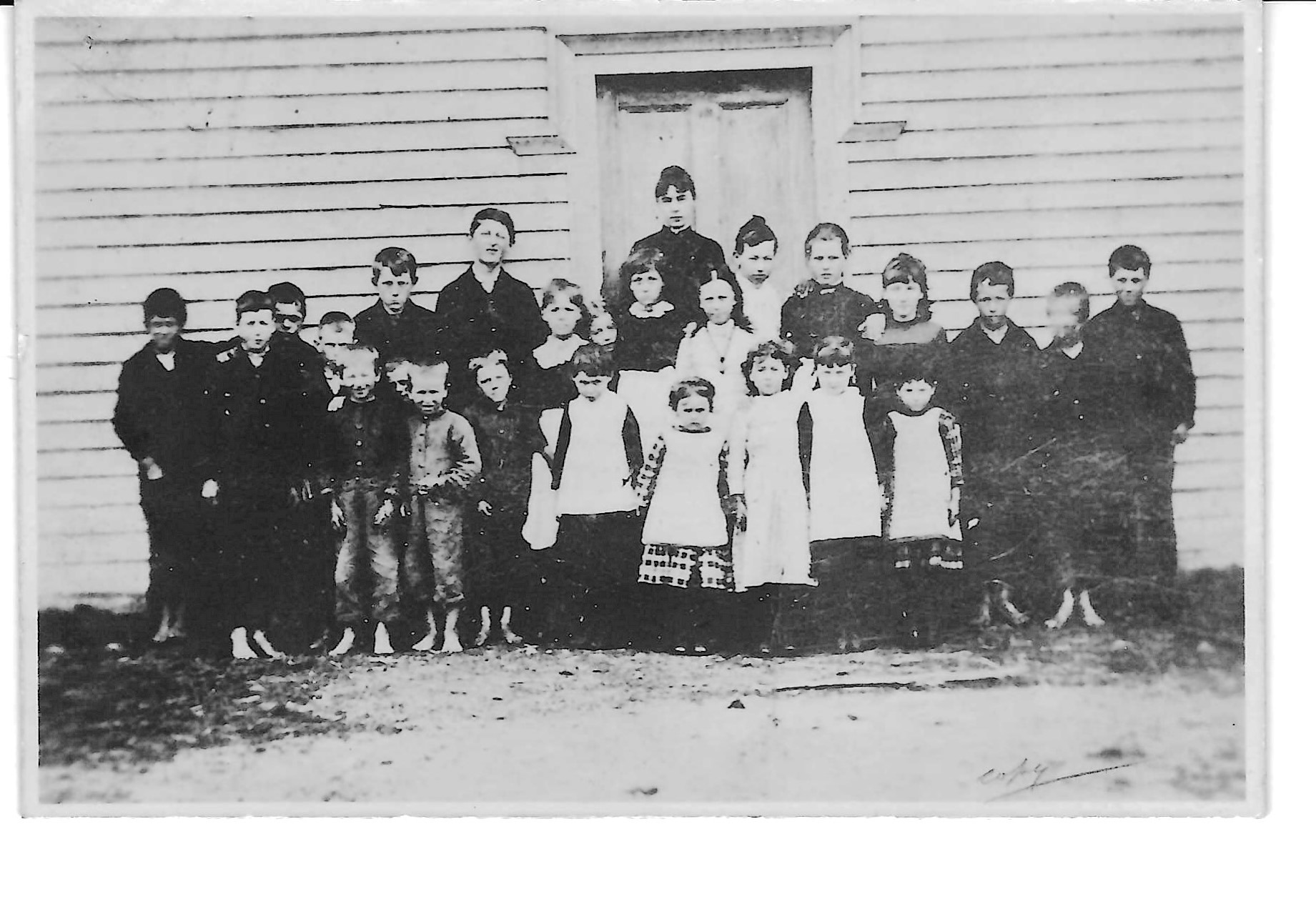


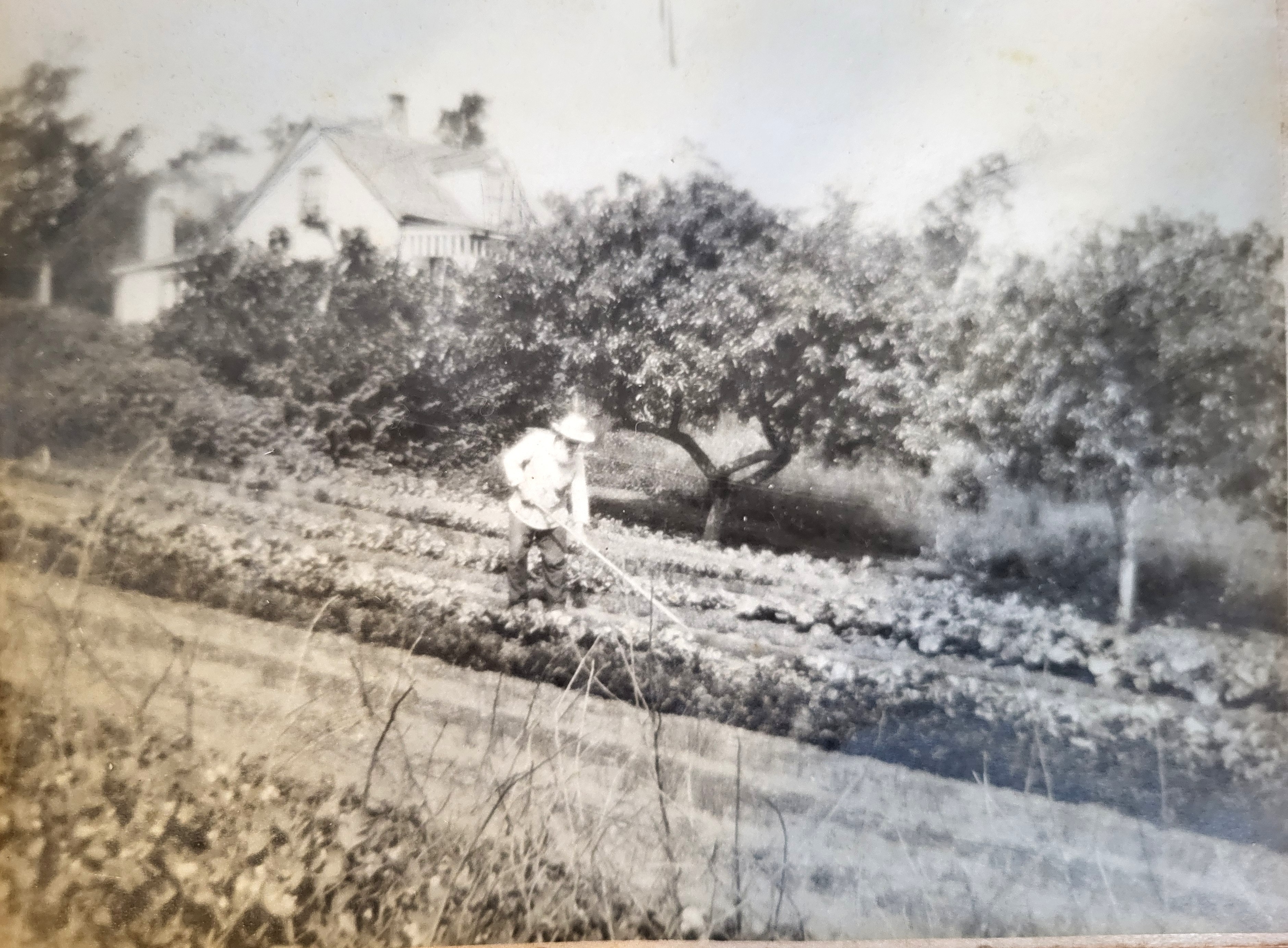


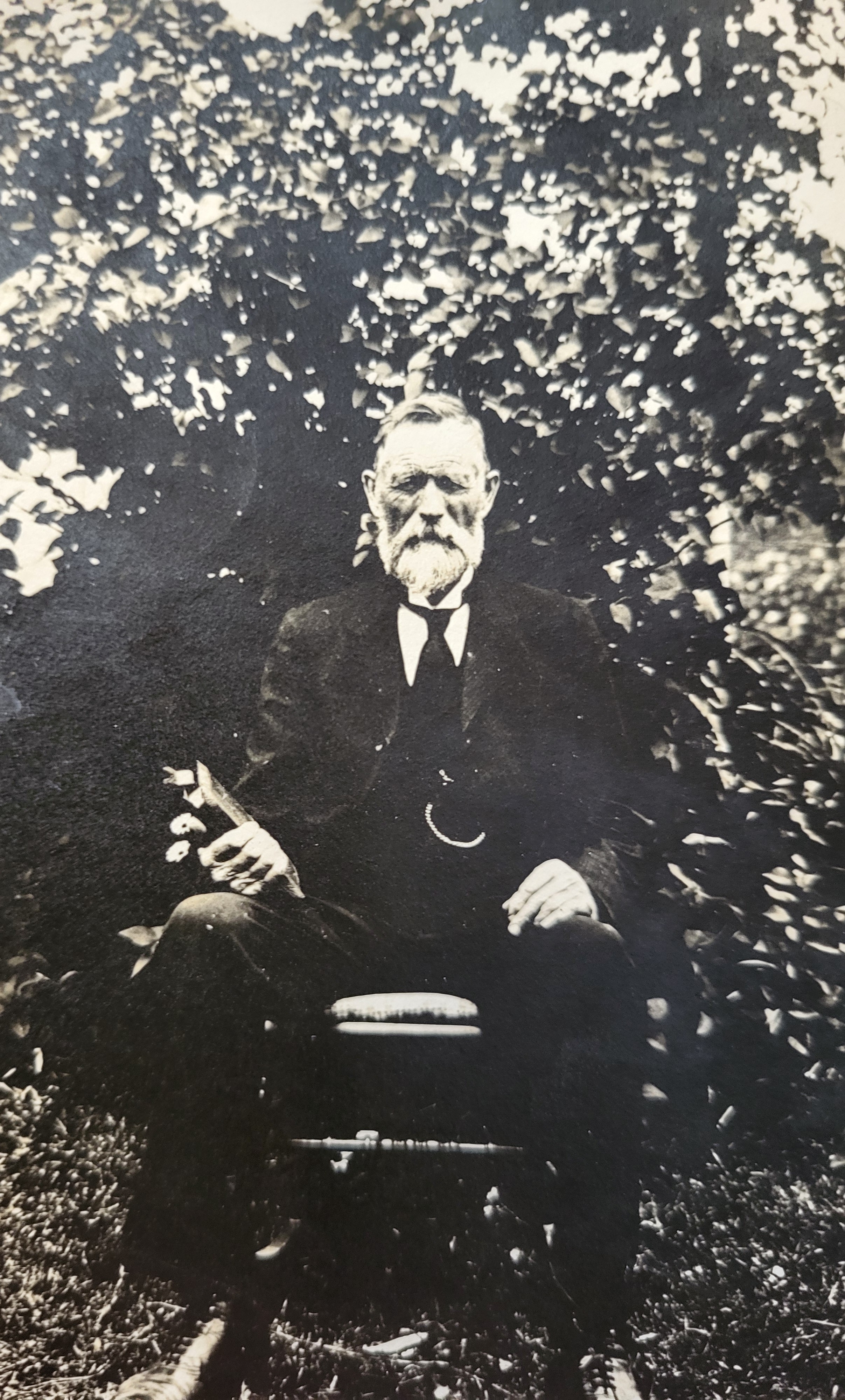

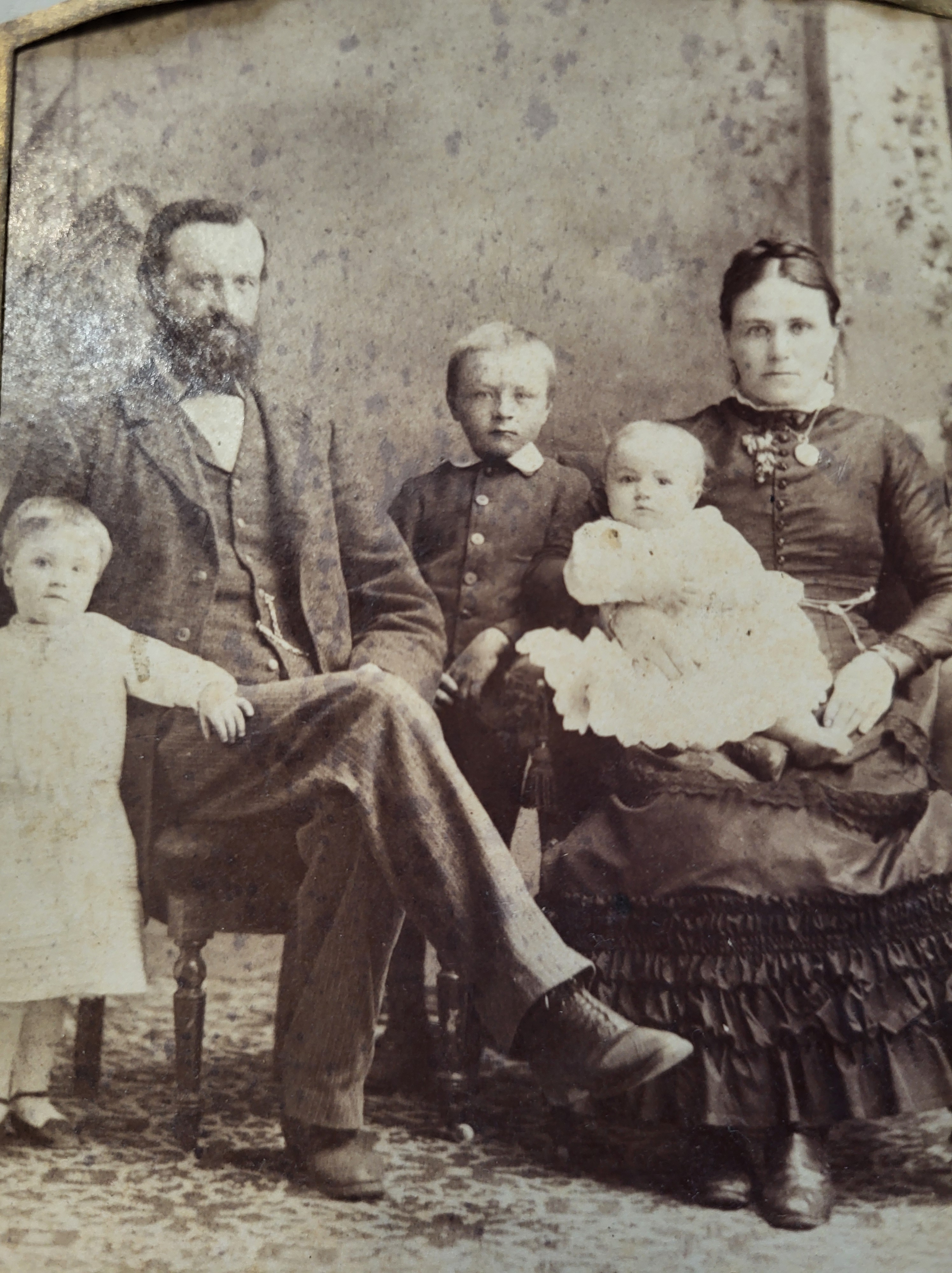


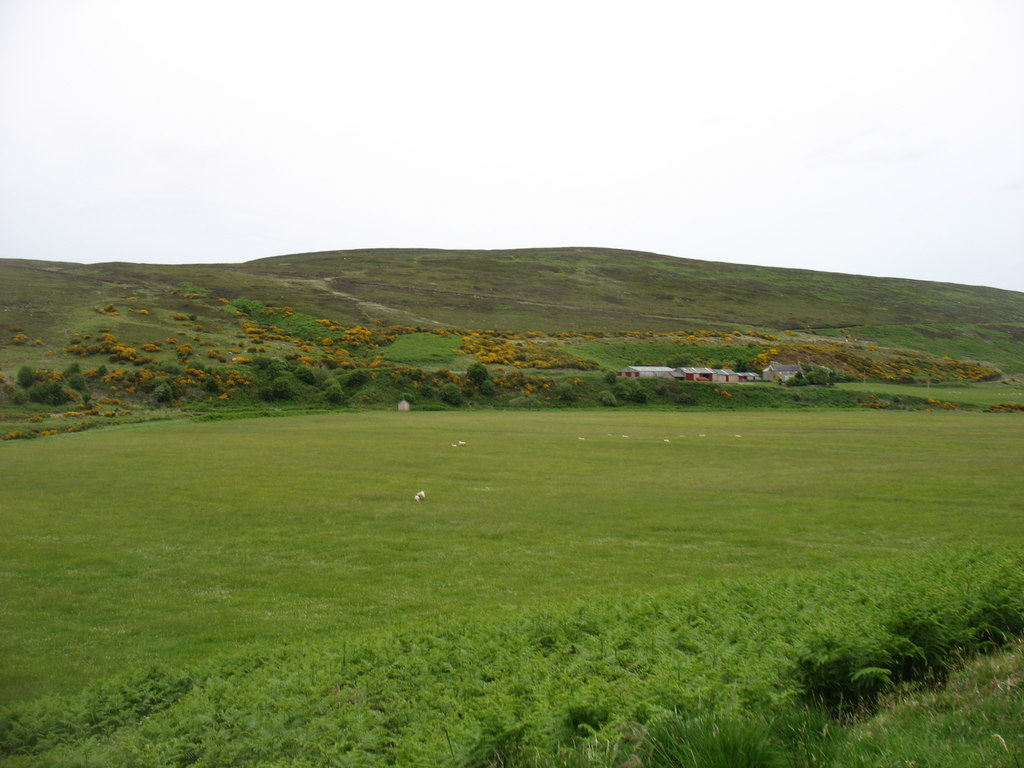


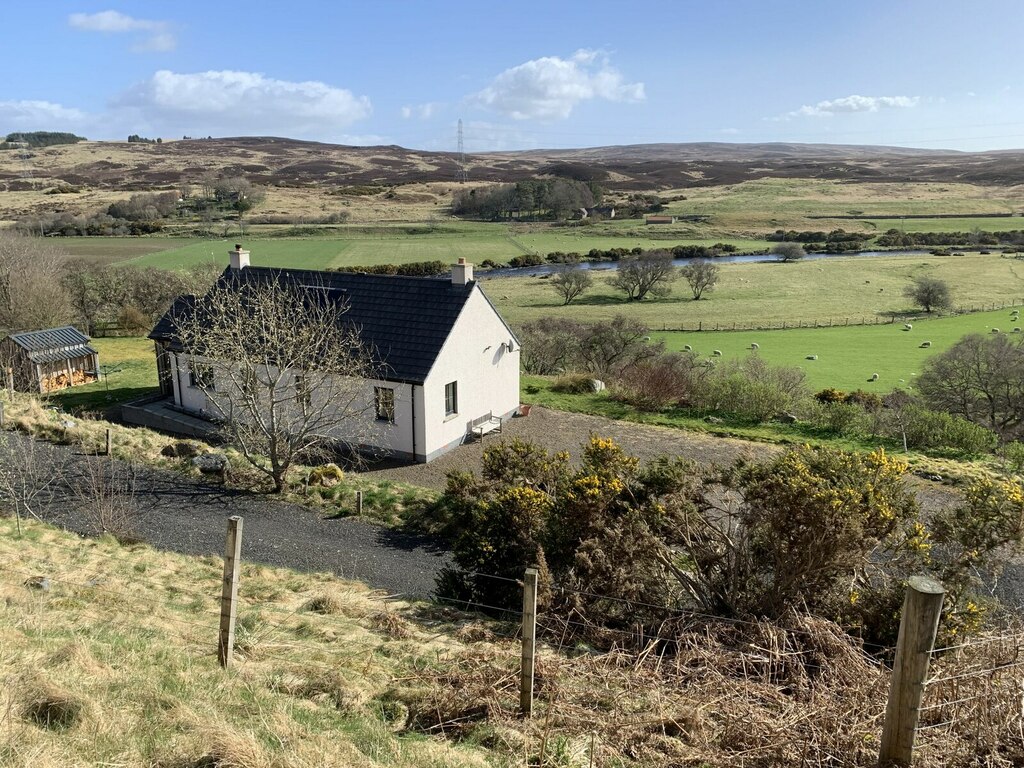


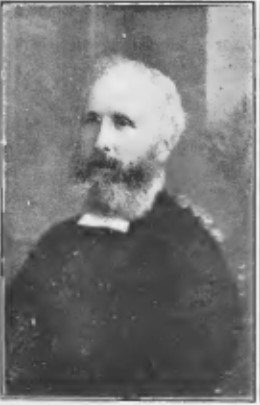

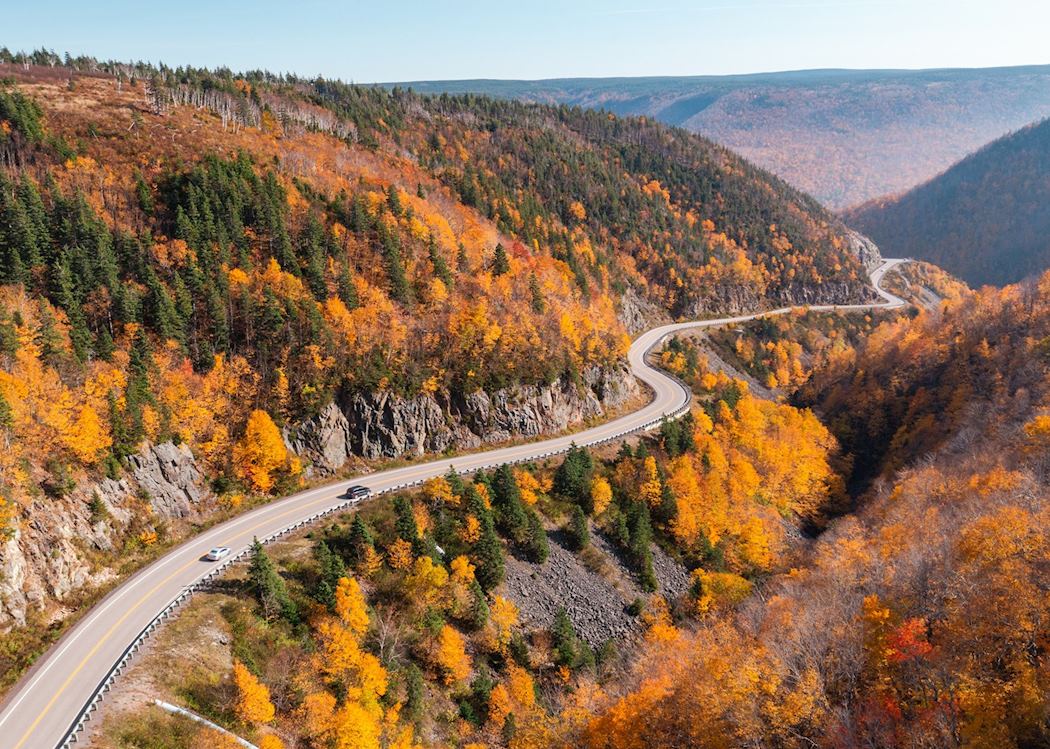


 earltown