In 1876 young Alex Polson struck out from the family farm on Polson Mountain, North River, to seek adventure. This was a time when families were beginning to migrate from the hard life of the Cobequid Hills to the mid western states. His travels took him first to Minnesota, followed by stints in the southwest, and finally to Gray’s Harbour in Washington. By the time he died in 1939, he had built a substantial lumbering empire in the Pacific Northwest, amassed thousands of acres of woodland, introduced a private railroad to his logging camps, served as a state senator, dabbled in mining and managed all of this with a steady hand through good times and bad.
The Polsons were one of the North River families that were an extension of the Earltown community. They were part of the Earltown congregation, connected with a few of the families between The Falls and Riversdale, and shared a common language, culture and Scottish homeland.
Alex’s parents were Peter Polson, (1822-1909), and Catherine MacLean (1823-1909). Peter Polson was born at Upper South River, Antigonish County, shortly after his parents, William Polson and Isabella Sutherland, arrived there from Scotland. The family had lived in Kildonan Parish when the older children were born. That parish was substantially cleared in the years leading up to 1820 and the young couple, if not forcibly removed, were certainly impacted to the point where they had to relocate.
Catherine MacLean was born at Black River between Kemptown and Riversdale. Her parents, Alex MacLean and Oighrig MacLennan1, came to Black River from Ardindrean, Loch Broom, in 1818. Catherine was a twin of Marion MacLeod of Central North River and one of a family of 13.

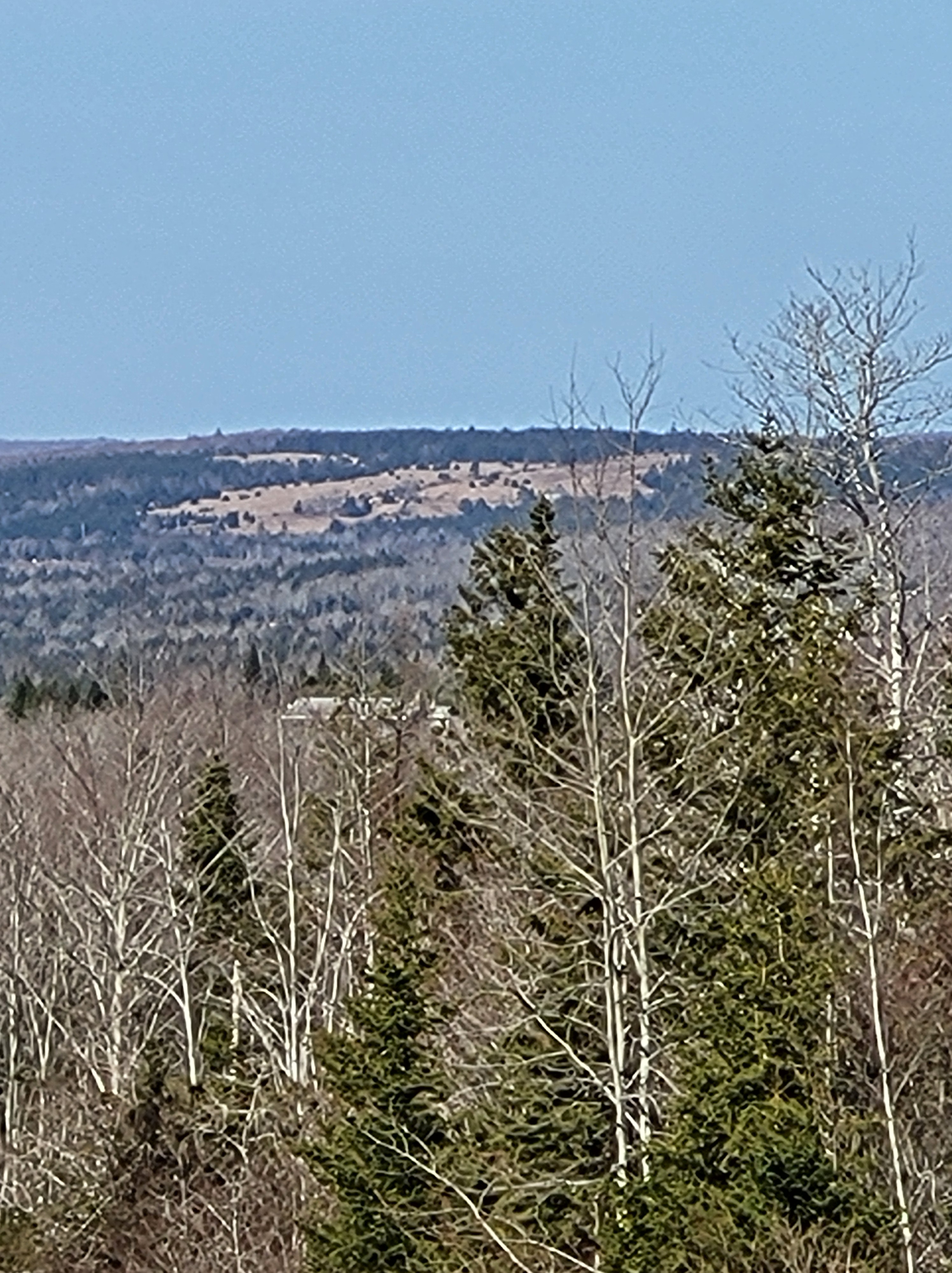
Peter Polson’s oldest sister, Ellen, was married to a John Murray at West Branch. This couple moved from West Branch to Upper North River around 1838. This connection is likely what brought Peter to the North River area. Peter and Catherine settled on a lofty farm on the MacKenzie Settlement Road. The clearing is visible at the head of the North River valley from various points along the 311 Highway and vantage points around Truro. Locally, the hill is known as Polson Mountain.
Alexander MacLean Polson, one of nine children, was born on this homestead in 1853. In the 1871 census, he had finished school and he was farming with his father. Woods work went hand in hand with farming. Males, starting in their late teens and extending to a time when they acquired their own farm, often spent the winter in the local logging camps. Given the number of mouths to feed on the Polson farm, Alex undoubtedly did time in the woods. According to biographical sketches, he left Polson Mountain at the age of 23 in 1876 with all his possessions in a saddle bag. His goal was to participate in the gold rush of the times and thus ended up in Deadwood, Dakota Territory, where gold was discovered that year. It was a lawless town that attracted such characters as Wyatt Earp, Calamity Jane and Wild Bill Hickok, (who was shot in the local saloon in 1876).
Unsurprisingly, Alex only hung around the town for three months. He then relocated to the Southwestern territories hoping the dry climate would help his asthma. His next home was in Carson City, Nevada, where he was involved in both lumbering and mining. In 1879, he moved to Tucson, Arizona, before embarking on a 1,500 mile horseback journey to Goldendale, Washington where he was employed in supplying timber for the expansion of the railroad. The following year he went to Olympia where he gained more experience as a foreman for a local lumbering company. Always traveling and exploring in his spare time, he came across Montesano, a small town on the Chehalis River, where he decided to put down roots.
One of his early accomplishments was the construction of the first splash dam in nearby Pacific County. A splash dam was used in logging to raise the water level of streams to allow for the passage of logs. Logs would be dumped in the pond behind the dam to accumulate for a drive. A chute allowed the water and logs to escape downstream. The logs would eventually be collected at tidewater, the usual location of the mills.
In 1891 Alex married a college educated lady from Iowa, Ella Arnold. They later moved to nearby Hoquiam on Gray’s Harbour where they built a spacious house. Together, this couple had three children: Franklyn Arnold, Charles Stuart and Dorothy Kathryn.

During his early years in Grays Harbour, Alex was the county assessor in addition to his logging ventures. Then, and subsequently, he was actively involved in trading and amassing property. If this was a conflict of interest, the journalists of the day were silent.
In 1887, his younger brother Robert arrived in Hoquiam, coming directly from Polson’s Mountain at the suggestion of Alex. He was a giant of a man who had learned the blacksmithing trade back in Nova Scotia. Blacksmiths were in high demand anywhere logging was an industry2. Robert became more enamored with logging and spent a year in the camps around Hoquiam before heading to British Columbia to try the trade in his native country. He was back in Hoquiam a year later, 1889, at which time he set up his own logging operation. In 1891 Alex and Robert merged their operations into what was later known as the Polson Logging Company.

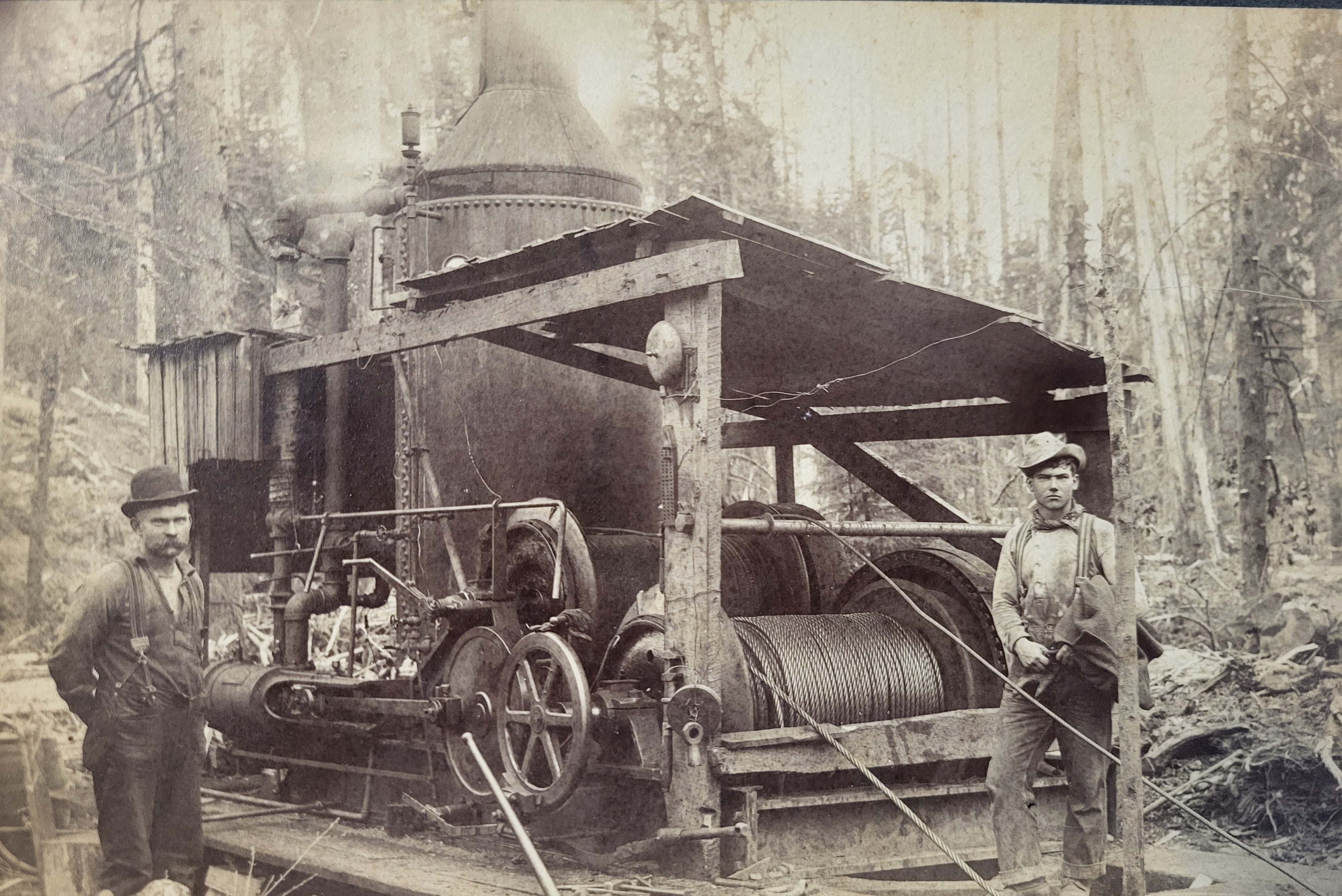
Both brothers initially operated using bull teams to skid the logs to the steams or splash dams. They quickly transitioned to the steam donkey when those became more readily available. By 1894, their operations were getting further inland so they set to work constructing their own railway to bring the logs to tidewater. Their first locomotive already had a reputation. Known as Farting Betsy, it was the first locomotive to cross the Cascades under its previous ownership.

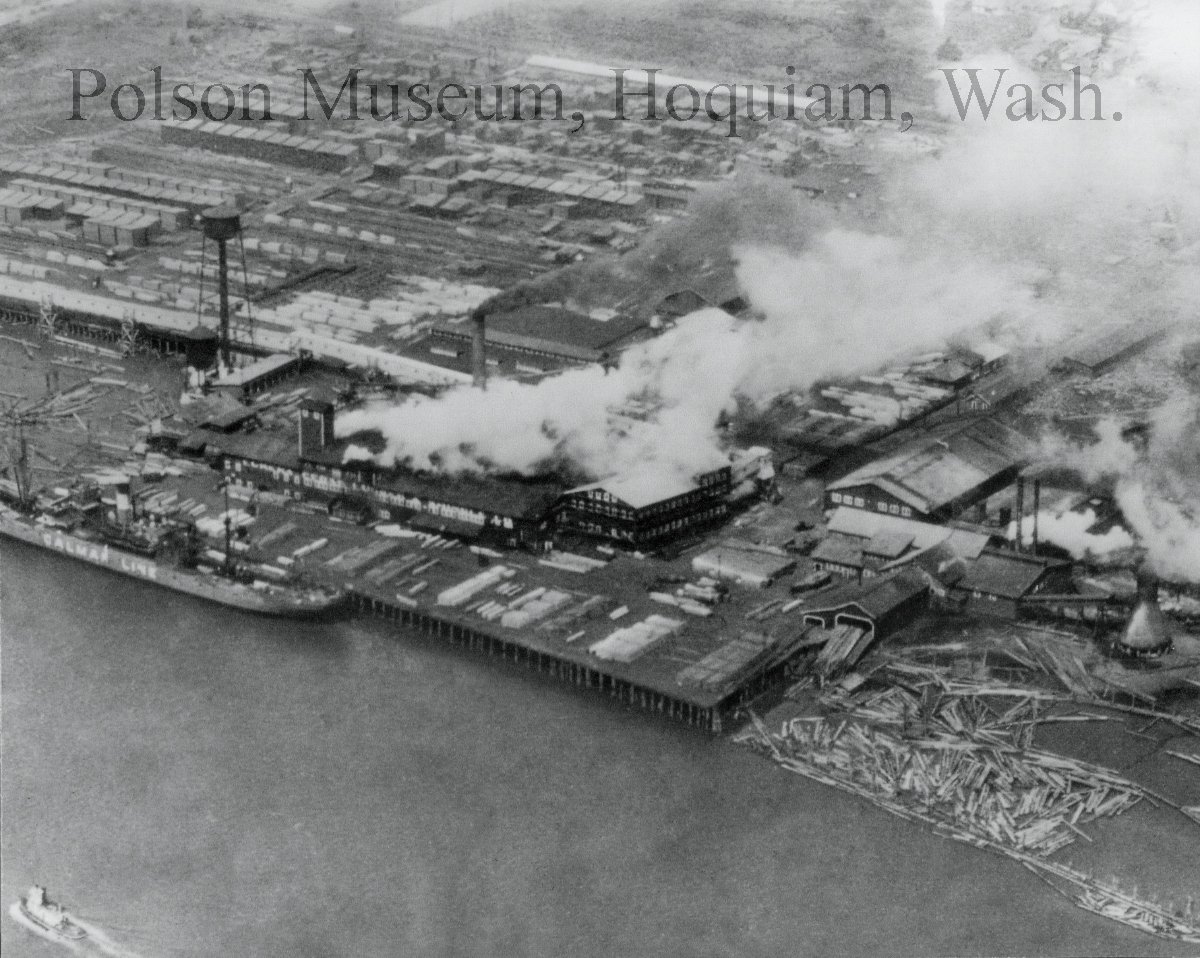
The next venture was to acquire their sawing capacity. Alex purchased a half interest in a Hoquiam mill. This interest was later sold but, according to the newspaper of the day, Alex had interests in other mills. The brothers were now on their way to be the largest lumbering empire in the Northwest.

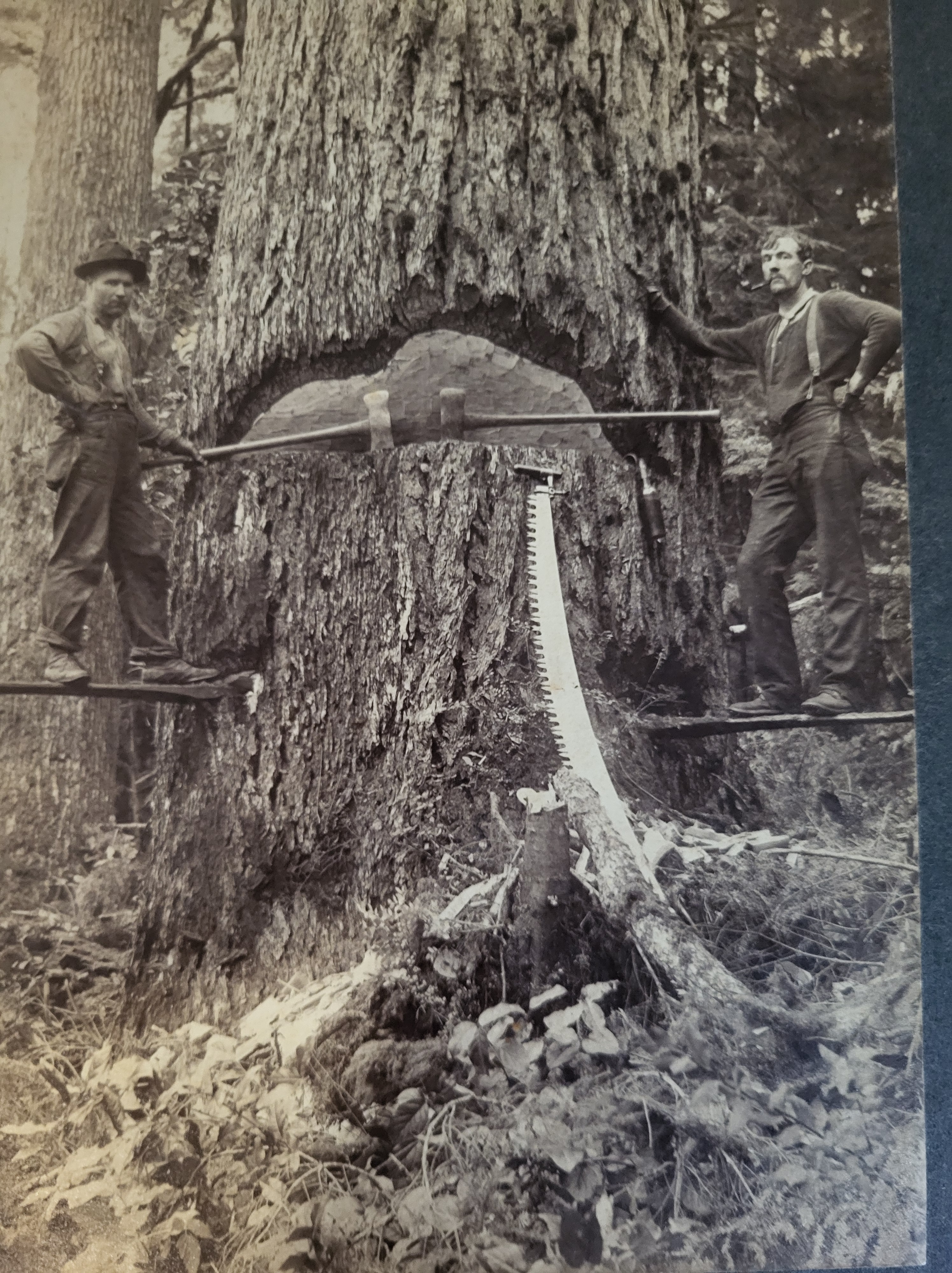
Their rapid growth was hurried along, ironically, by a forest fire. A fire had swept through some of the best timber stands north of Gray’s Harbour. Swift moving fires in a pine forest consume the brush but leave the main trunk. The trunk can be salvaged for timber if harvested in the first four or five years before worms ruin it. The Polsons, who suffered some losses from the fire, were in a position to carry out much of the salvage in the burned-out areas which more than compensated for their fire losses.


In 1903 Alexander MacLean Matheson3 of Upper Kemptown arrived in Hoquiam. He was a first cousin of the brothers who was an experienced millwright and had owned a shingle mill in Oregon. Alex Matheson and Robert Polson organized the Polson Shingle Company and opened their new facility in 1904 capable of producing 300,000 shingles per day. In 1914, the shingle mill was amalgamated into a new company called the Eureka Lumber and Shingle Company with Robert Polson as president, Alex Polson as Vice President and Alex Matheson as the mill manager. They purchased several other mills in the following years.
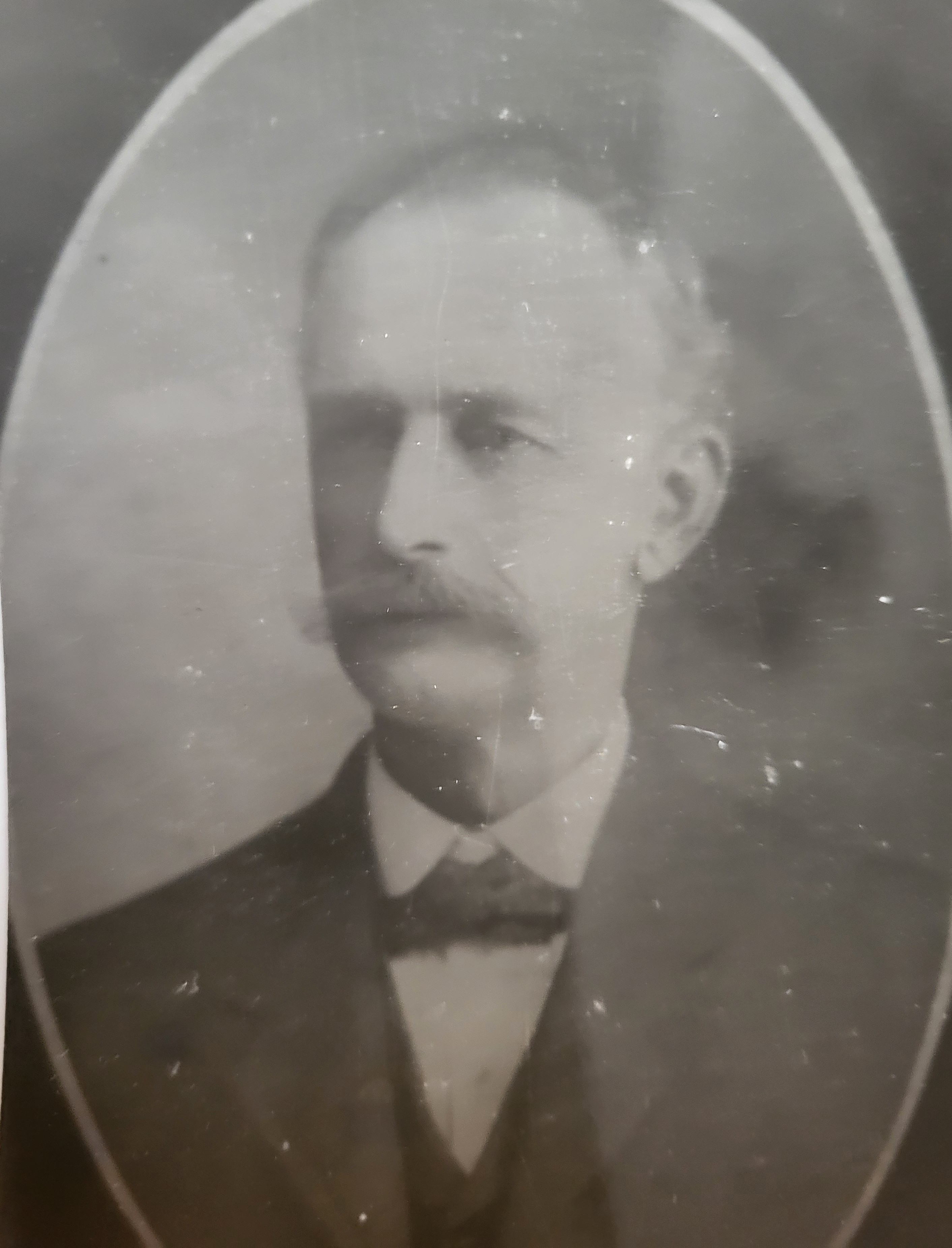
As for the daily management of the enterprise, Alex Polson was the public facing partner. He was more inclined towards negotiating, financing, and promoting. He was active on the city council and served as a state senator for a term. Civic duties did not come without some excitement. In 1901 Alex and the town postmaster, Ed Campbell, had a heated disagreement over the disposition of certain school lands. The argument escalated to the point where the combatants took to the street to settle the matter with fists. Cooler heads intervened before blood was shed and the matter was resolved in a more civilized fashion.
Alex’s stint as a state senator had its moments. As the Aberdeen Herald reported on numerous occasions, Senator Polson was in the lead on a project to create Gray’s Harbour County with a portion of Chehalis County. As reported on February 28th, 1907 by the Aberdeen Herald, a competing Democratic leaning paper in Montesano “…is searching the dictionary for abusive epithets to apply to him”.
Robert, described as a gentle giant in his eulogy, was considered the boss out in the woods. The company had twelve camps back in the bush housing over 200 employees. There were also ten locomotives each with a crew. Employees came and went. Some were ruffians. Safety was always a problem. It would have been no easy task to manage such an operation. However, judging from photographs of Robert, one would think twice before crossing him4. Robert had a mansion to himself on the Hoquiam waterfront next to his brother. His last years were spent with his sister, Maggie Ellis.
The sawmills were entrusted to their cousin Alex Matheson. He was assisted by his son Gilbert and brother William.
Meanwhile back in Nova Scotia, Old Peter Polson and his wife Catherine died within weeks of one another in 1909 and were buried in Earltown. Another of their sons, William, was the one who stayed behind to look after the parents and homestead. In 1904 William married Margaret Matheson5 of The Falls, daughter of George and Christy Matheson.[1]

In 1912 William and Margaret were summoned to Gray’s Harbour to join the family enterprise. The Aberdeen Herold of November 25,1912 reported that ” Mr. and Mrs. Wm. Polson of Truro, Nova Scotia, arrived last week and are now settled in their new home just east of this city. They were accompanied by Miss Marion Polson. “ The home, pictured below, was situated on a 450 acre farm on the outskirts of Montesano. William’s role was to manage the farm.

With 250 hungry men to feed in the camps, food security was an issue. The farm supplied eggs, chicken, turnips and likely a variety of other staples for the cookhouses. In a conversation with the writer several years ago, Alex Polson’s grandson, (also Alex Polson), claimed the farm was part of a strategic plan. If the timber industry were to fail, the brothers and their families could turn to farming.

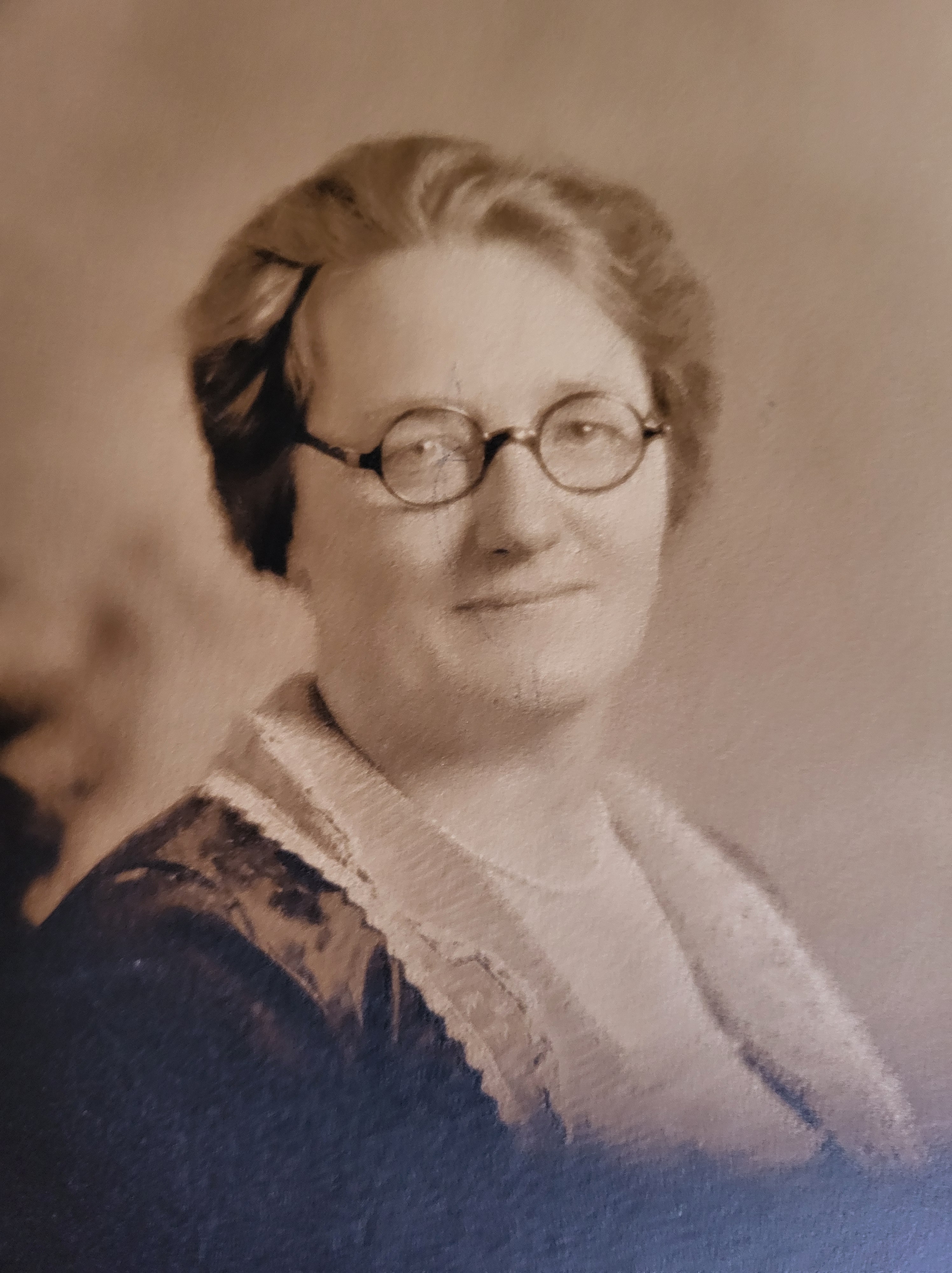

Other siblings also made their way to Grays Harbour. John J., of whom little is known, died in Hoquiam in 1883 making him the first to join Alex. Sister Margaret was in the area by the 1890’s. Margaret, (Maggie), was the second wife of logger Hiram Ellis. Together the couple established the Aberdeen Greenhouse business near their home in Aberdeen. Marion never married and lived with the Will Polson family.
Logging was not the only passion of Polson brothers. They always had an eye out for minerals when acquiring timberlands and also explored prospects in the north of the state. In 1910 Alex began development in relation to a sizable coal deposit near Mount Baker. It was reported years later that significant sums were spent on the property and it was not without controversy. Papers of the time reported several suits being launching both by and against Polson. A review of the mining history in the area is silent on the Polson seam leading us to believe that Polson abandoned or sold his claim. Robert was also known to dabble in the mining industry in the interior of British Columbia.
William Polson died in 1926, Robert in 1936 and Alex in 1939. Alex’s son Arnold had taken over the overall management in 1933. One of the key members of management team of the enterprise was Alexander MacLean Polson, son of William and Margaret. Mac, as he was known, was born on Polson’s Mountain in 1907 and was married to Blanche “Baie” Fulton of Marshall’s Corner, Upper Onslow. The name did not grant automatic privilege. Mac, like all the Polson offspring, worked on the farm and in the woodlands before becoming involved in the finances of the empire6.
In 1947 Mac helped negotiate the sale of the entire empire – sawmills, camps, railways, etc. – to Rayonier Inc. with the exception of 4,000 acres retained for family members. By that time, the company appears to have mergered with a couple of other Grays Harbour lumbering families.
At the peak of their operation, the Polson Company owned and operated two tidewater sawmills, a shingle mill, twelve logging and construction camps, 125 miles of rail, a huge inventory of logging and railway equipment and boasted an annual output of 300 million feet of lumber. At the time of sale, it held 50,000 acres of virgin timber and 80,000 acres of reforested timberlands.
The founding brothers played the long game, risks were calculated, stability was valued over quick returns and their humble Scottish origins taught them not to take their good fortunes for granted. Family mattered as cousins were welcomed to Hoquiam and either employed or directed to employment. Young men from the Colchester hills were treated likewise. Some earned enough to move on to safer vocations while others settled into logging and milling
For two lads who grew up in the Cobequid Hills where there were often more times than meals, their accomplishments were monumental.
- Pronouced Erig and often spelled by the clergy as Erc. It loosely translates to Henrietta or Harriot as all three usually devolved into Henny in both Gaelic and English. ↩︎
- Blacksmithing is most often associated with shoeing horses. However this was the trade that custom manufactured machinery used on the farm or in mills. It was a particularly useful skill employed in the logging industry as new methods were constantly being adopted which required a fair degree of custom fabrication. ↩︎
- Alex Matheson was a son of Gilbert Matheson and Nancy MacLean, Upper Kemptown. ↩︎
- The writer’s grandfather, Gordon S. Matheson, “chopped” in the Polson camps at one point before moving on to explore farming in Southern Alberta. He acquired land near Lethbridge but was called back to The Falls to take over the home place from his aging father. ↩︎
- Margaret’s father George was a first cousin of the Polson brothers and a brother of their mill manager, Alex M. Matheson. ↩︎
- Daily American Republic 1985-01-25: Alexander MacLean Polson, treasurer of one of the largest logging companies in the world, died Wednesday. He was 77. Polson worked for the Polson Logging Co., which was founded by his uncles in 1891. The company sold its mammoth holdings to Rayonier in 1950. ↩︎
Sources:
Direct correspondence, Dr. Robert Polson, Ithica, NY, 1975
Hunt, Herbert Washington, West of the Cascades SJ Clarke Publishing, 1917
Van Sycle, Edward They Tried to Cut It All, Grays Harbor–Turbulent Years of Greed and Greatness. Seattle, WA :Pacific Search Press, 1981
1871 Census – Onslow, Nova Scotia
1900 Census – Washington
1910 Census – Washington
Multiple issues of Aberdeen Herald 1890-1917
Personal conversations – Alex Polson, Seattle
Lillian Polson Henkle, Oregon
Don and Kay Daemkar
Ruth Matheson Renner, Ariel, Washington
Special thanks to the Polson Museum, Hoquiam, for permission to use their photographs
 earltown