Lumber Barons from North River

In 1876 young Alex Polson struck out from the family farm on Polson Mountain, North River,  to seek adventure.  This was a time when families were beginning to migrate from the hard life of the Cobequid Hills to the mid western states.  His travels took him first to Minnesota, followed by stints in the southwest, and finally to Gray’s Harbour in Washington.  By the time he died in 1939, he had built a substantial lumbering empire in the Pacific Northwest, amassed thousands of acres of woodland, introduced a private railroad to his logging camps, served as a state senator, dabbled in mining and managed all of this with a steady hand through good times and bad.

The Polsons were one of the North River families that were an extension of the Earltown community.  They were part of the Earltown congregation, connected with a few of the families between The Falls and Riversdale, and shared a common language, culture and Scottish homeland.
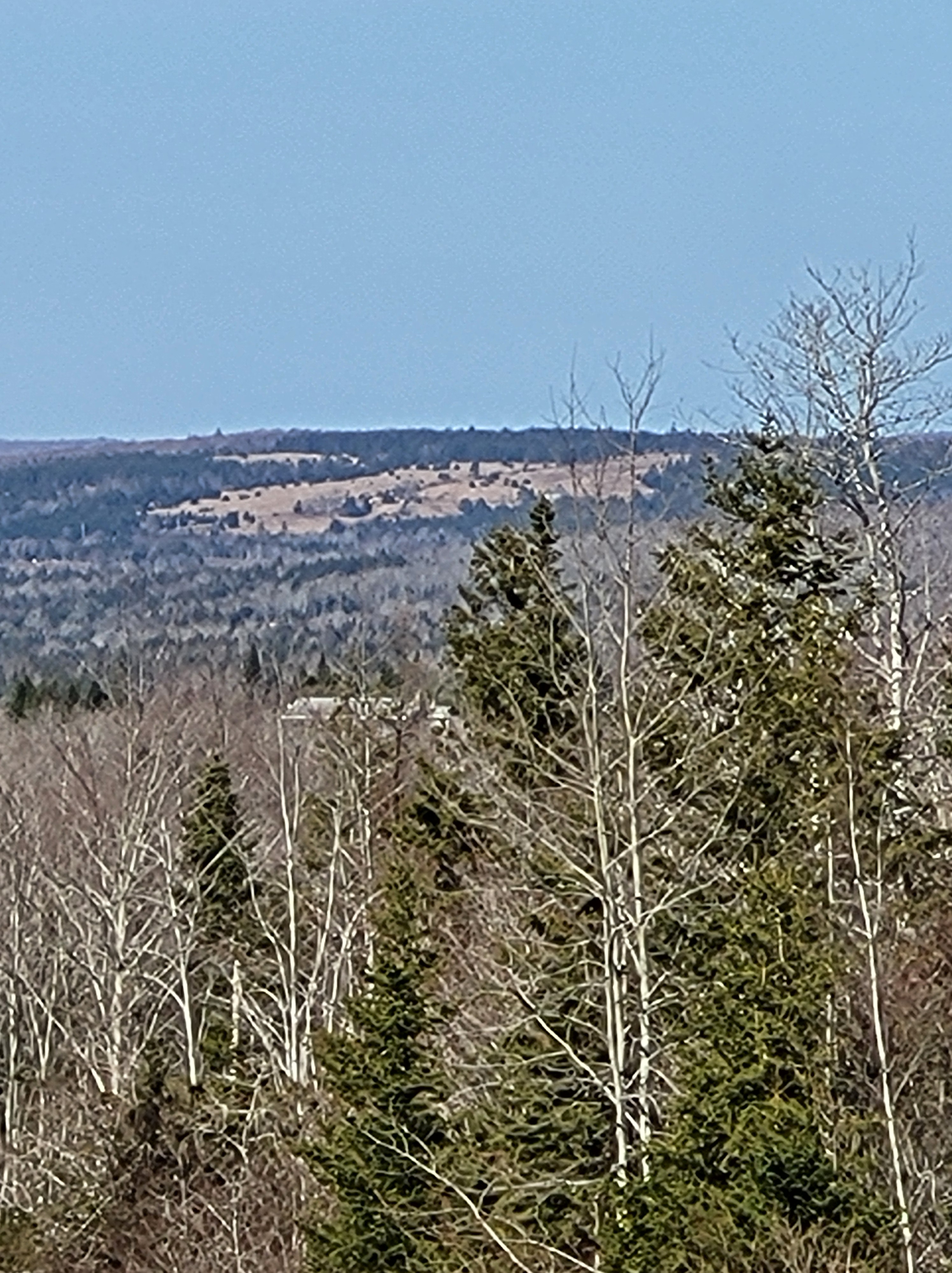
The clearing is in the distance on the MacKenzie Settlement Road and the ridge used to be commonly known as Polson Mountain. The Polson homestead was to the upper right.

Alex’s parents were Peter Polson, (1822-1909), and Catherine MacLean (1823-1909).  Peter Polson was born at Upper South River, Antigonish County, shortly after his parents,  William Polson and Isabella Sutherland, arrived there from Scotland.  The family had lived in Kildonan Parish when the older children were born.  That parish was substantially cleared in the years leading up to 1820 and the young couple, if not forcibly removed, were certainly impacted to the point where they had to relocate.

Catherine MacLean was born at Black River between Kemptown and Riversdale.  Her parents, Alex MacLean and Oighrig MacLennan1,  came to Black River from Ardindrean, Loch Broom, in 1818. Catherine was a twin of Marion MacLeod of Central North River and one of a family of 13. 

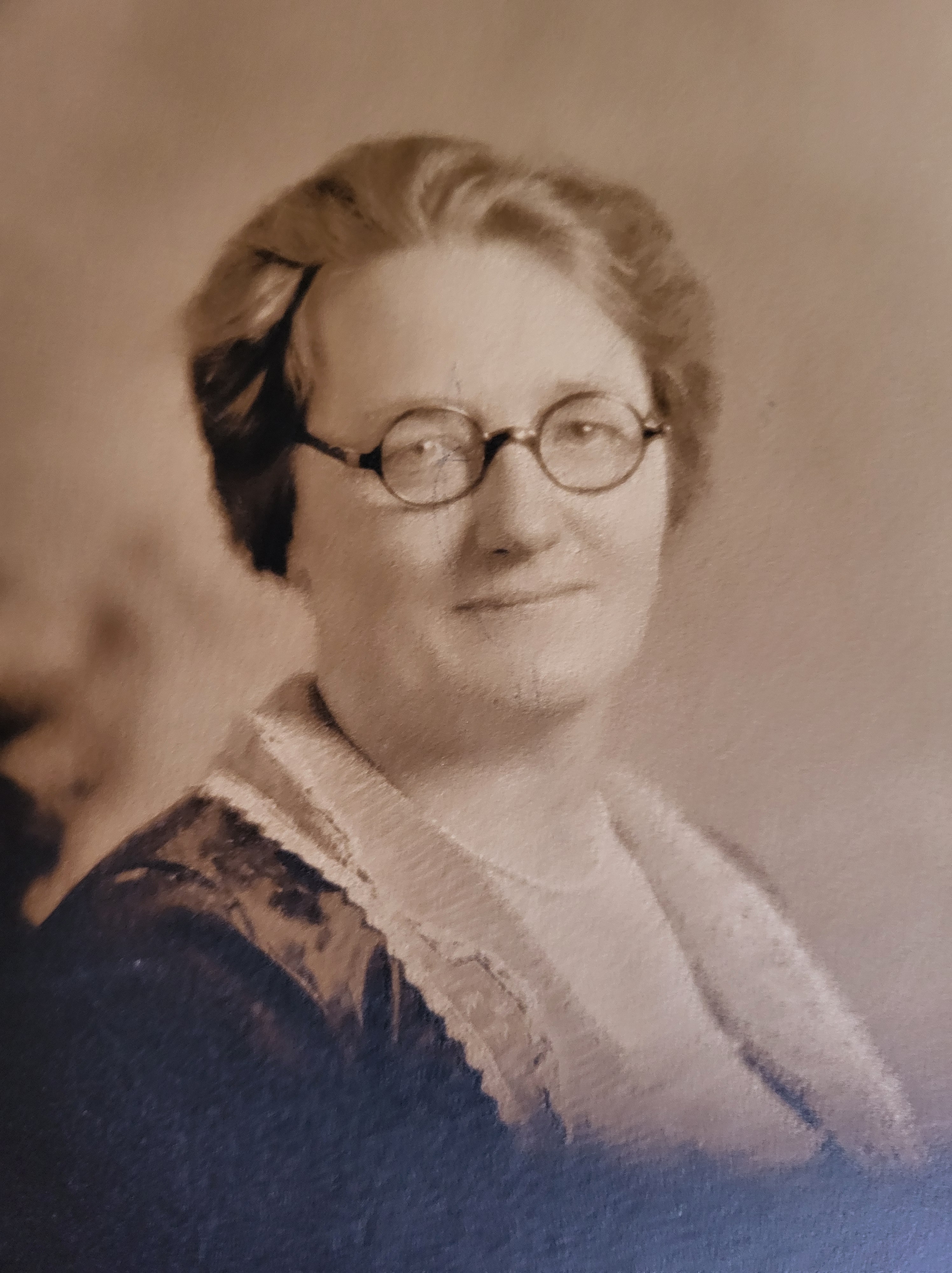
Catherine MacLean Polson (Polson Museum Collection)

Peter Polson’s oldest sister, Ellen, was married to a John Murray at West Branch.  This couple moved from West Branch to Upper North River around 1838.  This connection is likely what brought Peter to the North River area.  Peter and Catherine settled on a lofty farm on the MacKenzie Settlement Road.  The clearing is visible at the head of the North River valley from various points along the 311 Highway and vantage points around Truro.   Locally, the hill is known as Polson Mountain. 

Alexander MacLean Polson, one of nine children, was born on this homestead in 1853. In the 1871 census, he had finished school and he was farming with his father. Woods work went hand in hand with farming. Males, starting in their late teens and extending to a time when they acquired their own farm, often spent the winter in the local logging camps. Given the number of mouths to feed on the Polson farm, Alex undoubtedly did time in the woods. According to biographical sketches, he left Polson Mountain at the age of 23 in 1876 with all his possessions in a saddle bag.  His goal was to participate in the gold rush of the times and thus ended up in Deadwood, Dakota Territory, where gold was discovered that year.  It was a lawless town that attracted such characters as Wyatt Earp, Calamity Jane and Wild Bill Hickok, (who was shot in the local saloon in 1876).

Unsurprisingly, Alex only hung around the town for three months. He then relocated to the Southwestern territories hoping the dry climate would help his asthma.  His next home was in Carson City, Nevada, where he was involved in both lumbering and mining.   In 1879, he moved to Tucson, Arizona, before embarking on a 1,500 mile horseback journey to Goldendale, Washington where he was employed in supplying timber for the expansion of the railroad.   The following year he went to Olympia where he gained more experience as a foreman for a local lumbering company.   Always traveling and exploring in his spare time, he came across Montesano, a small town on the Chehalis River, where he decided to put down roots.

One of his early accomplishments was the construction of the first splash dam in nearby Pacific County.  A splash dam was used in logging to raise the water level of streams to allow for the passage of logs.   Logs would be dumped in the pond behind the dam to accumulate for a drive.  A chute allowed the water and logs to escape downstream.  The logs would eventually be collected at tidewater, the usual location of the mills.

In 1891 Alex married a college educated lady from Iowa, Ella Arnold.  They later moved to nearby Hoquiam on Gray’s Harbour where they built a spacious house.  Together, this couple had three children: Franklyn Arnold, Charles Stuart and Dorothy Kathryn.

Alexander MacLean Polson (Polson Museum Collection)

During his early years in Grays Harbour, Alex was the county assessor in addition to his logging ventures.  Then, and subsequently, he was actively involved in trading and amassing property.  If this was a conflict of interest, the journalists of the day were silent.

In 1887, his younger brother Robert arrived in Hoquiam, coming directly from Polson’s Mountain at the suggestion of Alex.   He was a giant of a man who had learned the blacksmithing trade back in Nova Scotia.  Blacksmiths were in high demand anywhere logging was an industry2.   Robert became more enamored with logging and spent a year in the camps around Hoquiam before heading to British Columbia to try the trade in his native country.  He was back in Hoquiam a year later, 1889, at which time he set up his own logging operation.  In 1891  Alex and Robert merged their operations into what was later known as the Polson Logging Company.

Robert Polson (Polson Museum Collection)

Both brothers initially operated using bull teams to skid the logs to the steams or splash dams.  They quickly transitioned to the steam donkey when those became more readily available.  By 1894, their operations were getting further inland so they set to work constructing their own railway to bring the logs to tidewater.  Their first locomotive already had a reputation.  Known as Farting Betsy, it was the first locomotive to cross the Cascades under its previous ownership.

Polson Railway Camp (Polson Museum Collection)

The next venture was to acquire their  sawing capacity.   Alex purchased a half interest in a Hoquiam mill.   This interest was later sold but, according to the newspaper of the day, Alex had interests in other mills.  The brothers were now on their way to be the largest lumbering empire in the Northwest.

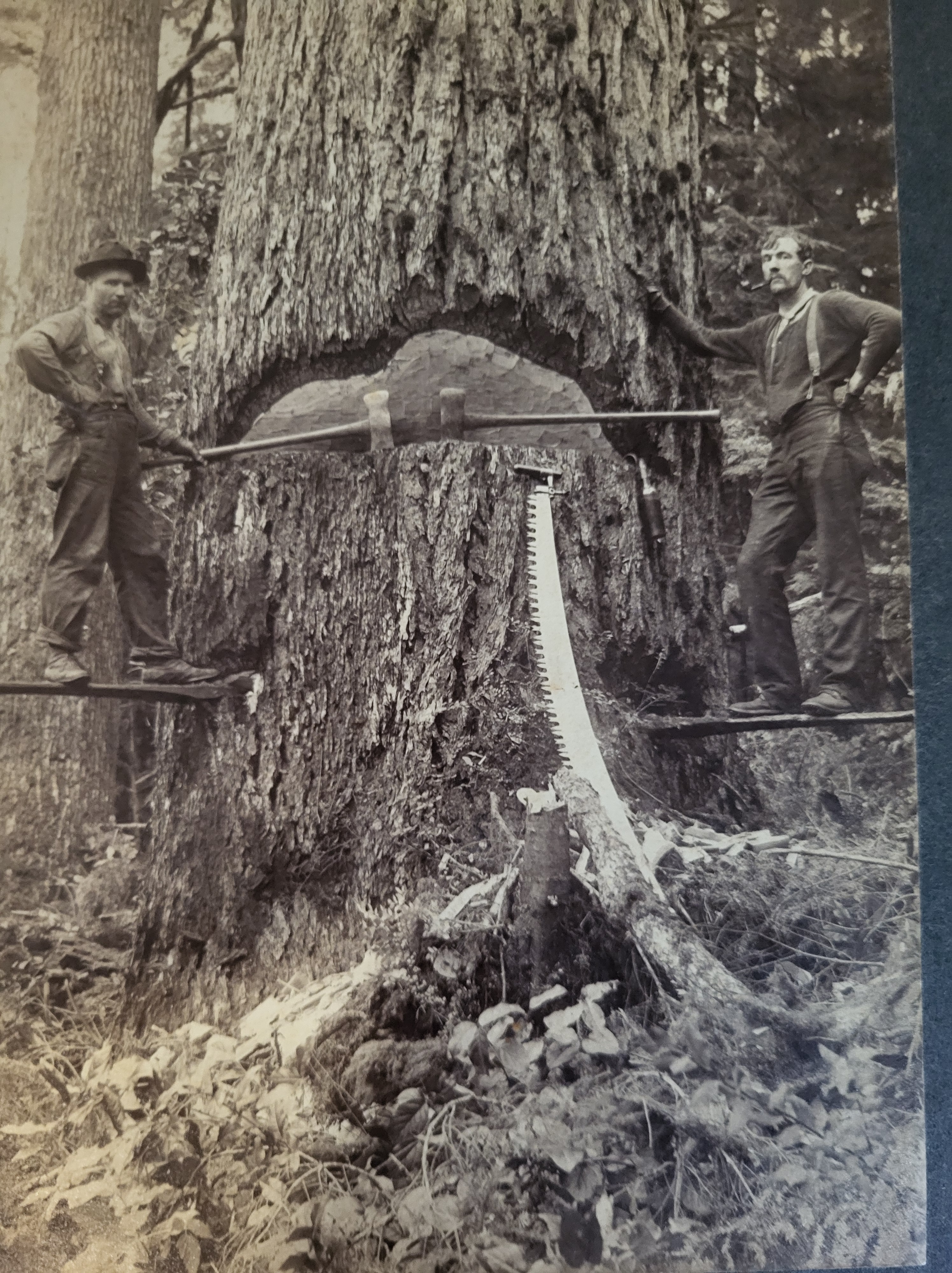
Polson Logging Crew (Glen Matheson collection)
Smoke Break (Glen Matheson collection)

Their rapid growth was hurried along, ironically, by a forest fire.  A fire had swept through some of the best timber stands north of Gray’s Harbour.  Swift moving fires in a pine forest consume the brush but leave the main trunk.  The trunk can be salvaged for timber if harvested in the first four or five years before worms ruin it.   The Polsons,  who suffered some losses from the fire, were in a position to carry out much of the salvage in the burned-out areas which more than compensated for their fire losses.

Woods camp office with Robert Polson sitting on step (Polson Museum Collection)
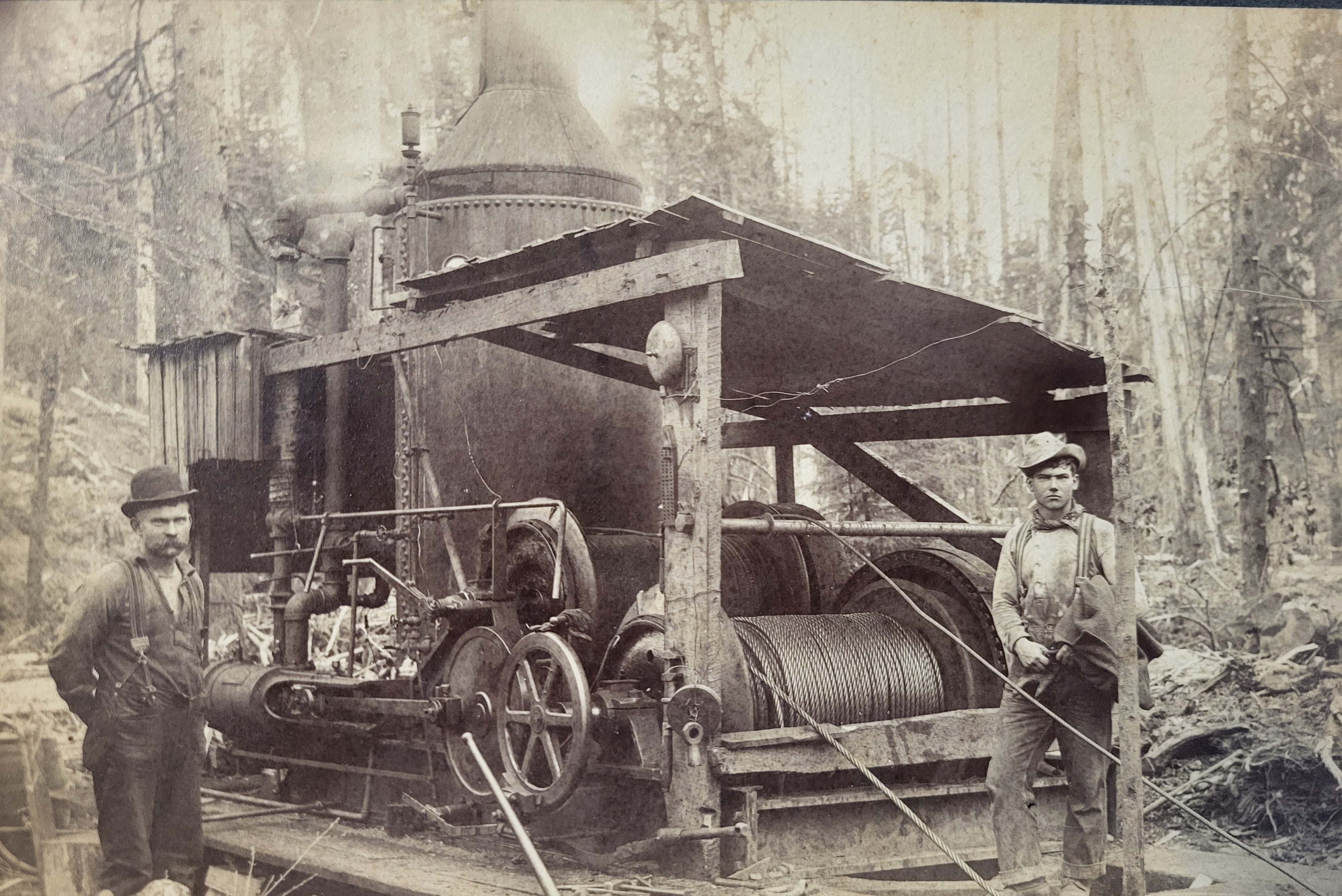
The Steam Donkey was adopted early by the Polsons. They replaced teams of oxen or horse to snig logs out of the woods to the rail or waterways. It was stationary and employed pulleys, cables and spar towers to navigate the logs. The Aberdeen Herald reported that Alex Polson designed his own version for his operations. (Glen Matheson collection)
One of the Polson Camps. The bunkhouses were up on blocks so they could be loaded onto flat cars and transported to the next cut. (Glen Matheson Collection)

In 1903 Alexander MacLean Matheson3 of Upper Kemptown arrived in Hoquiam.  He was a first cousin of the brothers who was an experienced millwright and had owned a shingle mill in Oregon.  Alex Matheson and Robert Polson organized the Polson Shingle Company and opened their new facility in 1904  capable of producing  300,000 shingles per day.  In 1914, the shingle mill was amalgamated into a new company called the Eureka Lumber and Shingle Company with Robert Polson as president, Alex Polson as Vice President and Alex Matheson as the mill manager. They purchased several other mills in the following years.
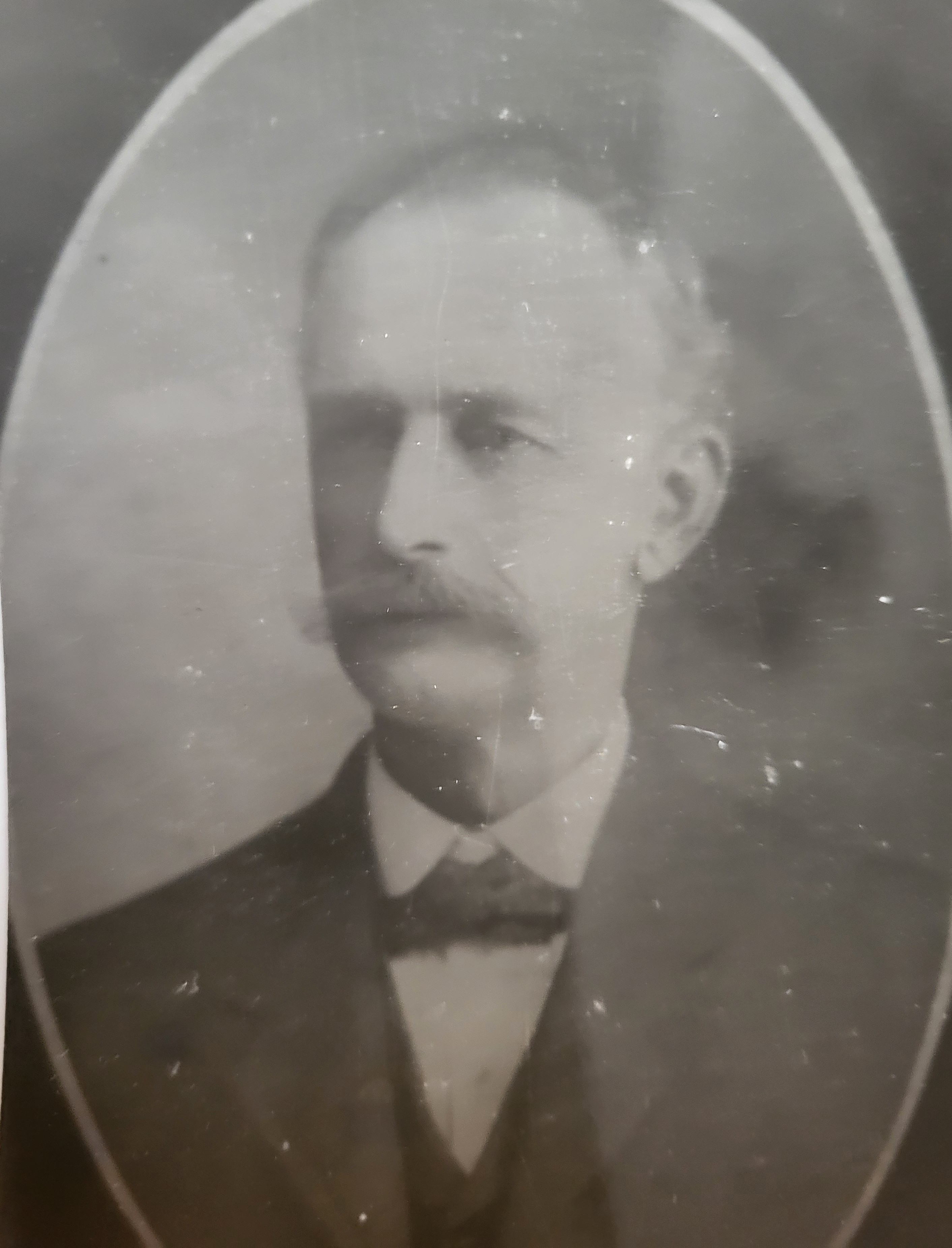
Alex MacLean Matheson (Glen Matheson collection)

As for the daily management of the enterprise,  Alex Polson was the public facing partner.  He was more inclined towards negotiating, financing, and promoting.  He was active on the city council and served as a state senator for a term.   Civic duties did not come without some excitement.  In 1901 Alex and the town postmaster,  Ed Campbell,  had a heated disagreement over the disposition of certain school lands.  The argument escalated to the point where the combatants took to the street to settle the matter with fists.  Cooler heads intervened before blood was shed and the matter was resolved in a more civilized fashion.

Alex’s stint as a state senator had its moments. As the Aberdeen Herald reported on numerous occasions, Senator Polson was in the lead on a project to create Gray’s Harbour County with a portion of Chehalis County. As reported on February 28th, 1907 by the Aberdeen Herald, a competing Democratic leaning paper in Montesano “…is searching the dictionary for abusive epithets to apply to him”.

Robert, described as a gentle giant in his eulogy, was considered the boss out in the woods.  The company had twelve camps back in the bush housing over 200 employees.  There were also ten locomotives each with a crew.   Employees came and went.  Some were ruffians.  Safety was always a problem.  It would have been no easy task to manage such an operation.  However, judging from photographs of Robert, one would think twice before crossing him4. Robert had a mansion to himself on the Hoquiam waterfront next to his brother. His last years were spent with his sister, Maggie Ellis.

The sawmills were entrusted to their cousin Alex Matheson.  He was assisted by his son Gilbert and brother William.
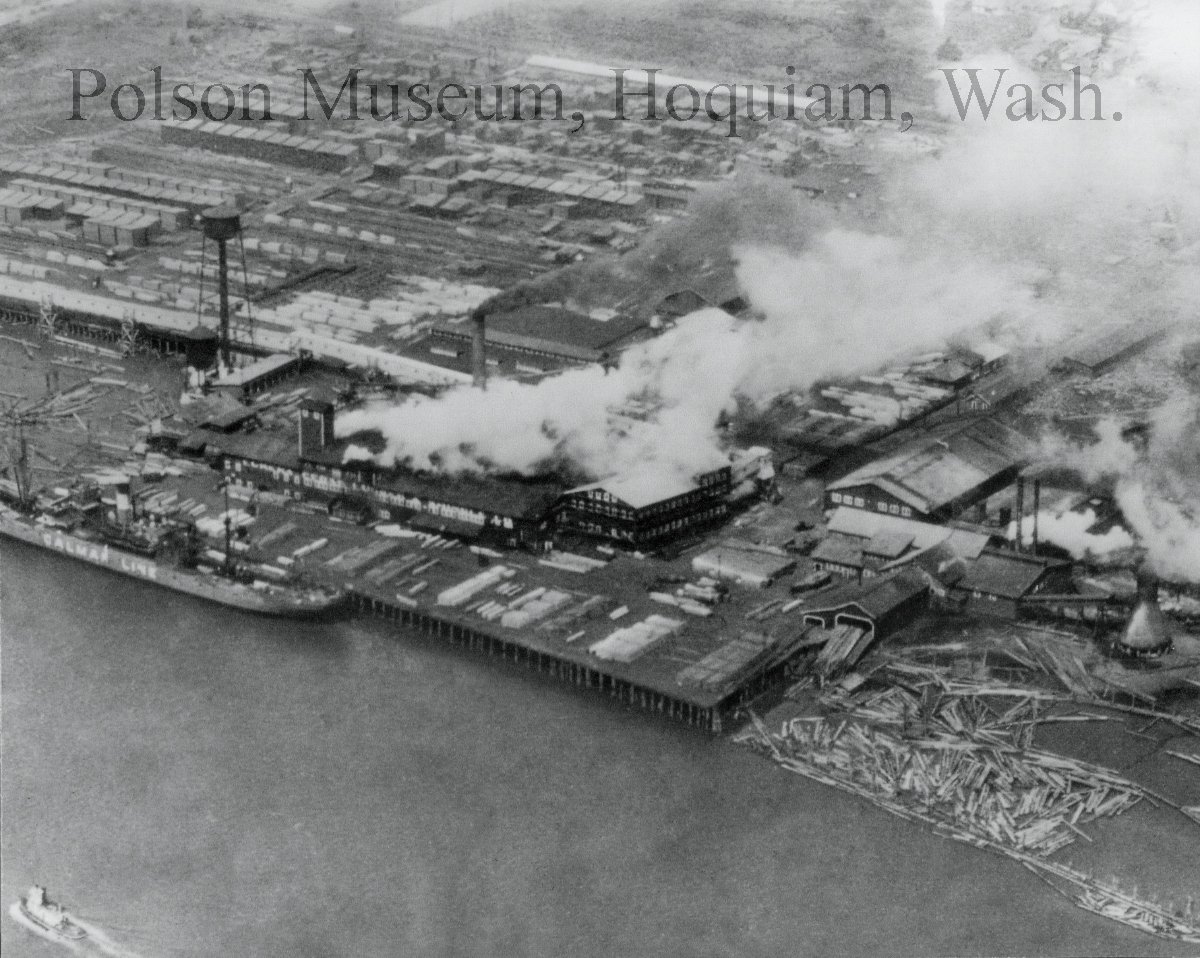
Eureka Mill, Hoquiam, Washington (Polson Museum Collection)

Meanwhile back in Nova Scotia, Old Peter Polson and his wife Catherine died within weeks of one another in 1909 and were buried in Earltown.   Another of their sons, William, was the one who stayed behind to look after the parents and homestead.   In 1904 William married Margaret Matheson5 of The Falls, daughter of George and Christy Matheson.[1] 

Polson Family Graves Earltown Village Cemetery

In 1912 William and Margaret were summoned to Gray’s Harbour to join the family enterprise.  The Aberdeen Herold of  November 25,1912 reported that ”   Mr. and Mrs. Wm. Polson of Truro, Nova Scotia, arrived last week and are now settled in their new home just east of this city. They were accompanied by Miss Marion Polson. “   The home, pictured below, was situated on a 450 acre farm on the outskirts of Montesano.  William’s role was to manage the farm.   

Will and Margaret Polson home near Montesano (Glen Matheson Collection)

With 250 hungry men to feed in the camps, food security was an issue.  The farm supplied eggs, chicken, turnips and likely a variety of other staples for the cookhouses.   In a conversation with the writer several years ago,  Alex Polson’s grandson, (also Alex Polson), claimed the farm was part of a strategic plan.   If the timber industry were to fail, the brothers and their families could turn to farming. 

Cookhouse Crew. The cookhouses and dining rooms were on rail dollies for easy transport to the next cutting (Polson Museum Collection)

Other siblings also made their way to Grays Harbour.  John J., of whom little is known, died in Hoquiam in 1883 making him the first to join Alex.   Sister Margaret was in the area by the 1890’s.  Margaret, (Maggie), was the second wife of logger  Hiram Ellis.  Together the couple established the Aberdeen Greenhouse business near their home in Aberdeen.  Marion never married and lived with the Will Polson family.

Logging was not the only passion of Polson brothers. They always had an eye out for minerals when acquiring timberlands and also explored prospects in the north of the state. In 1910 Alex began development in relation to a sizable coal deposit near Mount Baker. It was reported years later that significant sums were spent on the property and it was not without controversy. Papers of the time reported several suits being launching both by and against Polson. A review of the mining history in the area is silent on the Polson seam leading us to believe that Polson abandoned or sold his claim. Robert was also known to dabble in the mining industry in the interior of British Columbia.

William Polson died in 1926,  Robert in 1936 and Alex in 1939.  Alex’s son Arnold had taken over the overall management in 1933. One of the key members of management team of the enterprise was Alexander MacLean Polson, son of  William and Margaret.    Mac, as he was known, was born on Polson’s Mountain in 1907 and was married to Blanche “Baie” Fulton of Marshall’s Corner, Upper Onslow. The name did not grant automatic privilege.  Mac, like all the Polson offspring, worked on the farm and in the woodlands before becoming involved in the finances of the empire6.

In 1947  Mac helped negotiate the sale of the entire empire – sawmills, camps, railways, etc. – to Rayonier Inc. with the exception of 4,000 acres retained for family members. By that time, the company appears to have mergered with a couple of other Grays Harbour lumbering families.

At the peak of their operation, the Polson Company owned and operated two tidewater sawmills, a shingle mill, twelve logging and construction camps, 125 miles of rail, a huge inventory of logging and railway equipment and boasted an annual output of 300 million feet of lumber. At the time of sale, it held 50,000 acres of virgin timber and 80,000 acres of reforested timberlands.

The founding brothers played the long game, risks were calculated, stability was valued over quick returns and their humble Scottish origins taught them not to take their good fortunes for granted. Family mattered as cousins were welcomed to Hoquiam and either employed or directed to employment. Young men from the Colchester hills were treated likewise. Some earned enough to move on to safer vocations while others settled into logging and milling

For two lads who grew up in the Cobequid Hills where there were often more times than meals, their accomplishments were monumental.


  1. Pronouced Erig and often spelled by the clergy as Erc. It loosely translates to Henrietta or Harriot as all three usually devolved into Henny in both Gaelic and English. ↩︎
  2. Blacksmithing is most often associated with shoeing horses. However this was the trade that custom manufactured machinery used on the farm or in mills. It was a particularly useful skill employed in the logging industry as new methods were constantly being adopted which required a fair degree of custom fabrication. ↩︎
  3. Alex Matheson was a son of Gilbert Matheson and Nancy MacLean, Upper Kemptown. ↩︎
  4. The writer’s grandfather, Gordon S. Matheson, “chopped” in the Polson camps at one point before moving on to explore farming in Southern Alberta. He acquired land near Lethbridge but was called back to The Falls to take over the home place from his aging father. ↩︎
  5. Margaret’s father George was a first cousin of the Polson brothers and a brother of their mill manager, Alex M. Matheson. ↩︎
  6. Daily American Republic 1985-01-25: Alexander MacLean Polson, treasurer of one of the largest logging companies in the world, died Wednesday. He was 77. Polson worked for the Polson Logging Co., which was founded by his uncles in 1891. The company sold its mammoth holdings to Rayonier in 1950. ↩︎

Sources:

Direct correspondence, Dr. Robert Polson, Ithica, NY, 1975
Hunt, Herbert Washington, West of the Cascades SJ Clarke Publishing, 1917
Van Sycle, Edward They Tried to Cut It All,  Grays Harbor–Turbulent Years of Greed and Greatness. Seattle, WA :Pacific Search Press, 1981
1871 Census – Onslow, Nova Scotia
1900 Census – Washington
1910 Census – Washington
Multiple issues of Aberdeen Herald 1890-1917
Personal conversations – Alex Polson, Seattle
Lillian Polson Henkle, Oregon
Don and Kay Daemkar
Ruth Matheson Renner, Ariel, Washington
Special thanks to the Polson Museum, Hoquiam, for permission to use their photographs

The Lubeag Sutherlands

Late in the summer of 1819, Robert Sutherland “Lubeag”, his second wife Eliza MacKay as well as the sons to his first wife, found themselves on a Pictou wharf beginning a new chapter in their lives.  They were collateral damage in an agricultural and social experiment beyond their control.  Their arrival in Pictou was within their control. While they had the option of remaining in their native shire, Northern Nova Scotia offered more opportunity – or so they hoped.   

Lubeag comes from the Gaelic lub, which means a loop or curve, and beag, which means little. In this case, it perfectly describes the geographic setting where this family lived prior to the clearances.  It is the name of a pre-clearance farming hamlet on the Skinsdale River in the back country of Clyne Parish in Sutherland.   It is over a dozen miles from the parish center near Brora and was home to six or seven families.  One of those families was that of Robert Sutherland (1779-1861).

Lubeag from the air. (Crown Copyright- Canmore)

The aerial photo shows the pronounced curve in the river, giving the area its name.  Lubeag is located on the far side of the river.  Arable land for crops is found along the river, while the homes and animal enclosures are located on a terrace above the fields.  Beyond is an expanse of rough grazing land on Cnoc na Lubeag and beyond.  In the foreground is another pre-clearance settlement known as Muiemore. 

Lubeag to the right with Cnoc na Lubeag in the background (George Brown Photo)

Wild and remote today, that was not always the case in those times.  It was located along a droving route through the centre of Sutherland.  The route commenced near Kinbrace in Kildonan where cattle were aggregated from various routes coming out of Caithness and the northern valleys of Sutherland.  The cattle were driven down this trail collecting more cattle from communities along the way.  It passed through Lubeag and continued on to Sciberscross, then crossed into Rogart and ultimately crossed into Easter Ross at Invershin. The cattle would end up at livestock markets in the south of Scotland.  Cattle were the primary cash income for farmers before the influx of sheep.

Strath Skinsdale was originally not part of the Sutherland Estate.  It was owned at the beginning of the 19th century by William Munro of Uppat.  His leases with his tenants were due for renewal in 1819.  In 1812, Munro sold Strath Skinsdale to the Sutherland Estate with the existing leases being assumed.  After 1812, Widow Sutherland appears as the sole tenant of Lubeag1. That doesn’t mean that her family was the sole occupant.  Tenants would usually sublet portions of their lease to a secondary class of farmers and labourers.   

Grazing land near Lubeag (Andrew Tryon Photo)

Small and targeted evictions had been occurring in Clyne for several years as leases expired or opportunities arose.  Most of Clyne was slated for removal in 1819 however most of the downstream communities were spared that year for a variety of reasons.  Skinsdale was not.  It was cleared in May along with parts of Kildonan and Strath Naver.  There is no indication that violence was employed in the Skinsdale communities however the constables did set fire to the dwellings to prevent re-occupation by the evicted2.

This was not unexpected.  Those with means likely had an exit strategy in place as would appear to be the case with Robert.  He was among a boatload that left Sutherland that May for Pictou and beyond.  This passage was known about the previous year when Donald Ross of Earltown reported to the Court of Sessions in Truro that twenty-five families from the highlands were expected in Earltown the following year.  Most of these families were from Rogart and most of those had ties to the upper settlements of Strath Brora within the Rogart boundaries. 

From the obituary of Angus Graham, Plainfield, we learn that he was a passenger on the ship Diana in 1819 that brought many of the first settlers to Earltown3.  Robert and his family were most likely on this passage as well as future next door neighbour, Alex Sutherland “Ballem”. 

We know that Alex Sutherland “Ballem” left his wife with relatives or former Rogart neighbours in Scotsburn while he went ahead to construct a crude cabin and start a clearing.  There is no narrative as to how Robert handled this first step but he likely left Eliza with connections in the Caribou-Toney River area4.  That area has been receiving Sutherland immigrants since 1813.  One of those families, also a Robert Sutherland family, was said to have been closely related.

Roads in Earltown in 1819 were still rough trails through the forest marked with blazes on trees.  Their guide would have been Donald Ross, an early settler at Rossville, who seemed to working in tandem with Donald Logan of Lyon’s Brook.  Logan, a native of Creich, was an active recruiter in Ross and Sutherland.   Robert’s ticket of location was a 200 acre parcel of land which began at the junction of Highway 311 and Kemptown Road and then extended along the left side of the road leading up Gunn’s Hill.  The parcel extended southerly almost to Earltown Lake.   His fellow passenger, Alex Sutherland, settled on the right of the road leading up Gunn’s Hill.   The cabin and eventual house were located over a ridge from the current 311 highway.

The site of the Lubeag Sutherland farm on Gunn’s Hill. (David Heatley site confirmation and photo)

As already indicated, Robert was married twice.  His first wife, Elspeth, died in Clyne.   She was the mother of two sons,  Donald (Big Donald, and  Alexander (Alex Lubeag).  Before leaving Scotland, Robert married a second time.  His new wife was Eliza MacKay, daughter of Donald.   She was the mother of Betsy, James, John, Annie, William, Isabel and Donald M.5.  

“Big Donald”  (1811-1881) married Catherine Sutherland “Ballem”, the girl next door.  She was born near Scotsburn in 1819 shortly after her parents arrived in Pictou.  Donald and Catherine lived on the north branch of the Alex MacDonald Road.  They had no family.

Alex “Lubeag” (1813-1866) married Marion Baillie, daughter of Marion Baillie (later married to Donald MacKay “MacComish”).  Alex and Marion lived at Central Earltown on what is now the Alex and Linda McNutt farm.  They had six children:

  1. Robert on the home place and was married to Annie Sutherland “Mighty”;
  2. Christy, unmarried;  
  3. Nancy, unmarried;
  4. Donald “Little Donald”  was a carpenter and coffin maker in Earltown Village. He was married to 1. Christena Matheson and 2. Isabel Lynch;
  5. Isabel married 1. William Matheson, Matheson Corner and 2. Alex Graham of Graham Settlement;
  6. William who died young.

Betsy (1820-1892), never married and lived on the home place.

James (1823-1878), remained on the original farm.  He married Christy MacKay “MacComish” of West Earltown, daughter of Donald MacKay and Marion Baillie6.  This branch of the family was more commonly known by the descriptor “Lake” due to their proximity to Earltown Lake.  Their issue:

  1. Elspy 1848-1932  unmarried
  2. Donald 1850-1858
  3. Marion 1851-1931  married Alex MacKay “Tailor” who lived further up Gunn’s Hill on the left.  After his parents died, they moved to Boston.
  4. Ann  1853-1907  married William Ferguson, Rossville
  5. Margaret 1855-1931 unmarried
  6. Elizabeth  1856-1932 unmarried
  7. Dolina  1858-1938  married Dan Munro of Upper Kemptown and lived on the College Grant Road.
  8. Robert  1862-1945  went to Boston as a young man and married Martha Sanborn.  They lived in Plymouth, NH.
  9. Alexander 1863-1947  went to Boston as a young man and married Clista Sherburne of New Hampshire.  He died in Boston.
  10. John William 1865-1944   aka  Johnny Lake.  He remained on the home farm unmarried with his sisters. 
  11. Jennie Bell 1869-1898  married Dan MacKay “Ross” of Rossville. 

Johnny Lake worked at carpentry for a brief period in Halifax and was employed by Strachan Matheson of Upper Kemptown.  Johnny observed the importance of family devotions until death.  Ruth Sutherland Chisholm of Bible Hill recalls his evening visits to her family’s home on Sutherland Road and he would conclude visits by asking that the “books be brought down” and prayers be said kneeling by the kitchen table.

After Johnny’s death, Finley and Jessie MacDonald lived in the house briefly, as did their son, Willard Kitchener MacDonald, who would later become well known as the Hermit of Gully Lake.

Annie  1827- 1870’s married Alexander MacKay “MacComish”.  They lived on Cnoc Na Goidthe, West Earltown where they raised twelve children.  Many of them left home young for unknown destinations.

William 1828-1862  unmarried

Isabel 1831-1864   married William MacKay “MacComish”, brother of Alexander and Christy noted above and a half brother of Marion Baillie, wife of Alex Lubeag.   They had six children.  Isabel died relatively young after which Will married Ellen MacKay “Hector” of West Earltown7.  They removed to New Truro Road.

Donald MacKay 1833-1921 was better known as Donald M and gave rise to another descriptor – the M’s.  Although Robert already had a Donald to the first wife, this Donald was named for Eliza’s father. It was rare not to have a child named for a particular grandparent.   Donald M. first married Mary MacKay “Judge” from Rossville.  They appear in the 1871 census as living near her parents on Stewart Road.   Donald was a lumberman so this may have been a temporary home while working in the woods nearby.   Mary died in in 1873.  They had the following issue:

  1. Robert William  1865-1874  
  2. Janie                       1866-1927 
  3. Alex MacKay        1869- before 1893
  4. Lila                          1872-1973   married John Baillie, East Earltown
  5. Thomas                   1872-1907   in Plymouth, NH.

Donald M’s second wife was Catherine Graham of Graham Settlement.  They were married in River John in 1877.  By this time, the family had moved to a farm at Nuttby which is still in the family.  He continued in the lumber business.   Donald and Catherine’s family:

  1. Daniel G.          1881-1941   married Georgie Matheson and operated a mill at Balmoral.
  2. James A.           1880-1976  married Sadie MacLean and lived in Roxbury, Ma.
  3. Robert              1878-1947  married Minnie Myers. He lived in Winnipeg for many years but returned to Nova Scotia and died in Bible Hill.
  4. Hugh Finley “Hughie M” 1887-1976  lived on the home place at Nuttby. He was married to Mildred Purdy. He continued his father’s sawmill and lumbering business.
  5. Isabel                1883-1924  married John Blakely, Brookside, Colchester County
  6. John J.  “Johnnie M”  1885-1980  married Christena Matheson and farmed on Sutherland Road, Nuttby.  They retired to Balmoral.
  7. Alexander Murdoch “A.M.” 1893-1943 married Catherine MacKenzie.  He took over the Earltown general store from his mother in law.  He was the local county councillor for twelve years and the Warden of Colchester County for six years.  The family moved to Bible Hill where he operated a store before his death.

John 1837-1928    married Jessie Sutherland “Ballem” from next door.  They lived in Bigney near River John where John was a tailor.  They had no natural family but brought up at least one girl.  John died at her home in Trenton in 1928.

There is a local tradition that Robert Lubeag had at least one brother who emigrated to Ontario and settled in the predominantly Sutherlandshire settlements of Zorra and Nissouri.  A descendant, Donald Sutherland, was a senator. 

Final resting place of Robert Lubeag – Earltown Village Cemetery

Footnotes:

  1. We can only speculate that the Widow Sutherland was Robert’s mother. Based on naming patterns of his children, Robert’s father was likely a Donald Sutherland. ↩︎
  2. These areas were hard to police. The estate learned from previous evictions that former tenants would return to the area and reoccupy the houses. Therefore the estate field officers, much to the dissatisfaction of the administration, sensitive to bad press, burned the dwellings. Some of the roof timbers belonged to the tenants. These were assessed and paid for by the estate but not before deducting eviction costs ! ↩︎
  3. Angus Graham received a grant at Earltown Village. He quickly lost interest in favour of Plainfield and sold the property to John MacKay “Miller” and Neil MacKay “Tailor” who made permanent homes thereon. ↩︎
  4. Maria Sutherland, wife of John Ferguson, Matheson Brook, had a blood connection to Lubeags. Her father, also Robert Sutherland, settled in the Caribou district. ↩︎
  5. The genealogy which follows is bare bones to give a sense of how the family spread out in the community and beyond. More precise details are available from the author of this post. ↩︎
  6. This family lived at Dalvait, Strath Brora. They were cleared out in 1821 and came directly to West Earltown. ↩︎
  7. Ellen’s father Hector and her grandmother Eleanor emigrated to West Earltown from Muiemore, across the river from Lubeag. ↩︎

Sources:

Adamson, Donald Beck Commercialisation, Change and Continuity: an archaeological study of rural commercial practice in the Scottish Highlands 2014

Hunter, James Set Adrift Upon the World , The Sutherland Clearances Birlinn Limited, 2015

MacDonald, Gladys The Lake Sutherlands unpublished manuscript

WIlson, Margaret The Lake Sutherlands unpublished genealogy

Sutherland Estate Records – Rent Rolls

Nova Scotia Crown Land Grant Map 79

1871 Canada Census, Earltown, Colchester County

Special thanks to David Heatley of Nuttby for the generous sharing of geophysical data in locating old homesteads.

East Earltown School 1901

Recently we were able to share a picture of the 1889 class of the East Earltown School. Since then, Ian MacCara has shared the following picture of the 1900-1901 class of the same school. There are a few older students who appeared in the 1889 photo but the majority are new faces.

Unlike 1889, this group includes a couple of families from across the line in Pictou County. The Munro and MacLeod families lived on the College Grant Road. College Grant had its own school for many years, located near the junction with the main road between West Branch and River John. It would be a similar hike either way for the MacLeods but East Earltown was 1.5 km closer for the Munro family.

What the future had in store for these students was typical of most rural schools in that era. Some of the girls married local boys and settled into rural life. Some of the boys, not many perhaps at this stage, took over the family farm. Several went west across the continent for better opportunities. Some died before finishing school and in this class, one died on the battlefield.

The names were documented at the time. The comments are mine and subject to correction

Doorway L-R

Jessie MacKay – Teacher
Jane Matheson -Daughter of John and Annie (Murray) Matheson, Back Mountain

Back Row L-R

Josie MacLeod – Daughter of Dan and Jessie (MacKay) MacLeod, College Grant.
She married George MacIntosh, Earltown.
Sarah Gratto – Adopted daughter of Peter and Christy (MacKay) Gratto, MacBain’s
Corner. She married Ed Carruthers in Boston in 1902 and settled in Claresholme,
Alberta where she died in 1907.
Bertie Langille – Albertena Langille, daughter of Solomon and Emily (Langille) Langille,
Mountain Road. She married William Haldane, Red Deer, Alberta
Bessie Sutherland – Possibly from Mountain Road
Christy Baillie – Daughter of John and Johanna (Sutherland) Baillie, Balmoral Road
She married Allister Hamilton and lived on Brule Point.
Alex Matheson – Son of John and Annie (Murray) Matheson, Back Mountain.
He married Ellie McNutt and took over the family farm and later moved to
MacBain’s Corner.
Jamie Murdoch – Foster son of James and Ann (MacKenzie) Langille, Balmoral Road.
Believed to have gone west after finishing school.
Lawson Langille – Son of Solomon and Emily Langille, Mountain Road. Lawson died at
Vimy in World War I.

Middle Row LR

Margaret MacLeod – Daughter of Dan and Jessie (MacKay) MacLeod, College Grant.
She married Bert Rae of West Branch. She died in 1916.
Millie Priest – Daughter of Barbara “Pensioner” MacKay and George Priest, Vasselboro,
Maine. She lived for a few years with her grandparents, Dan and Jane MacKay “Pensioner” before returning to Maine.
Bessie Matheson – Daughter of John and Annie (Murray) Matheson, Back Mountain.
She married George Ferguson of Balmoral. They first lived in Montana, returned to Balmoral and later moved to Brule Point.
Gus Gunn – Angus Gunn was a son of Dan and Jessie (MacKay) Gunn, Squire MacKay
Road. The family moved to New Glasgow when the father took ill. Gus married Margaret Hadley and lived in Moncton.
Willie Munro – Son of Dan and Dolina (Sutherland) Munro, College Grant Road. He married Libbie MacKay and lived at East Branch River John.
Jim Munro – Son of Dan and Dolina (Sutherland) Munro, College Grant Road.
He married Jessie MacKinnon and lived in Massachusetts
Jack Gunn – Son of Dan and Jessie (MacKay) Gunn. He married Irene Douglas, New
Glasgow.
Peter Matheson – Son of John and Annie (Murray) Matheson. he married Hilda
Poignant and lived in Bellingham, Wa.
George Murray – Son of John Murray “Hodge” and Mae Sutherland “Dearg”, MacBain’s
Corner. He married Berte Handschu and lived in Ashcroft, BC

Front Row L-R

Stanley Langille – Son of Solomon and Emily Langille, Mountain Road. He married
Jennie Murray of West Branch. He was a merchant.
Johnnie Munro – Son of Dan and Dolina (Sutherland) Munro, College Grant Road. He
married Bessie Baillie and lived at College Grant Road.
George Robert Munro -Son of Dan and Dolina (Sutherland) Munro. Died young
Georgie Matheson – Daughter of John and Annie (Murray) Matheson, Back Mountain.
She married 1) Dan G. Sutherland, Balmoral 2) John D. “Jack” MacKay
Christena Matheson – Daughter of John and Annie (Murray) Matheson, married
John J. Sutherland. They farmed at Nuttby and retired to Balmoral. Christen lived to 103.
Rena Ferguson – Raised by Jim and Ann Langille, Balmoral Road
Little Willie MacKay – This guy is a mystery at the moment but seems to be connected to the Achany MacKays. (Notice that the plaid leggings match the dress panels of the two MacKay girls).
Lena MacKay – Daughter of Robert and Margaret (Murray) MacKay “Achany”. She
married Gardiner Forbes, Denmark Merchant.
Marion MacKay – Daughter of Robert and Margaret (Murray) MacKay. Died in 1903 age 12.
Lena Munro – Likely Tena Munro, daughter of Dan and Dolina (Sutherland) Munro
and wife of Dan Bain, West Branch.
Jennie Murray – Daughter of John Murray “Hodge” and Mae Sutherland “Dearg”,
MacBain’s Corner. She was better known as Jennie Hodge. She married Dan MacDonald of PEI and lived at Saltsprings.

Jessie MacKay, the teacher, was a student in the 1889 photo when she was living with her aunt, Marion A. MacKay who was the teacher that year. Jessie was the daughter of Joe MacKay “Strathy” and Margaret MacKay, Spiddle Hill South, West Earltown. Jessie’s mother was from East Earltown. In 1905, she became the wife of Thomas Murray, “Bonesetter”, formerly of Earltown and then the minister at Mount Stewart, Prince Edward Island. Not finding the ministry to his liking, he went to work in the Westville mines until he secured the position of Town Clerk of Westville. Jessie died in 1919.

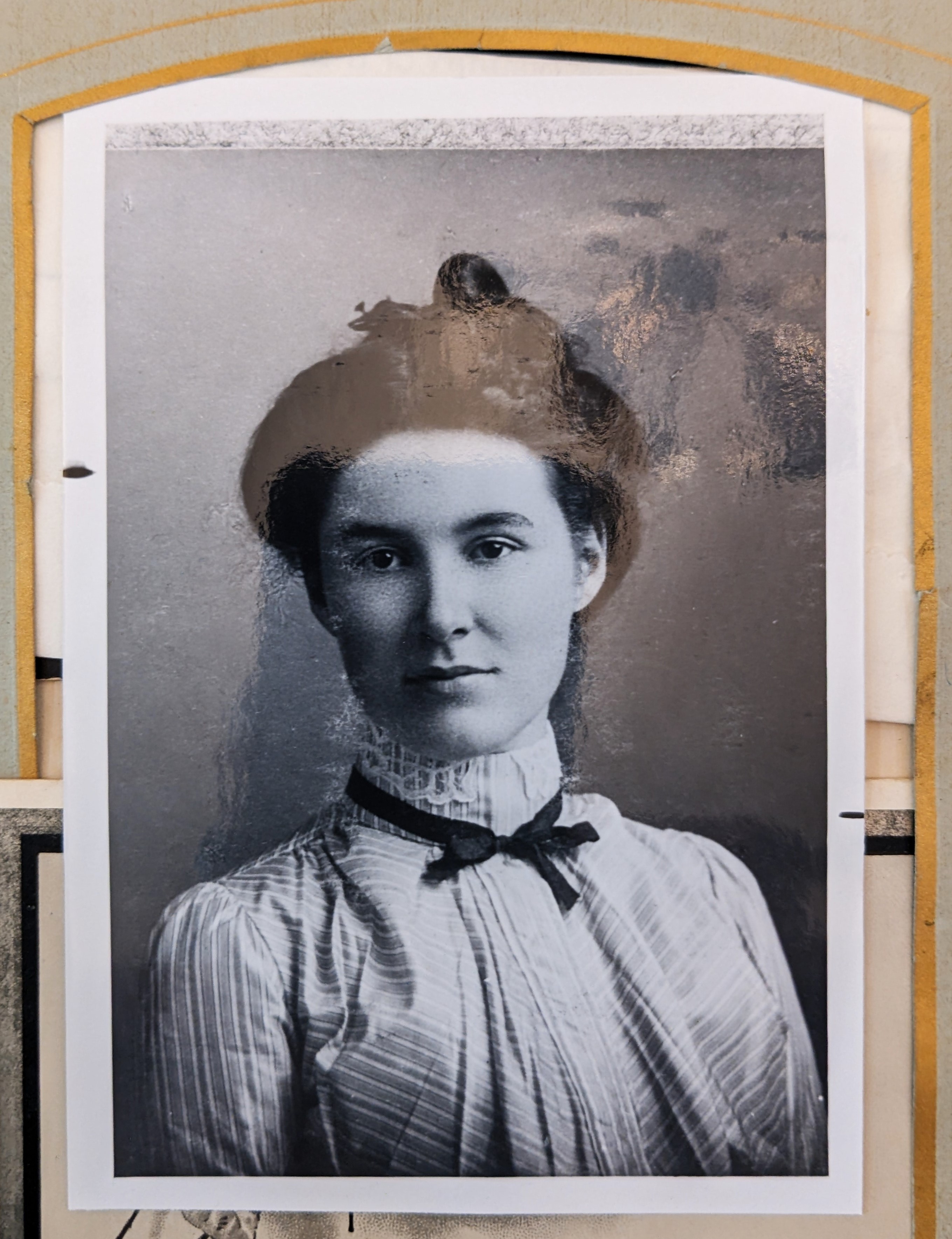
Janie Matheson, standing next to the teacher, would have been 18 at the time. With only
eleven grades offered in those days, she was likely assisting the teacher on this occasion. She showed great promise as a teacher her career and life was cut short on December 29, 1903 when she died of TB1.

Janie Matheson (Ruth Sutherland Chisholm Collection)


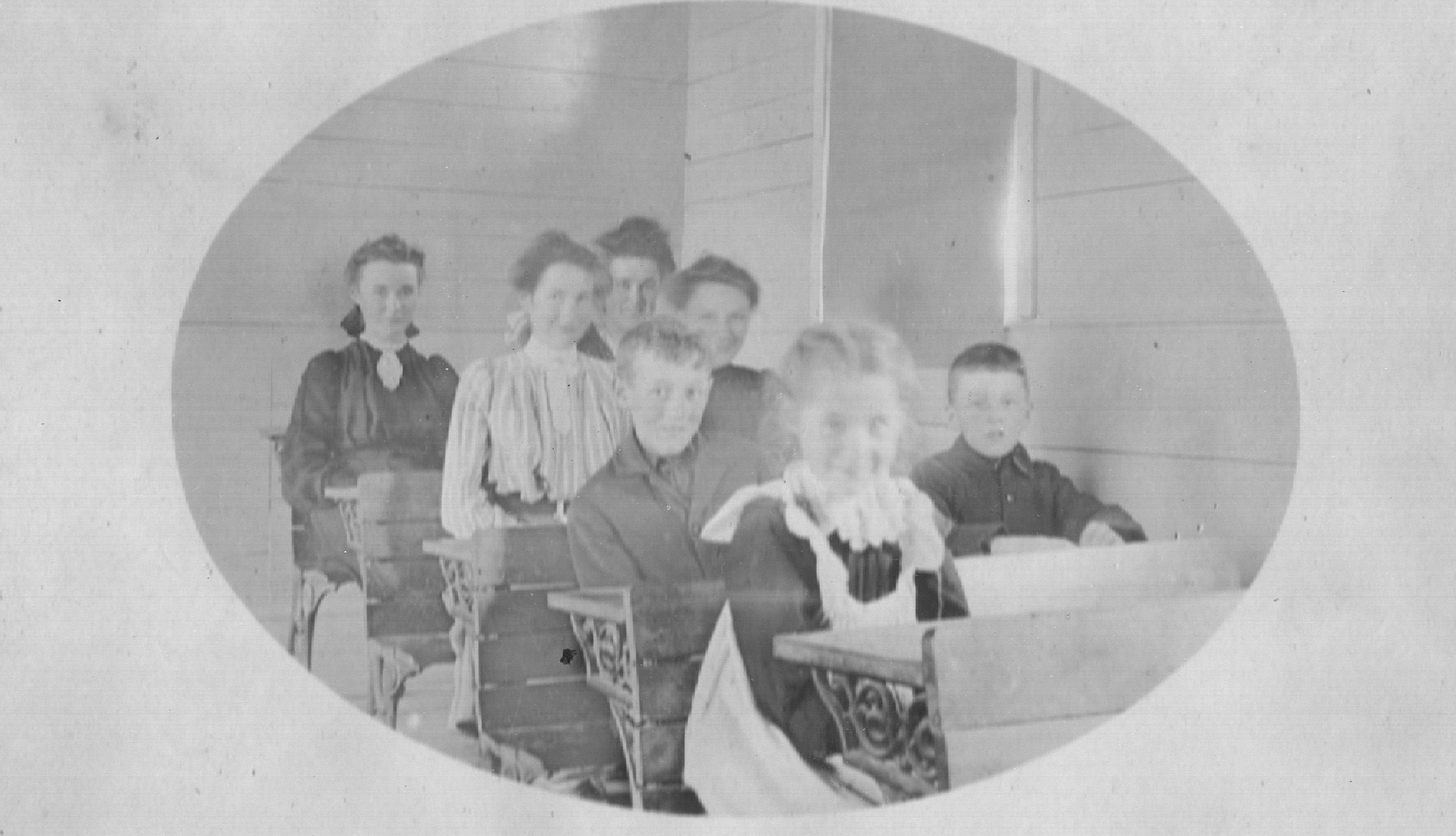
Many may have seen this last photo which is in the North Shore Archives. This digital copy was provided by Alex and Mary Ann MacKay. It was taken inside the school in 1909 and shows what a difference eight years can make.

East Earltown School – 1909 (Alex and Mary Ann MacKay Collection)

Back to Front, Left to Right

Georgie Matheson, __________ , Tena Munro, Jennie Murray, John Munro, John A. MacKay, Margaret Matheson.
Georgie Matheson, Tena Munro, Jennie Murray and John Munro are described after the first picture.

John A. MacKay “Bratten” lived on the farm behind the school most of his life. He was a son of Alexander F. MacKay of Diamond and Marion MacKay, East Earltown. The father died when John A. was an infant compelling his mother to return to her home at MacBain’s Corner. He married Jessie Murray.

Margaret Matheson was the daughter of John Matheson and Annie Murray, Back Mountain. She died in 1922 age 22 of TB.

Sources:

Census of Earltown, Nova Scotia 1901

Census of River John, Nova Scotia 1901

MacCara Reid, Mary, John Alexander Matheson – A Collection of Family History and Memories, 2019

Ian MacCara


  1. TB was fairly common in those days and followed certain families. Georgina and her sister both died of TB. Two other sisters successfully survived it. Their mother Annie died of it in 1904. She was a Bonesetter Murray from The Falls. Many in her family were afflicted with TB which was traced to the house at The Falls. That house burned down around 1900 thus sparing future generations. ↩︎